

Why Do Single-Phase and Three-Phase Injection Tests Produce Different Results?
Learn why single-phase and three-phase primary injection tests produce different results, including phase sequence, current balance, and magnetic coupling.
Single-phase and three-phase primary injection tests can produce different measurement results because they use different current paths and test configurations.
The number of energized phases, current direction, conductor arrangement, and magnetic effects can influence the measurements. Engineers should understand these differences before comparing test results.
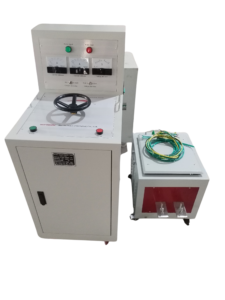
Click the image to know more about 6000A Primary Current Injection Tester.
What Is the Difference Between Single-Phase and Three-Phase Primary Injection Testing?
Single-phase injection applies current through one selected phase or current path. Three-phase injection applies currents through three phase circuits according to the required test arrangement.
The main differences are:
| Comparison | Single-phase injection | Three-phase injection |
|---|---|---|
| Current paths | One selected phase | Three phase circuits |
| Test arrangement | Individual phase connection | Coordinated three-phase connection |
| Main purpose | Check an individual current path | Evaluate multiple phase circuits together |
| Current relationship | One applied current | Three currents with defined relationships |
| Test preparation | Individual phase connections | Phase sequence and connection coordination |
The actual test capability depends on the injection equipment and the approved test configuration.
Why Can Three-Phase Injection Produce Different Current Readings?
Three-phase currents have defined phase relationships. In a balanced three-phase system, the phase currents have equal magnitudes and are separated by 120 electrical degrees.
For an ideal balanced system:
[
I_A+I_B+I_C=0
]
This is a vector relationship, not a simple addition of the three current magnitudes.
If the three currents are unbalanced or have incorrect phase relationships, the resulting residual current may differ from the expected value.
This can affect measurements in protection circuits that monitor phase or residual current.
How Does Phase Sequence Affect Primary Injection Test Results?
Phase sequence describes the order in which the three phase quantities reach their corresponding positions in the AC cycle.
The common phase sequences are:
- ABC sequence.
- ACB sequence.
An incorrect phase sequence can affect the expected response of equipment that depends on phase relationships or directional protection.
Engineers should identify the phase connections and verify the required sequence before performing a coordinated three-phase test.
Can Magnetic Coupling Affect Multi-Phase Injection Testing?
Yes. Magnetic coupling between conductors can influence the electrical characteristics of a high-current test arrangement.
When AC current flows through conductors, it produces magnetic fields. The relative position and direction of the conductors affect the magnetic field distribution and circuit inductance.
This effect becomes relevant when engineers arrange multiple high-current cables close together.
The outgoing and return conductors should be arranged according to the test configuration and equipment instructions. Engineers should avoid changing cable positions between comparative tests without recording the change.
Why Should Engineers Keep the Test Configuration Consistent?
Different cable arrangements and connection points can change the electrical conditions of a test.
For example, moving the return conductor may change the magnetic coupling between the conductors. Changing the connection points may also introduce different contact conditions.
To make test results comparable, engineers should keep the following conditions consistent:
- Test connection points.
- Cable length and arrangement.
- Phase identification.
- Current measurement points.
- Injection duration.
- Test instrument configuration.
If the configuration changes, engineers should document the change before comparing results.
How Should Engineers Compare Single-Phase and Three-Phase Test Results?
The two test methods should only be compared when their test objectives and measurement conditions are equivalent.
For example, engineers should not compare a single-phase current reading directly with the sum of three phase current magnitudes.
Instead, they should evaluate each phase separately and consider the vector relationship between the three currents.
| Measurement | What engineers should evaluate |
|---|---|
| Phase A current | Magnitude and measured value |
| Phase B current | Magnitude and measured value |
| Phase C current | Magnitude and measured value |
| Phase sequence | Correct phase order |
| Phase balance | Difference between phase current magnitudes |
| Residual current | Vector sum of phase currents |
| Test conditions | Connection and instrument configuration |
The acceptance limits must come from the equipment specifications and approved test requirements.
What Common Errors Should Engineers Avoid During Three-Phase Injection Testing?
Incorrect phase connections can produce misleading test results or activate unintended protection functions.
Common mistakes include:
| Mistake | Possible consequence | Recommended action |
|---|---|---|
| Incorrect phase identification | Measurements assigned to the wrong phase | Check phase markings and drawings |
| Reversed phase sequence | Incorrect directional response | Verify the required phase sequence |
| Different cable arrangements | Changed test circuit characteristics | Keep cable positioning consistent |
| Incorrect current measurement point | Inconsistent phase readings | Use the approved measurement points |
| Incorrect return conductor routing | Unexpected magnetic coupling | Follow the approved connection arrangement |
| Comparing unlike test conditions | Incorrect interpretation | Compare equivalent measurements |
Engineers should verify the complete test arrangement before applying current.
Which Test Equipment Is Required for Three-Phase Injection Testing?
The equipment depends on whether the test requires one phase or three coordinated current outputs.
A suitable injection system must provide the required current and support the connection arrangement specified by the test procedure.
For high-current applications, the Wrindu RDSL-82-6000D Primary Current Injection Tester offers up to 6000 A output current, a rated capacity of 36 kVA, and a 6 V output rating.
| Parameter | Specification |
|---|---|
| Model | RDSL-82-6000D |
| Maximum output current | 6000 A |
| Rated capacity | 36 kVA |
| Output voltage | 6 V |
| Structure | Split-type |
| Current monitoring | Two ammeters |
| Power-on time | Less than 2.5 minutes |
| Working cycle | Longer than 10 minutes |
The above specifications do not establish that the RDSL-82-6000D provides three independent simultaneous phase outputs. Engineers should confirm the required phase configuration with Wrindu before selecting equipment.
Learn more about the Wrindu RDSL-82-6000D Primary Current Injection Tester.
What Should Engineers Confirm Before Performing Three-Phase Injection Testing?
Before testing, engineers should confirm the required phase arrangement, current magnitude, phase sequence, and connection points.
They should also verify that the injection equipment supports the intended test configuration.
The test procedure should clearly define the measurement points and expected phase relationships. This helps engineers distinguish actual equipment problems from differences caused by the test arrangement.
