
Why Does the Choice Between Online and Offline Oil Testing Matter

Compare online vs offline transformer oil testing methods, including speed, accuracy, and cost. Learn how to combine both approaches for effective predictive maintenance and improved transformer reliability with Wrindu solutions.

Transformer oil testing is no longer just a routine maintenance task—it directly impacts asset reliability, operational safety, and maintenance strategy. Choosing between online and offline oil testing determines how quickly faults are detected, how accurately trends are analyzed, and how effectively maintenance decisions are made.

As power systems evolve toward digitalization, understanding the strengths and limitations of both approaches becomes essential for building a robust condition monitoring program.

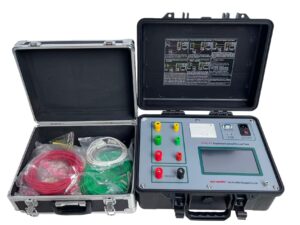
Wrindu Portable Insulation Oil DGA Tester

Click the image to know more about Portable DGA Insulation Oil Tester.


What Is Online Transformer Oil Testing?

Online oil testing refers to continuous or real-time monitoring using sensors installed directly on the transformer. These systems track key parameters without interrupting operation.

Typical features include:

  • Real-time Dissolved Gas Analysis (DGA)
  • Continuous moisture monitoring
  • Live temperature and load correlation
  • Remote data access and alarms

Online systems are particularly valuable for critical transformers where even minor faults can lead to major outages.


What Is Offline Transformer Oil Testing?

Offline oil testing involves manually collecting oil samples and analyzing them using laboratory or portable test equipment. This traditional method remains widely used due to its flexibility and comprehensive testing capability.

Common offline tests include:

  • Breakdown Voltage (BDV)
  • Acidity and interfacial tension
  • Furan analysis for insulation aging
  • Detailed gas chromatography

Offline testing provides high-precision diagnostics but lacks real-time responsiveness.


How Do Online and Offline Testing Compare in Practice?

Speed and Responsiveness

  • Online: Immediate detection of abnormal changes
  • Offline: Delayed insights due to sampling and lab processing

Data Depth

  • Online: Limited to installed sensors and predefined parameters
  • Offline: Broader and more detailed analysis options

Trend Analysis

  • Online: Excellent for continuous trend monitoring
  • Offline: Depends on testing frequency

Cost Considerations

  • Online: Higher initial investment, lower long-term risk
  • Offline: Lower upfront cost, but potential higher failure-related expenses

Operational Impact

  • Online: No interruption to transformer operation
  • Offline: Requires sampling, with potential contamination risks

Can Online Testing Fully Replace Offline Methods?

Not quite. Online monitoring excels at early warning and trend tracking, but it cannot entirely replace the depth and flexibility of offline laboratory analysis.

In practice, the most effective strategy is a hybrid approach:

  • Use online monitoring for continuous surveillance and alarm triggering
  • Use offline testing for detailed diagnostics and confirmation

This combination ensures both speed and accuracy in maintenance decision-making.


What Are the Risks of Relying on Only One Method?

Relying exclusively on one method creates blind spots:

  • Online-only risk: Missing parameters not covered by sensors
  • Offline-only risk: Failing to detect rapidly developing faults between test intervals

A balanced approach minimizes these risks and improves overall asset visibility.


How Wrindu Testers Stand Out in Oil Testing Applications

Wrindu offers advanced offline oil testing solutions that complement modern online monitoring systems, enabling a complete predictive maintenance framework.

Key strengths include:

  • High Precision Measurement: Accurate detection of BDV, moisture, and contamination
  • Portable and Field-Ready Design: Ideal for on-site transformer diagnostics
  • Fast Testing and Reporting: Reduces downtime and speeds up decision-making
  • Wide Test Coverage: Supports multiple oil parameters beyond typical online sensors
  • Seamless Data Integration: Facilitates trend analysis when combined with monitoring systems

Wrindu testers play a critical role in validating online data and providing deeper insights into transformer health.


How Should Utilities Choose the Right Testing Strategy?

The optimal choice depends on several factors:

  • Transformer criticality
  • Load conditions and operating environment
  • Maintenance budget
  • Risk tolerance

For high-value assets, investing in both online and offline testing is often the most cost-effective long-term strategy.


FAQs: Online vs Offline Transformer Oil Testing

Q1: Which method is better for early fault detection?

A: Online testing is better for early detection due to real-time monitoring and instant alarms.


Q2: Why is offline testing still necessary?

A: Offline testing provides more comprehensive and detailed analysis, including parameters not covered by online sensors.


Q3: How often should offline oil testing be performed?

A: Typically every 6–12 months, but more frequently for critical transformers or when online systems indicate anomalies.


Q4: Is online monitoring cost-effective?

A: Yes, especially for critical assets, as it helps prevent costly failures and unplanned outages.


Q5: Can portable testers replace laboratory analysis?

A: Portable testers offer fast and reliable results on-site, but laboratory testing may still be required for advanced diagnostics.


Q6: What is the best practice for transformer oil testing?

A: A hybrid approach combining continuous online monitoring with periodic offline testing ensures the highest reliability and accuracy.


By integrating online and offline oil testing strategies, utilities can move toward a predictive maintenance model that enhances reliability, reduces risk, and maximizes transformer lifespan.

wrindu
wrindu