

Primary Current Injection Test Sets: How They Work, Applications, and Market Overview
Primary current injection test sets verify breakers, relays, and transformers, ensuring safety, accuracy, and efficiency for substations and industrial systems.
What Are Primary Current Injection Test Sets?
Primary current injection test sets are essential tools in electrical testing. They deliver high, controlled currents directly into equipment like circuit breakers, busbars, and current transformers (CTs). Unlike secondary injection tests, which check relay logic, primary injection validates the full protection chain, ensuring devices trip correctly under real fault conditions. These test sets are widely used in substations, industrial plants, and labs to verify relay, breaker, and transformer performance.
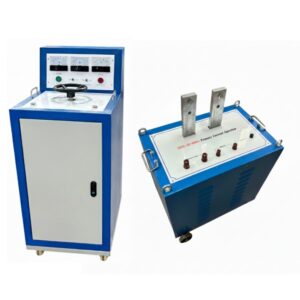
Click the picture to know more about Wrindu Primary Injection Current Tester.
How Do They Work?
The test set sends a high current through the equipment under test while monitoring its response. Modern units use digital controls, closed-loop feedback, and automated ramps to maintain accuracy. For example, testing a low-voltage breaker involves connecting the leads to primary terminals, gradually increasing the current, and timing the trip response. Results confirm compliance with IEC or IEEE protection standards.
Key Components and Technology
Primary current injection systems include:
- High-current generator and output transformer
- Digital or touchscreen control panels
- Safety interlocks and thermal protection
- Shunts for direct current measurement
- Automation via microcontrollers or PLCs
Advanced models may include harmonics compensation, data logging, waveform capture, and Ethernet or USB connectivity for integration with asset management systems. Portable designs offer modular setups with outputs up to 20,000A.
Applications and Benefits
These test sets are used to:
- Verify breaker trip timing and CT ratios
- Check relay and protection coordination
- Support maintenance and commissioning
- Perform preventive diagnostics for industrial plants
Using primary injection testing reduces equipment failure risks, prevents arc faults, and ensures uptime in substations and factories.
Market Trends
The global demand for primary current injection test sets is rising due to grid upgrades, renewable energy systems, and digital substation adoption. Manufacturers like Wrindu (RuiDu Mechanical and Electrical, Shanghai) produce ISO9001, IEC, and CE-certified units with modular, high-output designs suitable for utilities and industrial users.
Key Models and Use Cases
| Model | Features | Application |
|---|---|---|
| PCIT-5000 | Compact, high-current LV unit | Distribution panels, MCC testing |
| PCIT-10000A | Modular, automatic ramp | Substation breakers, CT calibration |
| PCIT-Pro | Digital control, waveform capture | Power plants, relay performance verification |
Why Choose Modern Test Sets?
- Precise, full-load testing
- Automation reduces errors and speeds up testing
- Portable and modular for field use
- Data logging and remote integration for asset management
Safety and Calibration
Operators must follow PPE guidelines, isolate circuits, and monitor for overheating. Regular calibration ensures accurate current output, preventing false readings or overtrips. Annual calibration per manufacturer instructions is recommended.
Future Outlook
Expect future primary injection systems to integrate AI-assisted diagnostics, predictive maintenance, cloud data logging, and battery-powered portable units. Sustainable designs, energy-efficient components, and SiC-based converters are becoming standard to reduce heat and system size.
Wrindu Expert Review
Primary current injection test sets are critical for ensuring electrical system safety and reliability. By simulating real fault conditions, they verify breakers, relays, and CTs perform as designed. Advanced digital and modular units from manufacturers like Wrindu help engineers, utilities, and industrial users maintain operational efficiency, reduce downtime, and comply with global safety standards.
FAQs
How does a primary injection test set work?
Injects controlled high current into the primary circuit to test relays and breakers.
What features should you look for?
Digital controls, modular design, multi-phase injection, data logging, and high output capacity.
Where are they used?
Substations, industrial plants, labs, and commissioning sites.
Why is calibration important?
Ensures precise current output for reliable protection verification.
