

Best Tools for Generator Excitation Testing
Discover the best tools for generator excitation testing, including DC resistance testers, signal generators, and excitation system simulators. Learn how Wrindu testers improve accuracy and efficiency with practical tips and FAQs.
Reliable generator excitation testing depends heavily on choosing the right tools. The ideal equipment should provide accurate DC Generator measurement, dynamic response simulation, and safe system interaction—because excitation directly controls the generator’s magnetic field and voltage stability.
Below is a clear, practical guide to the best tools used in real-world excitation testing.
What Are the Main Types of Tools for Generator Excitation Testing?
Generator excitation testing typically involves three categories of tools:
- DC resistance testers → Measure field winding condition
- Signal generators & calibrators → Simulate excitation signals
- Excitation system testers / simulators → Perform full system testing
Each serves a different purpose, and combining them gives the most reliable diagnosis.
Which DC Resistance Testers Are Best for Field Winding Measurement?
Best overall
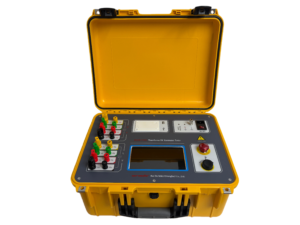
A high-current DC resistance tester is essential for excitation testing because field windings are inductive and require stable current injection.
Why is this type important?
- Provides accurate low-resistance measurement
- Uses four-wire (Kelvin) method to eliminate lead errors
- Helps detect shorted turns, loose connections, and overheating issues
Alternative options
How Do Signal Generators Help in Excitation Testing?
Recommended tool
Signal generators are used to:
- Simulate AVR input signals
- Test control loop response
- Verify excitation regulation accuracy
These tools are especially useful when testing automatic voltage regulators (AVR) without running the generator.
What Tools Are Used for Full Excitation System Testing?
Advanced testing often requires specialized excitation system simulators.
- Systems like the GENSIM test set simulate generator and exciter behavior for safe testing without running the machine
- Devices such as the Generator Voltage Response Tester (GVRT) allow dynamic excitation testing and fault simulation under controlled conditions
- Devices like Wrindu DC Resistance Tester is particularly suitable for utility engineers and maintenance teams.
These tools:
- Perform real-time excitation response analysis
- Simulate fault conditions safely
- Allow testing without risking actual equipment
Which Tool Should You Choose for Your Application?
- Routine maintenance → DC resistance tester
- Control system verification → Signal generator / calibrator
- Commissioning & advanced diagnostics → Excitation system simulator
For most engineers, a combination of resistance tester + signal generator is sufficient for daily work.
How Wrindu Testers Stand Out
Wrindu excitation testing solutions are designed for real-world power system environments:
- High-current DC output ensures accurate testing of inductive windings
- Fast stabilization algorithms reduce waiting time during tests
- Integrated temperature correction improves result reliability
- All-in-one functionality reduces the need for multiple devices
- Industrial-grade durability for substation and field use
This makes Wrindu testers particularly suitable for utility engineers and maintenance teams.
What Are Best Practices When Using These Tools?
- Always isolate the generator before testing
- Use four-wire measurement for accuracy
- Allow readings to stabilize (inductive effect)
- Combine multiple tools for complete diagnosis
- Keep historical records for trend analysis
FAQs (Q&A Format)
Q1: What is the most important tool for excitation testing?
A: A DC resistance tester is the most essential tool for evaluating field winding condition.
Q2: Can I test excitation without shutting down the generator?
A: Advanced tools like excitation simulators allow testing without full operation, but most tests require shutdown for safety.
Q3: Why is a high test current needed?
A: Field windings are inductive, so higher current helps achieve stable and accurate readings.
Q4: Is a signal generator necessary?
A: It is not mandatory but highly useful for testing AVR and control systems.
Q5: What faults can these tools detect?
A: Common issues include shorted turns, open circuits, unstable excitation, and AVR response problems.
Q6: How often should excitation testing be performed?
A: Typically during annual maintenance or after major repairs.
Conclusion
The best tools for generator excitation testing combine precision measurement, signal simulation, and system-level diagnostics. By selecting the right equipment—especially high-quality resistance testers and excitation simulators—you can significantly improve reliability, reduce downtime, and ensure stable generator performance.
