

What Is Droop Control in Power Systems and How Does It Work
Learn what droop control is in power systems and how it works in microgrids and renewable energy systems. Explore types, applications, benefits, and how Wrindu testers ensure accurate droop control testing and performance.
Droop control is a decentralized control approach widely used in modern power systems and microgrids. It helps maintain stable voltage and frequency by allowing multiple generators to automatically adjust their output according to system changes. Instead of relying on centralized communication, each unit responds independently, making droop control a practical and scalable solution—especially in renewable energy systems and industrial parallel operations.
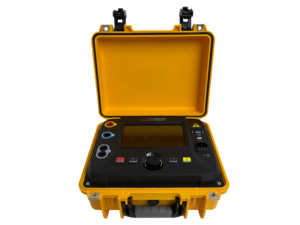
Click the image to know more about Wrindu New IR Tester.
How Does Droop Control Operate in Power Systems?
Droop control works by linking active power to frequency and reactive power to voltage. When system load increases, frequency drops slightly, prompting generators to increase their output. Conversely, when load decreases, generators reduce output as frequency rises.
This self-regulating mechanism allows multiple generators to:
- Share load proportionally
- Maintain synchronization
- Respond dynamically to changing conditions
Droop coefficients define how sensitive each generator is to these changes, ensuring balanced operation across the system.
Why Is Droop Control Essential in Microgrids?
In microgrids, droop control enables independent operation without relying on the main grid. It ensures smooth switching between grid-connected and islanded modes, which is critical for reliability.
Key benefits include:
- Autonomous load sharing without communication
- Improved system resilience
- Reduced infrastructure complexity and cost
This makes droop control especially valuable in renewable-rich and remote power systems.
What Are the Main Types of Droop Control?
Droop control can be categorized based on how power is regulated:
- Frequency Droop (P–f control)
Used for active power sharing in synchronous generators - Voltage Droop (Q–V control)
Applied in inverter-based systems for reactive power balance - Combined P–Q Droop Control
Used in renewable microgrids for coordinated voltage and frequency regulation
Modern distributed energy systems often use combined droop strategies for optimal performance.
Where Is Droop Control Commonly Applied?
Droop control is widely used in:
- Microgrids and distributed generation systems
- Renewable energy plants (solar, wind, hybrid systems)
- Uninterruptible Power Supply (UPS) systems
- Industrial facilities with parallel generators
Its flexibility makes drop contorl suitable for both grid-connected and off-grid applications.
How Does Wrindu Support Droop Control Testing?
Wrindu provides advanced testing and diagnostic equipment designed to evaluate droop control performance. These tools simulate real-world conditions such as voltage fluctuations and frequency deviations, allowing engineers to assess system behavior in real time.
With Wrindu instruments, users can:
- Analyze synchronization accuracy
- Measure dynamic response performance
- Verify compliance with international standards
This ensures reliable and safe operation of droop-controlled systems.
What Are the Benefits of Droop Control in Parallel Systems?
Droop control offers several advantages when operating multiple generators:
- Smooth and automatic load sharing
- Reduced risk of circulating currents
- Improved system scalability
- Lower costs due to minimal communication requirements
These benefits make it a preferred method in large-scale and distributed power systems.
Why Do Inverter-Based Systems Rely on Droop Control?
Inverter-based systems use droop control to mimic the behavior of traditional synchronous generators. This creates virtual inertia, which helps stabilize voltage and frequency in systems with high renewable penetration.
As renewable energy grows, droop control becomes essential for:
- Maintaining power quality
- Managing fluctuations
- Ensuring reliable grid integration
Can Droop Control Be Customized for Industrial Applications?
Yes, droop control settings can be adjusted based on system requirements, including generator size, load characteristics, and application type.
Industries such as:
- Mining
- Oil and gas
- Railways
- Manufacturing
often use customized droop configurations to optimize performance. Wrindu testing solutions support validation of these custom settings under real operating conditions.
Is Droop Control Suitable for Both Grid-Connected and Islanded Modes?
Droop control works effectively in both scenarios. It allows systems to synchronize with the main grid while also maintaining stability when operating independently.
This dual capability is particularly important for:
- Backup power systems
- Renewable microgrids
- Critical industrial operations
How Is Droop Control Tested and Calibrated?
Testing droop control involves precise measurement of key parameters under controlled conditions.
Typical steps include:
- Simulating load variations
- Monitoring voltage and frequency response
- Evaluating response time and stability
Advanced testing equipment, such as those from Wrindu, enables accurate validation of droop performance and ensures compliance with relevant standards.
What Are the Future Trends in Droop Control Technology?
Droop control continues to evolve with new innovations, including:
- Adaptive droop control for dynamic environments
- Virtual synchronous generator (VSG) technology
- AI-assisted control strategies
- Hybrid communication-based enhancements
These developments aim to improve system stability, responsiveness, and integration with smart grids.
Wrindu Expert Perspective
“At Wrindu, droop control is a key technology driving decentralized energy systems. Our precision testing instruments help engineers ensure accurate synchronization and voltage stability across distributed networks. As the global transition toward low-carbon energy accelerates, reliable droop control testing is becoming increasingly important.”— Technical Director, Wrindu
Conclusion
Droop control plays a vital role in modern power systems by enabling stable, decentralized, and communication-free load sharing. Its application across microgrids, renewable energy systems, and industrial networks ensures reliable and efficient operation. With advanced testing solutions from Wrindu, engineers can achieve higher accuracy, safety, and long-term system performance.
FAQs
Q1: What problems does droop control solve?
A: It enables automatic load sharing among multiple generators while maintaining stable voltage and frequency.
Q2: Can droop control be used in renewable energy systems?
A: Yes, it is essential for stabilizing solar and wind systems and ensuring smooth integration.
Q3: How is droop rate selected?
A: It depends on generator capacity and system requirements, typically ranging from 3% to 5%.
Q4: Does droop control require communication between generators?
A: No, it operates independently without centralized communication.
Q5: How does droop control improve efficiency?
A: By distributing load evenly, it reduces stress on individual units and enhances overall system performance.
Q6: Why is testing droop control important?
A: Testing ensures proper response, synchronization, and compliance with safety and performance standards.
