

How to Measure the Internal Impedance of a Battery
Learn how to measure battery internal impedance using DC load, AC impedance, and EIS methods. Understand formulas, testing steps, and key factors affecting accuracy. Explore Wrindu testing solutions for reliable battery diagnostics and health evaluation.
Measuring a battery’s internal impedance is very important for understanding its health, efficiency, and remaining lifespan. Internal impedance reflects how easily current can flow inside the battery and changes as the battery ages or degrades.
This guide explains several common methods used in industry and laboratories, from simple DC testing to advanced electrochemical analysis.
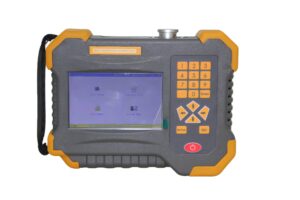
Click the image to know more about Battery Impedance Tester.
What Is Battery Internal Impedance and Why Does It Matter?
Battery internal impedance is the opposition inside a battery that resists current flow. It includes both resistive and reactive (capacitive/inductive) components.
Why it is important:
- Indicates battery health condition
- Helps predict performance drop
- Shows aging and degradation level
- Affects heat generation and efficiency
Higher impedance usually means the battery is aging or damaged.
How Does the Simple DC Method Work?
The DC method is the easiest way to estimate internal resistance using basic tools.
Measurement Principle:
It uses voltage drop under load to calculate resistance based on Ohm’s law.
R_{int} = \frac{V_{oc} – V_{load}}{I}
Where:
- (V_{oc}) = open-circuit voltage
- (V_{load}) = voltage under load
- (I) = load current
Steps:
- Measure open-circuit voltage first
- Connect a known load resistor
- Measure voltage under load
- Measure current
- Calculate internal resistance
Limitations:
- Only measures DC resistance
- Does not include reactive effects
- Accuracy depends on stable load conditions
When Should You Use the AC Method?
The AC method is more accurate and widely used in professional battery testing.
How it works:
A small AC signal is applied to the battery, and the voltage-current response is measured.
Key idea:
It measures both magnitude and phase difference between voltage and current.
Z = Vac/Iac
What it can show:
- True impedance value
- Resistive and reactive components
- Better accuracy than DC method
This method is commonly used in battery manufacturing and research.
What Is Electrochemical Impedance Spectroscopy (EIS)?
EIS is an advanced testing technique used for detailed battery analysis.
How it works:
- Applies a range of AC frequencies
- Measures impedance response at each frequency
- Produces diagnostic plots (Nyquist/Bode)
What it reveals:
- Charge transfer resistance
- Electrolyte condition
- SEI layer growth
- Aging mechanisms
This method is widely used in research and EV battery development.
Can Commercial Battery Testers Simplify the Process?
Yes. Modern battery testers provide fast and automated impedance measurements.
Benefits:
- Quick measurement results
- Standardized testing procedures
- Reduced human error
- Suitable for production lines
These tools are commonly used in quality control environments.
Why Do Temperature and State of Charge Matter?
Battery impedance is not constant—it changes depending on conditions.
Key factors:
- State of charge (SoC): affects internal chemical reactions
- Temperature: influences ion movement and resistance
- Aging: increases impedance over time
For accurate comparison, tests should be done under the same conditions.
How Can Battery Aging Be Detected Through Impedance?
As a battery ages, its internal impedance increases.
Signs of aging include:
- Higher internal resistance
- Reduced energy efficiency
- Faster voltage drop under load
- Increased heat generation
Monitoring impedance over time helps predict battery failure.
How Wrindu Testers Stand Out
Wrindu provides professional electrical testing solutions designed for accurate impedance and power system diagnostics.
Key Advantages:
- High-precision measurement accuracy
- Stable performance in field and lab environments
- Fast and reliable testing results
- Easy operation for engineers
- Suitable for industrial battery and electrical testing
Wrindu equipment is widely used for:
- Battery internal resistance testing
- Electrical system diagnostics
- Power quality analysis
- Insulation and circuit testing
- Preventive maintenance applications
These tools help engineers evaluate battery condition more accurately and improve system reliability.
FAQs
What is battery internal impedance?
It is the internal resistance and reactance that limit current flow inside a battery.
Which method is most accurate for measuring impedance?
AC methods and EIS provide the most accurate and detailed results.
Can a multimeter measure battery internal resistance?
Only approximately using the DC method; it is not highly accurate.
Why does internal resistance increase over time?
Due to aging, chemical degradation, and internal material wear.
Does temperature affect impedance measurement?
Yes. Higher temperature usually lowers resistance, while low temperature increases it.
What is the safest method for testing batteries?
Low-current AC or professional battery testers are safest and most stable.
How often should battery impedance be tested?
It depends on usage, but regular monitoring is recommended for critical systems.
Can impedance predict battery failure?
Yes. A rising impedance trend is a strong indicator of battery degradation.
