

How Temperature Affects Battery Internal Impedance and Performance
Learn how temperature influences battery internal impedance, performance, and lifespan. Discover the effects of high and low temperatures on lithium batteries, charging behavior, and testing accuracy. Explore Wrindu testing solutions for reliable battery diagnostics under different conditions.
Temperature is one of the most important external factors influencing battery performance and internal impedance. Whether in electric vehicles, energy storage systems, or portable devices, temperature changes can significantly affect efficiency, safety, and lifespan.
Understanding this relationship helps engineers design better systems and prevent unexpected battery failures.
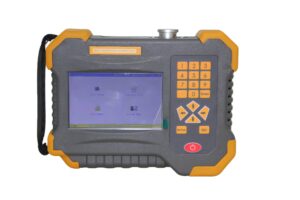
Click the image to know more about Battery Impedance Tester.
Why Does Temperature Influence Battery Impedance?
Battery internal impedance is closely related to electrochemical reactions inside the cell.
At the core level:
- Ion movement depends on temperature
- Electrolyte conductivity changes with heat or cold
- Reaction speed inside electrodes varies
This directly affects internal resistance and overall performance.
What Happens to Battery Impedance at Low Temperatures?
Low temperatures slow down chemical activity inside the battery.
Main effects:
- Increased internal resistance
- Slower ion movement
- Reduced discharge capability
- Voltage drops more quickly under load
Even a healthy battery may appear weak in cold conditions.
Why Does High Temperature Also Increase Long-Term Impedance?
High temperature does not always increase impedance immediately, but it accelerates aging.
Long-term effects include:
- Faster electrolyte degradation
- Growth of internal SEI layer
- Loss of active material
- Permanent increase in resistance
This leads to faster battery aging and shorter lifespan.
How Does Temperature Affect Charging Performance?
Charging behavior is strongly influenced by temperature conditions.
At low temperature:
- Charging becomes less efficient
- Risk of lithium plating increases
- Internal resistance rises temporarily
At high temperature:
- Charging speed may increase
- Internal stress becomes higher
- Long-term degradation accelerates
Proper temperature control is essential during charging.
Can Temperature Cause False Impedance Readings?
Yes. Temperature variations can distort measurement results.
Reasons include:
- Changing ion mobility
- Variation in chemical reaction speed
- Temporary resistance fluctuations
That is why impedance testing should always be done under controlled temperature conditions.
What Is the Ideal Temperature Range for Batteries?
Most lithium-based batteries perform best in moderate conditions.
Recommended range:
- Typically around room temperature (about 20–30°C)
- Avoid extreme heat or freezing conditions
- Maintain stable environment for consistent performance
Stable temperature ensures reliable operation and measurement accuracy.
How Does Temperature Affect Battery Lifespan?
Temperature directly impacts long-term battery health.
Key relationship:
- Higher temperature → faster aging
- Lower temperature → reduced performance efficiency
- Stable temperature → optimal lifespan
Maintaining thermal balance is essential for durability.
How Can Thermal Management Improve Battery Performance?
Thermal management systems help control operating conditions.
Common methods:
- Cooling systems (air or liquid)
- Heating systems for cold environments
- Battery management systems (BMS)
- Temperature monitoring sensors
These systems help maintain safe and stable operation.
Why Is Temperature Monitoring Important in Testing?
Accurate testing requires stable conditions.
Benefits of temperature monitoring:
- More accurate impedance readings
- Better comparison over time
- Early detection of abnormal behavior
- Improved diagnostic reliability
Without temperature control, test data may be misleading.
How Wrindu Testers Stand Out
Wrindu provides advanced electrical testing equipment designed for accurate battery impedance measurement and environmental performance analysis.
Key Advantages:
- High-precision testing under stable conditions
- Reliable performance in field environments
- Fast and consistent measurement results
- Easy operation for engineers
- Suitable for industrial and energy storage systems
Wrindu solutions are widely used for:
- Battery impedance testing under different temperatures
- Energy storage system diagnostics
- Electrical performance monitoring
- Preventive maintenance applications
- Battery health evaluation
These tools help engineers understand how temperature affects battery behavior and improve system reliability.
FAQs
Does temperature affect battery internal impedance?
Yes. Temperature has a direct impact on internal resistance and performance.
Why does cold weather reduce battery performance?
Because low temperatures slow down ion movement and increase resistance.
Can high temperature damage batteries?
Yes. Long-term heat exposure accelerates chemical aging and increases impedance.
What is the best temperature for battery operation?
Most batteries perform best at moderate room temperature conditions.
Can temperature changes affect test results?
Yes. Testing must be done under controlled temperature for accuracy.
How does temperature affect battery lifespan?
High temperatures shorten lifespan, while stable conditions extend it.
Can thermal management improve battery health?
Yes. Proper temperature control significantly improves performance and durability.
Why is temperature monitoring important in battery systems?
It ensures safety, stability, and accurate performance evaluation.
