

Safety Key Points for Voltage Inspection Using Phasing Sticks
Master phasing stick voltage inspection safety points, including protective measures, pointer anomaly handling and non-voltage judgment. See how Wrindu testers perform & voltage inspection FAQs.
Voltage inspection is an indispensable safety procedure before high-voltage phasing work. A standardized voltage check can effectively prevent residual voltage, induced electricity and accidental electric shock accidents. This article focuses on the core safety key points of phasing stick voltage inspection: personal protective measures, pointer abnormal troubleshooting, and non-voltage judgment confirmation methods. It also lists the advantages of Wrindu testers and long-tail FAQs for on-site electrical workers.
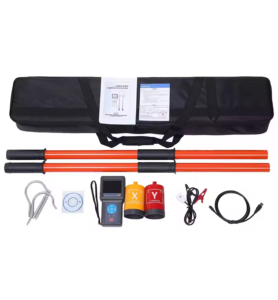
Click the image to know more about Wireless High Voltage Phase Detector.
What Protective Measures Are Required During Voltage Inspection?
Personal and equipment protection is the first line of defense for voltage inspection. Any negligence may lead to electric shock or insulation breakdown. Standard protective measures are clearly sorted out for field operation.
-
Personal Protection: Operators must wear qualified insulating gloves, anti-slip insulating shoes and safety helmets. Do not wear wet clothes, metal accessories such as necklaces and rings to avoid conductive risks. Two-person operation is mandatory: one person operates and the other monitors safety.
-
On-site Environment Protection: Set up warning tapes and safety isolation zones around the tested equipment to prevent irrelevant personnel from entering the operation area. Keep the ground dry and flat; avoid working in thunderstorm, heavy fog and strong electromagnetic interference environments.
-
Equipment Protection: Before inspection, confirm the insulation grade of the phasing stick matches the voltage level of the tested circuit. Check the insulation rod for damage, dirt and moisture. Place the testing instrument on a dry insulating mat to reduce leakage current.
How to Deal With Abnormal Pointer Conditions During Inspection?
Pointer abnormality is a common failure in voltage inspection, including sudden jitter, offset drift and no response. Correct emergency disposal can avoid misjudgment and potential safety hazards.
-
Pointer Continuous Jitter: This condition is usually caused by induced voltage or unstable contact. The operator should keep the phasing stick static, stay away from adjacent live lines, and recontact the measuring point. Do not read jittered data as valid judgment basis.
-
Excessive Pointer Deflection: If the pointer exceeds the standard range sharply, stop the test immediately. Check whether the measuring range matches the voltage level and confirm no high-voltage leakage on the equipment surface. Resume operation after eliminating hidden dangers.
-
Pointer No Response: When the pointer remains static, check wiring looseness, probe oxidation and rod body dampness. Replace spare testing parts in time. Never blindly judge the circuit as non-voltage without troubleshooting.
What Confirmation Methods for Non-voltage Judgment?
Judging whether the equipment is non-voltage is the core purpose of voltage inspection. Multiple verification methods must be adopted to eliminate residual voltage and induced voltage interference.
-
Pointer Reading Confirmation: After stable contact, the pointer stays at zero scale without any obvious deflection for more than 5 seconds. No fluctuation rebound under static state.
-
Multi-point Repeated Verification: Select three different measuring points on the same equipment for voltage inspection. All points must show consistent non-voltage results to avoid dead-angle detection omission.
-
Auxiliary Judgment Method: Observe the equipment indicator lights, voltage transformers and display instruments. Combine mechanical power-off state to comprehensively confirm that there is no residual charge in the circuit.
-
Discharge Confirmation Step: After confirming non-voltage, perform artificial discharge for 2 to 3 times to eliminate hidden residual capacitance voltage before subsequent phasing work.
How Wrindu Testers Stand Out in Voltage Inspection?
In high-risk voltage inspection scenarios, Wrindu phasing sticks and testing instruments provide stronger safety optimization and stable detection performance, which is more suitable for harsh power operation environments than ordinary measuring tools.
-
High-grade Insulation Material: Wrindu testing rods adopt high-density epoxy resin insulation layer, which is resistant to high voltage, moisture and creepage. It greatly reduces electric leakage risk during long-time voltage inspection.
-
Anti-jitter Pointer Calibration System: Built-in damping and filtering components effectively suppress induced voltage jitter. The pointer returns to zero quickly and stays stable, helping operators judge non-voltage state accurately.
-
Over-range Safety Protection: When encountering abnormal overvoltage, the internal buffer structure can protect the dial from damage and remind operators to stop inspection through obvious pointer locking feedback.
-
Humanized Safe Structure: Equipped with anti-slip insulated grip and high-visibility dial scale. The extended insulation distance effectively isolates human body from charged conductors, lowering operation risk.
-
Strict Consistency Repeatability: Multiple inspection data deviation is controlled within 1%, fully meeting the multi-point verification standard for non-voltage judgment in power industry.
FAQs
Q1: Why does the pointer still have slight deflection even if the equipment is powered off?
A1: Slight deflection is mostly caused by induced voltage or residual capacitance voltage. It is not real live voltage. You need to keep the testing rod static, wait 3 to 5 seconds for data stabilization, and combine multi-point repeated detection to make final judgment.
Q2: Can I remove protective gloves during simple low-voltage voltage inspection?
A2: It is strictly prohibited. Even low-voltage equipment may have instantaneous surge voltage. Insulating gloves are essential isolation protection. Wrindu highly recommends complete protective equipment for all voltage inspection scenarios.
Q3: What should I do if the phasing stick gets damp suddenly during outdoor inspection?
A3: Stop inspection immediately and move the rod to a dry and ventilated place. Do not wipe with wet cloth. Damp insulation layer will greatly increase electric leakage risk. Continue operation only after complete drying and re-inspection.
Q4: How many times is the minimum verification for non-voltage confirmation?
A4: The industry standard requires at least 3 times of verification at different positions. For closed switch cabinets and cable terminals, increase to 4 times to eliminate detection blind spots caused by uneven charge distribution.
Q5: What is the most dangerous misoperation in voltage inspection?
A5: The most common dangerous misoperation is judging non-voltage based on one single unstable pointer data. Induced electricity and instantaneous surge often cause misjudgment. Always follow multi-point repeated testing rules.
Safety Operation Summary
Voltage inspection safety depends on standardized protective measures, scientific abnormal pointer disposal and rigorous non-voltage confirmation methods. Adopting high-safety testing equipment such as Wrindu testers can reduce environmental interference and human judgment errors. All operators must prioritize safety, strictly comply with high-voltage operation specifications, and complete voltage inspection before any phasing work to ensure zero safety accidents.
