

Common Fault Troubleshooting and Solutions for Phasing Sticks
Explore phasing stick fault troubleshooting with common fault phenomena, standard checking steps and easy fixes. See how Wrindu testers stand out and read practical FAQs.
Phasing sticks belong to precision high-voltage testing tools. Long-term outdoor use, improper storage and irregular operation often cause various mechanical and electrical faults. Mastering phasing stick troubleshooting can reduce downtime and avoid misjudgment during field tests. This article systematically sorts out common fault phenomena, standard troubleshooting steps, and simple repair solutions. It also covers how Wrindu testers stand out and long-tail FAQs.
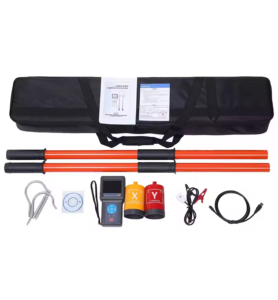
Click the image to know more about Wireless High Voltage Phase Detector.
What Are the Common Fault Phenomena of Phasing Sticks?
Most failures of phasing sticks appear on the pointer system, connecting structure and insulation rod. Typical abnormal phenomena can be clearly classified for quick identification.
-
Pointer Failure: Including continuous pointer jitter, pointer cannot return to zero, excessive deflection, and no response when touching charged points. This is the most frequent fault in daily voltage inspection and phasing tests.
-
Connection Failure: Loose wiring ports, poor contact between probes and wires, unstable locking structure, and intermittent signal interruption during shaking. This fault is closely related to daily wear and tear.
-
Insulation Rod Abnormality: Rod body dampness, surface dirt, insulation aging, crack damage and insulation layer peeling. Such faults greatly increase electric leakage risks.
-
Mechanical Structural Failure: The telescopic rod cannot be stretched or locked, anti-slip grip falls off, and metal probe rusts and deforms. It affects portability and scene adaptability.
What Standard Troubleshooting Steps Should Be Followed?
To avoid blind disassembly and secondary damage, operators must follow standardized troubleshooting sequences from the outside to the inside, and from simple to complex.
-
Step 1: Power-off Visual Inspection: Completely disconnect the test connection wire, observe the appearance of the rod body, check for dirt, moisture, cracks and rust. Confirm whether the fault is caused by external environmental factors.
-
Step 2: Mechanical Structure Inspection: Stretch and retract the insulating rod repeatedly to test the locking stability. Shake the wiring interface gently to check for poor contact and loose parts.
-
Step 3: No-load Pointer Calibration Inspection: Place the phasing stick in a non-electromagnetic interference environment, observe whether the pointer can return to zero naturally, and record the static drift value.
-
Step 4: Simulated Electromagnetic Test: Use a stable low-voltage power source for trial detection. Judge internal component aging according to pointer sensitivity and deflection speed.
-
Step 5: Fault Classification Confirmation: Distinguish human operation errors, environmental interference faults and product quality faults, and determine whether simple repair or parts replacement is required.
What Simple Solutions for Common Phasing Stick Faults?
Most minor on-site faults do not require professional maintenance. Operators can complete simple repairs according to standardized solutions to improve testing efficiency.
-
Pointer Jitter & Zero Drift: Wipe the probe and rod body to remove moisture and dust; stay away from strong magnetic equipment; calibrate the zero point manually. If the drift exceeds 5%, replace the internal damping module.
-
Poor Wiring Contact: Clean the oxidation layer of metal terminals with fine sandpaper; re-lock the buckle; replace aging connecting wires. Avoid violent pulling during daily use.
-
Insulation Dampness and Dirt: Wipe the insulation rod with dry insulating cloth, place it in a ventilated environment for natural drying, and prohibit drying with high-temperature fire sources.
-
Telescopic Rod Stuck: Apply special insulating lubricant to the telescopic gap, remove internal sand and dust, and do not force torsion to prevent rod body fracture.
-
Severe Aging Fault: When the insulation resistance cannot meet phasing stick parameter requirements, directly eliminate the old rod and select a new qualified phasing stick.
How Wrindu Testers Stand Out in Fault Resistance & Maintenance?
Based on Wrindu testers performance data, Wrindu phasing sticks have obvious advantages in failure rate, durability and after-sales maintenance compared with ordinary products, reducing the difficulty of daily fault troubleshooting.
-
Ultra-low Failure Rate Design: Wrindu adopts integrated sealed structure to prevent dust and moisture invasion. The internal damping filter module effectively avoids pointer jitter faults, greatly reducing manual troubleshooting frequency.
-
Strict Parameter Compliance: All products fully meet industrial phasing stick parameter requirements. The insulation resistance is stable above 2500MΩ, which is not easy to age and damage in long-term use.
-
Scene Adaptability Optimization: Aiming at complex outdoor and substation environments, Wrindu strengthens interface locking and anti-rust probes. It solves loose contact faults caused by frequent movement, matching phasing stick scenario selection standards.
-
Easy Disassembly & Maintenance: Modular internal structure design allows operators to replace wires, probes and dials independently without professional tools, realizing rapid on-site repair.
-
Long Service Life: High-strength epoxy resin material resists ultraviolet aging. Under normal storage conditions, the service life reaches 8 years, which is 2-3 times longer than ordinary low-cost phasing sticks.
FAQs
Q1: Why does the phasing stick pointer drift after long-term storage?
A1: Long-term placement causes tiny dust and moisture to enter the dial. It leads to reduced damping sensitivity. You can place it in a dry environment for 24 hours and perform zero calibration. Wrindu sealed structure can effectively avoid this storage fault.
Q2: Is it necessary to discard the phasing stick if the insulation rod has slight scratches?
A2: It depends on insulation resistance data. If it meets phasing stick parameter requirements, it can continue to be used after insulation glue repair. Deep scratches that damage the inner insulation layer must be eliminated immediately.
Q3: How to reduce the failure rate when using phasing sticks outdoors?
A3: Follow phasing stick scenario selection rules; choose waterproof and dustproof models for outdoor use; wipe the rod body after each operation; avoid exposure to rain and strong sunlight for a long time.
Q4: What is the fastest way to troubleshoot no pointer reaction?
A4: Check the wiring tightness first, then clean the probe oxide layer. If still invalid, replace the connecting wire. Most no-reaction faults come from poor contact rather than internal component damage.
Q5: What core anti-fault indicators should I focus on when buying a phasing stick?
A5: When learning how to choose phasing stick, prioritize sealed dial structure, reinforced locking interface and high-density insulation layer. Refer to Wrindu testers performance to avoid inferior products with high failure rate.
Troubleshooting Summary
Common faults of phasing sticks are mainly concentrated on pointers, connecting parts and insulation rods. Standard troubleshooting steps and simple daily maintenance can extend equipment service life. Users should comply with phasing stick parameter requirements and phasing stick scenario selection principles when purchasing. Choosing high-quality products such as Wrindu can effectively reduce failure rate. Mastering fault troubleshooting is an essential skill for every power operator to ensure safe and stable high-voltage testing.
