

Why Is Battery Conductance Testing Becoming More Important in Modern Power Systems
Learn how battery conductance testing measures internal health, detects weak cells, and ensures reliable performance for automotive, UPS, EV, and industrial battery systems. Discover tools, methods, and FAQs for accurate SOH monitoring.
Battery conductance testing is now widely used in electric vehicles, substations, telecom systems, UPS backup systems, and renewable energy storage. Unlike traditional load testing, conductance testing quickly checks battery health without fully discharging the battery.
This fast and non-destructive method helps engineers identify weak batteries early, reduce downtime, and improve system reliability.
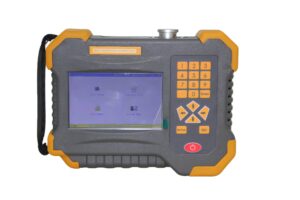
Click the image to know more about Battery Impedance Tester.
What Does Battery Conductance Actually Mean?
Battery conductance describes how easily electrical current flows inside a battery. A battery with high conductance can deliver power efficiently, while low conductance usually means aging, sulfation, corrosion, or internal damage.
In simple terms:
- Higher conductance = healthier battery
- Lower conductance = weaker battery performance
Because conductance is closely related to battery capacity and internal condition, it has become an important indicator for battery maintenance programs.
How Does Battery Conductance Testing Work?
A conductance tester sends a small AC signal through the battery and measures how the battery responds. The process takes only a few seconds and does not damage the battery.
Modern testers automatically analyze:
- Battery conductance
- Internal resistance
- State of Health (SOH)
- Temperature influence
- Battery condition trends
Compared with traditional discharge testing, conductance testing is faster and safer for large battery systems.
Why Are Utilities and Data Centers Using Conductance Testing?
Large power systems depend heavily on reliable backup batteries. A single failed battery can affect the entire system.
Industries using battery conductance testing include:
| Industry | Main Purpose |
|---|---|
| Data Centers | UPS backup reliability |
| Power Utilities | Substation battery maintenance |
| Telecom | Emergency power verification |
| EV Fleets | Battery health monitoring |
| Renewable Energy | Energy storage system maintenance |
Routine conductance checks help reduce unexpected battery failures and maintenance costs.
What Problems Can Battery Conductance Testing Detect?
Conductance testing helps identify common battery problems such as:
- Sulfation
- Plate corrosion
- Dry-out condition
- Loose internal connections
- Capacity reduction
- Weak cells inside battery strings
Early detection prevents sudden failures and improves operational safety.
Why Is Conductance Testing Better Than Voltage Checks?
Voltage alone cannot accurately show battery condition. A battery may show normal voltage while still having poor capacity.
| Testing Method | Main Limitation |
|---|---|
| Voltage Test | Cannot fully show battery health |
| Load Test | Time-consuming and stressful |
| Conductance Test | Fast and accurate SOH indication |
Conductance testing gives a more realistic picture of battery performance under operating conditions.
How Often Should Battery Conductance Testing Be Performed?
Testing frequency depends on application importance.
General recommendations:
- Critical UPS systems: every 3 months
- Substation batteries: every 6 months
- EV fleet batteries: monthly trend checks
- Industrial backup systems: annually or semi-annually
Trend analysis over time is more valuable than a single test result.
What Features Should a Good Battery Conductance Tester Have?
Modern battery conductance testers should include:
- Temperature compensation
- Digital display
- Data storage
- Multi-battery support
- Portable design
- High noise rejection capability
Wrindu develops professional battery diagnostic equipment for industrial, utility, and renewable energy applications worldwide.
How Is AI Changing Battery Conductance Monitoring?
New battery diagnostic systems now combine conductance testing with:
- AI prediction models
- Cloud monitoring platforms
- Wireless battery management
- Smart maintenance alerts
These technologies help operators predict battery failures before they happen.
FAQs
Q1: What does low battery conductance mean?
A1: Low conductance usually indicates battery aging, sulfation, corrosion, or reduced capacity.
Q2: Is battery conductance testing safe?
A2: Yes. Conductance testing uses a small AC signal and does not damage the battery.
Q3: Can conductance testing replace load testing?
A3: In many routine maintenance applications, conductance testing is faster and more practical, but some systems may still require load testing.
Q4: Which batteries can be tested with conductance methods?
A4: Lead-acid, AGM, GEL, and some lithium-ion batteries can all be tested.
Q5: Why is conductance testing important for UPS systems?
A5: It helps identify weak batteries before backup power failure occurs.
Q6: Can conductance testing predict battery failure?
A6: Yes. Trending conductance values over time helps detect early battery degradation.
Q7: What industries use battery conductance testing the most?
A7: Utilities, telecom, data centers, EV fleets, renewable energy plants, and industrial facilities.
Q8: How long does a conductance test take?
A8: Most tests are completed within a few seconds.
Q9: What is the difference between conductance and resistance testing?
A9: Conductance testing focuses on current-carrying capability, while resistance testing mainly measures opposition to current flow.
Q10: Can conductance testing improve battery lifespan?
A10: Yes. Early fault detection helps prevent overuse, overheating, and unexpected battery failures.
