

What Is the Difference Between Transformer Type Testing and Factory Acceptance Testing (FAT)
Learn the key differences between transformer type testing and factory acceptance testing (FAT). Understand their purpose, timing, standards, test items, and why both are essential for transformer quality, safety, and performance in substations and industrial power systems.
Transformer testing is an important part of power equipment manufacturing and quality control. Among all transformer tests, Type Testing and Factory Acceptance Testing (FAT) are two of the most important procedures.
Although both tests evaluate transformer performance and safety, their purpose, timing, standards, and testing scope are very different.
Understanding these differences helps utilities, EPC contractors, manufacturers, and industrial users improve transformer reliability and reduce operational risks.
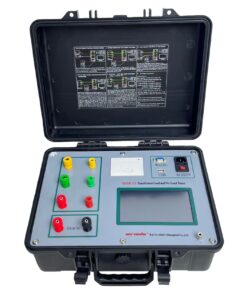
Clcik the image to know more about Wrindu Transformer No-load and Load Loss Tester.
Why Is Transformer Testing Important?
Transformers operate in critical power systems such as substations, renewable energy plants, factories, and transmission networks.
Testing helps verify:
- Electrical performance
- Insulation condition
- Mechanical strength
- Manufacturing quality
- Operational safety
Without proper testing, hidden defects may lead to transformer failure, costly downtime, or grid instability.
What Is Transformer Type Testing?
Transformer Type Testing is a complete performance verification test used to confirm whether a transformer design meets international standards and technical requirements.
Type testing is usually performed:
- After developing a new transformer design
- When major design changes occur
- When changing materials or manufacturing processes
The purpose is to validate the transformer design itself rather than checking a single production unit.
What Is Factory Acceptance Testing (FAT)?
Factory Acceptance Testing (FAT) is performed before the transformer leaves the factory.
The goal is to verify that the manufactured transformer matches:
- Contract specifications
- Customer requirements
- Production quality standards
FAT focuses more on manufacturing quality and installation condition rather than full design validation.
What Is the Main Difference Between Type Testing and FAT?
| Item | Type Testing | Factory Acceptance Testing (FAT) |
|---|---|---|
| Main Purpose | Verify transformer design | Verify production quality |
| Testing Time | During product development | Before shipment |
| Test Scope | Full performance evaluation | Routine quality inspection |
| Performed By | Independent laboratories or manufacturers | Manufacturer with customer witness |
| Standard Basis | IEC / IEEE standards | Contract + factory standards |
| Frequency | Only for specific designs | Every transformer unit |
Which Tests Are Included in Transformer Type Testing?
Type testing usually includes advanced performance and stress tests.
Common tests include:
Insulation Tests
- Lightning impulse withstand test
- Power frequency withstand test
- Partial discharge test
Thermal Tests
- Temperature rise test
- Cooling performance evaluation
Mechanical Tests
- Short-circuit withstand capability test
- Winding deformation analysis
Electrical Performance Tests
- No-load loss measurement
- Load loss measurement
- Short-circuit impedance measurement
- Harmonic current measurement
These tests verify whether the transformer can operate safely under severe conditions.
What Tests Are Included in FAT?
Factory Acceptance Testing normally includes routine inspection and basic electrical verification.
Typical FAT items include:
- Visual inspection
- Dimensional inspection
- Winding DC resistance test
- Turns ratio test
- Insulation resistance measurement
- Auxiliary equipment inspection
- Cooling system check
- Tap changer operation test
FAT ensures the transformer is correctly assembled and ready for delivery.
Why Are International Standards Important for Transformer Testing?
Transformer tests are usually based on international standards such as:
| Standard | Main Purpose |
|---|---|
| IEC 60076 | Power transformer testing requirements |
| IEEE standards | Transformer performance and insulation testing |
| Factory specifications | Customer or project requirements |
These standards help guarantee testing consistency, product reliability, and safety.
Who Participates in Transformer FAT?
Factory Acceptance Testing is commonly attended by:
- Transformer manufacturer
- Utility engineers
- Third-party inspectors
- EPC contractors
- End users
Customer participation allows direct inspection before shipment.
Why Is FAT Important for Utilities and EPC Projects?
FAT helps reduce project risk by identifying problems before installation.
Benefits include:
- Early defect detection
- Reduced commissioning delays
- Better quality control
- Lower maintenance costs
- Improved transformer reliability
For large substations and renewable energy projects, FAT is often mandatory.
How Are Type Testing and FAT Connected?
Type testing proves the transformer design is reliable.
FAT confirms each manufactured unit follows that approved design and meets customer requirements.
Both tests work together to improve transformer safety and operational performance.
Why Are Digital Transformer Test Systems Becoming Popular?
Modern transformer testing equipment now supports:
- Automatic report generation
- Digital waveform analysis
- Real-time monitoring
- Data storage and export
- Remote diagnostics
Wrindu develops intelligent transformer testing equipment for substations, manufacturers, utilities, and industrial power systems worldwide.
FAQs
Q1: What is the purpose of transformer type testing?
A1: Type testing verifies whether a transformer design meets international standards and performance requirements.
Q2: What is the purpose of Factory Acceptance Testing (FAT)?
A2: FAT checks manufacturing quality and confirms the transformer meets contract requirements before shipment.
Q3: Is FAT performed on every transformer?
A3: Yes. FAT is usually carried out for every transformer before delivery.
Q4: Is type testing required for every transformer?
A4: No. Type testing is normally required only for new designs or major design changes.
Q5: Which standards are commonly used for transformer testing?
A5: IEC 60076 and IEEE transformer standards are widely used internationally.
Q6: What is checked during transformer FAT?
A6: FAT includes visual inspection, electrical routine tests, insulation checks, and auxiliary equipment inspection.
Q7: Why is short-circuit testing important in type testing?
A7: It verifies the transformer’s ability to withstand fault currents and mechanical stress.
Q8: Can customers attend Factory Acceptance Testing?
A8: Yes. Utilities and project owners often witness FAT before shipment approval.
Q9: What happens if a transformer fails FAT?
A9: The manufacturer must repair or correct the issue before delivery.
Q10: Why are digital transformer test systems becoming more common?
A10: Digital systems improve testing accuracy, automation, reporting efficiency, and data management.
