

What is Series Resonance-A Simple Guide for High Voltage Testing
Learn what series resonance is in simple terms and how AC resonance test systems work in high-voltage testing. Discover the working principle, resonant frequency formula, key components, advantages, and applications in cable, transformer, and GIS insulation testing.
Series resonance is a key concept in electrical testing, especially in high-voltage systems. Although it sounds complex, it’s actually straightforward: it’s a condition where an inductor and a capacitor in a series circuit perfectly balance each other, allowing maximum current and high voltage in the circuit.
Series resonance is widely used in testing power transformers, cables, GIS equipment, and other high-voltage devices.
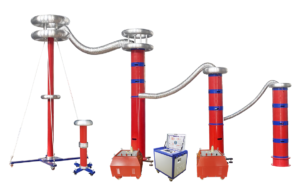
Click the image to know more about Series Resonance Withstand Voltage Test Device.
What Does Series Resonance Mean?
Series resonance happens when the inductive reactance equals the capacitive reactance in a series circuit. At this point:
- The circuit’s total impedance is at its lowest.
- Current reaches its maximum value.
- Voltage across the test object can be amplified several times.
The frequency at which this occurs is called the resonant frequency, calculated as:
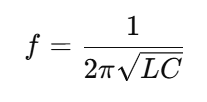
[
f = \frac{1}{2\pi \sqrt{LC}}
]
Where L is inductance and C is capacitance.
How Does Series Resonance Create High Voltage?
Why can a low-power source generate very high voltage?
In a series resonant circuit:
- Inductor and capacitor cancel each other’s reactance.
- Circuit current increases without needing huge input power.
- Voltage is amplified across the test device (like a cable or transformer).
This amplification is determined by the quality factor (Q):
- High Q → higher voltage amplification
- Low Q → less amplification
This is why series resonance is ideal for high-voltage testing without massive power supplies.
What Are the Applications of Series Resonance in Power Systems?
Series resonance is commonly used for AC withstand voltage testing of:
- High-voltage cables (6kV–500kV)
- Transformers
- GIS and SF6 switchgear
- Large generators and busbars
Traditional AC testers struggle with these high-capacitance devices. Series resonance allows testers to safely reach the required test voltage efficiently.
How Does a Series Resonance Test System Work?
A series resonance test system typically includes:
- Variable Frequency Power Supply – Adjusts the voltage and frequency to find the resonant point.
- Excitation Transformer – Boosts the voltage to the level required by the test object.
- HV Reactor – Helps tune the resonance and improves waveform quality.
- High Voltage Divider – Measures the voltage safely and accurately.
Step by step process:
- Adjust the frequency to reach resonance.
- Tune the output voltage to achieve the desired test voltage.
- Perform the AC withstand test while monitoring current and voltage.
What Are the Advantages of Series Resonance Testing?
- High efficiency: Produces high voltage without excessive power.
- Safe and reliable: Overvoltage, overcurrent, and discharge protections included.
- Portable: Lightweight, compact design for on-site testing.
- Accurate: Real-time waveform display and data printing for documentation.
FAQs About Series Resonance
Q: Can series resonance damage equipment?
A: No, if done correctly, the system protects both the equipment and the operator with safety features like overcurrent and discharge protection.
Q: Why not use regular AC testers for high-voltage equipment?
A: High-capacitance devices need very high voltage that traditional testers cannot safely supply. Series resonance achieves this efficiently.
Q: What is the difference between series and parallel resonance?
A: Series resonance maximizes current, while parallel resonance maximizes impedance and voltage in a parallel circuit.
Series resonance may seem complicated, but its principle is simple: matching the inductor and capacitor in series to create a powerful, efficient high-voltage test system. For high-voltage cables, transformers, and switchgear, it is the preferred method to ensure insulation safety and system reliability.
