

How Do You Test Phase Shift in Special Transformers?
Understand how transformer phase shift is tested in special transformers. This guide explains measurement methods, vector groups like Dyn11, testing tools such as TTR analyzers, and how phase shift impacts harmonic performance in power systems.
What Is Phase Shift in Transformers?
Phase shift is the angular difference between primary and secondary voltages. In special transformers, this is intentionally designed to control harmonics and power flow.
Why Is Phase Shift Critical in Converter Transformers?
Phase shift is essential because:
- It enables multi-pulse rectifier operation (6, 12, 24, 36 pulse systems)
- It reduces harmonic distortion
- It improves power quality in HV systems
Incorrect phase shift reduces system efficiency.
How Is Phase Shift Created in Special Transformers?
Phase shift is achieved using:
- Delta and star winding combinations
- Extended delta configurations
- Polygon or modified delta connections
- Tap changer adjustments
Some designs include ±7.5° or ±15° additional shifts.
How Is Phase Shift Measured On-Site?
Common methods include:
1. Single-phase voltage method
- Apply low voltage to primary
- Measure secondary voltage
- Compare phase relationships manually
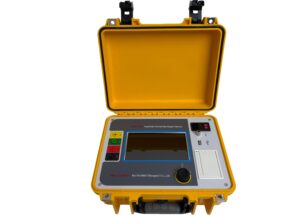
2. TTR tester method
- Automatic ratio + phase angle measurement
- No manual calculation required
- High accuracy and faster testing
3. Three-phase power method
- Apply balanced three-phase voltage
- Measure phase angles with analyzers
- Used mainly in laboratory conditions
What Problems Can Affect Phase Shift Accuracy?
Phase shift deviation may occur due to:
- Tap position changes
- Winding asymmetry
- Transport vibration
- Manufacturing tolerances
Even small deviations can affect harmonic suppression.
What Happens If Phase Shift Is Incorrect?
If phase shift is wrong:
- Harmonic reduction becomes ineffective
- Rectifier switching becomes unbalanced
- System losses increase
- Power quality drops
FAQs
Q1: What is normal phase shift in Dyn11 transformer?
Typically around 30° (11 o’clock vector position).
Q2: Can phase shift change during operation?
Yes, especially when tap changers are adjusted.
Q3: Which test is most accurate?
Modern TTR testers with IEC 61378-1 compliance.
Q4: Is manual testing still used?
Yes, but it is slower and more error-prone.
Q5: Why do special transformers use non-standard phase shifts?
To support multi-pulse converter and harmonic reduction systems.
