

What Should You Know About Battery Technology?
Explore key stationary battery technologies including lead-acid, lithium-ion, flow batteries, sodium-ion, and nickel-based systems. Learn working principles, applications, advantages, disadvantages, and why battery testing is critical for reliable grid storage and renewable energy systems.
As the world transitions toward renewable energy and smart grid storage, understanding the mechanics of stationary batteries becomes essential. Every battery type possesses distinct traits tailored for specific roles, ranging from backup power systems to grid stabilization.
Before diving into individual chemistries, it is important to note that all batteries are electrochemical devices. Because they rely on chemical reactions, temperature plays a critical role in their performance:
-
High temperatures accelerate degradation and shorten overall operational life.
-
Low temperatures temporarily reduce capacity and lower power output.
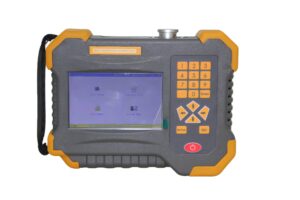
Click the image to know more about Battery Impedance Tester.
Why Are Lead-Acid Batteries Still Around?
Lead-acid batteries represent one of the oldest and most field-tested storage technologies available, boasting over a century of use in automotive, uninterruptible power supplies (UPS), and off-grid setups.
How Do They Work?
They generate power through a chemical reaction between a lead dioxide positive pole, a sponge lead negative pole, and a sulfuric acid electrolyte.
What Formats Do They Come In?
-
Vented Lead-Acid (VLA): Often called flooded batteries, these require regular water top-offs.
-
Valve-Regulated Lead-Acid (VRLA): Sealed units—including Absorbent Glass Mat (AGM) and Gel types—that operate on low electrolyte levels and require routine monitoring.
Where Are They Used?
-
Emergency backup for data centers and telecommunications.
-
Grid-tied and independent renewable energy storage.
-
Uninterruptible Power Supplies (UPS) and EV charging stations.
-
Starter batteries for internal combustion engines.
What Are Their Pros and Cons?
-
The Good: Highly affordable initial cost, exceptionally mature technology with a vast support history, and an impressive near-100% recycling rate. They are also relatively forgiving when accidentally overcharged.
-
The Bad: Low energy density (requiring substantial physical space) and a shorter lifespan, particularly if they are frequently subjected to deep discharges.
How Have Lithium-Ion Batteries Changed Energy Storage?
Thanks to their superior energy density and high operational efficiency, lithium-ion systems have completely transformed the energy landscape, becoming dominant in electric vehicles, consumer electronics, and grid storage.
How Do They Work?
These batteries utilize a lithium compound for the positive electrode, graphite for the negative electrode, and a lithium salt dissolved in an organic solvent as the electrolyte.
What Formats Do They Come In?
-
Lithium Nickel Manganese Cobalt Oxide (NMC): Balances power output with energy capacity.
-
Lithium Iron Phosphate (LFP): Prized for its enhanced safety profile and long operational life.
-
Lithium Nickel Cobalt Aluminum Oxide (NCA): Delivers exceptionally high energy density.
-
Lithium Manganese Oxide (LMO): Offers strong thermal stability.
Where Are They Used?
-
Large-scale grid stabilization and energy storage.
-
Electric and hybrid vehicles (EVs/HEVs).
-
Residential and commercial building power backup.
-
Smartphones, laptops, and cordless power tools.
What Are Their Pros and Cons?
-
The Good: Lightweight and compact due to high energy density, a long cycle life spanning thousands of charges, low self-discharge rates, fast-charging capabilities, and absolutely no memory effect.
-
The Bad: Higher upfront investment, potential risk of thermal runaway (fire hazards), and accelerated aging in high-temperature environments. They also require highly complex Battery Management Systems (BMS) to regulate safety and balance cell voltage.
Could Flow Batteries Be the Ultimate Solution for Large Grids?
Flow batteries feature a unique design where energy is stored externally in liquid electrolytes, allowing power output and energy capacity to be scaled independently.
How Do They Work?
The most widespread configuration is the Vanadium Redox Flow Battery (VRFB), which utilizes vanadium ions at varying oxidation states. Other variations include zinc-bromine and iron-chromium chemistries.
Where Are They Used?
-
Massive industrial energy storage plants.
-
Microgrids and remote, off-grid power stations.
What Are Their Pros and Cons?
-
The Good: They can withstand thousands of cycles without degrading, suffer no damage when completely discharged, and carry a very low fire risk because the water-based electrolyte is non-flammable. Scaling capacity is as simple as installing larger liquid tanks.
-
The Bad: They have a low energy density (requiring a massive physical footprint), involve high initial equipment costs, and utilize complex mechanical pump systems that carry a risk of electrolyte leaks.
Are Sodium-Ion Batteries the Sustainable Alternative We Need?
As an emerging alternative to lithium, sodium-ion technology leverages abundant, inexpensive materials to create a more sustainable footprint for future storage projects.
How Do They Work?
They mirror the working principle of lithium-ion batteries but swap out lithium for sodium ions. The architecture typically uses a layered metal oxide cathode and a hard carbon anode.
Where Are They Used?
-
Macro-grid storage installations.
-
Commercial and residential energy management.
-
Electric mobility and evolving consumer electronics.
What Are Their Pros and Cons?
-
The Good: Built from highly abundant and cheap raw materials, making them eco-friendly, non-toxic, and easy to recycle. Furthermore, they can be completely discharged to zero volts for safe transport and logistics.
-
The Bad: They offer lower energy density than lithium, making them less ideal for compact devices. Because the technology is still in the early stages of commercialization, it lacks a proven long-term track record in real-world, large-scale deployment.
When Are Nickel-Based Batteries Still Useful?
While less common in brand-new commercial installations, nickel-based batteries remain highly valued in legacy systems and harsh environments where absolute ruggedness is mandatory.
How Do They Work?
They feature a positive electrode made of nickel oxide hydroxide ($\text{NiOOH}$). During discharge, this material reduces to nickel hydroxide, while the negative electrode oxidizes—a process perfectly reversed during recharging.
What Formats Do They Come In?
-
Nickel-Cadmium (NiCd): Legendary for its mechanical and thermal durability.
-
Nickel-Metal Hydride (NiMH): Provides better energy density without relying on toxic heavy metals.
Where Are They Used?
-
Industrial emergency backup systems.
-
Railway signaling networks.
-
Aviation engine starters and critical backup power.
-
Telecommunications infrastructure.
What Are Their Pros and Cons?
-
The Good: Extremely resilient to physical stress and capable of enduring thousands of operational cycles over many years under harsh conditions.
-
The Bad: Lower energy density compared to modern alternatives, vulnerability to the “memory effect” (requiring deliberate full discharges to maintain capacity), and severe environmental restrictions due to the toxic cadmium found in NiCd cells.
Why Is Rigorous Battery Testing Crucial?
Deploying a battery system is only half the battle; maintaining it requires a customized diagnostics strategy tailored to its specific chemistry to ensure safety and longevity.
-
Lead-Acid Diagnostics: Demands frequent specific gravity measurements of the acid, capacity discharge tests, and ohmic resistance inspections.
-
Lithium-Ion Diagnostics: Relies on cutting-edge internal impedance monitoring and status tracking to catch cellular degradation before it triggers a failure.
-
Flow Battery Diagnostics: Combines standard electrical checks with chemical analysis of the liquid electrolyte to maintain the correct balance.
Implementing a strict testing routine prevents unexpected power failures, optimizes management algorithms, and protects your financial investment by maximizing the system’s operational lifespan.
FAQs
How does ambient temperature affect the capacity versus the lifespan of a stationary battery?
There is an inverse relationship between temperature benefits. Warm environments temporarily boost chemical activity, giving you higher immediate capacity and power output, but they permanently shorten the battery’s overall lifespan by accelerating internal degradation. Conversely, cold environments protect the battery’s long-term health but temporarily limit the amount of power it can discharge.
Why does a Battery Management System (BMS) add so much complexity to a lithium-ion setup?
Unlike lead-acid batteries, which can tolerate minor overcharging, lithium-ion cells are highly sensitive. A BMS is mandatory because it monitors every individual cell’s voltage, temperature, and current. It prevents dangerous conditions like thermal runaway (fires), guards against capacity-destroying deep discharges, and dynamically balances the cells to ensure uniform aging.
Can flow batteries actually be scaled up in capacity without changing the core power components?
Yes, this is the defining structural advantage of flow batteries. In standard solid-state batteries, adding capacity means adding more entire cell blocks (which increases both power and energy simultaneously). In a flow battery, the power output (kW) is determined by the size of the electrochemical cell stack, while the energy capacity (kWh) is determined solely by the volume of the liquid electrolyte tanks. To store more hours of energy, you simply install larger fluid tanks without buying a new cell stack.
What makes sodium-ion batteries significantly safer and cheaper to transport than lithium-ion batteries?
Lithium-ion batteries retain a volatile electrical charge during shipping; if they short-circuit, they can catch fire, making them hazardous cargo. Sodium-ion batteries, however, can be legally and safely discharged down to a completely inert zero-volt state for transit. Additionally, because sodium is globally abundant (derived from common salt) and doesn’t require expensive, supply-constrained metals like lithium or cobalt, its raw material pipeline is inherently cheaper and more stable.
