

Transformer Bushing Insulation Diagnosis: What Can Frequency Domain Dielectric Response Testing Reveal?
Learn how frequency domain dielectric response testing helps diagnose transformer bushing insulation conditions, detect moisture, evaluate aging, and improve high-voltage equipment reliability.
Why Is Transformer Bushing Insulation Testing Important?
Transformer bushings are critical components that connect internal transformer windings with external high-voltage systems.
Although bushings are smaller than transformers, their insulation condition directly affects transformer safety and grid reliability.
A bushing failure may cause:
- Transformer shutdown
- Power supply interruption
- Fire or explosion risk
- Expensive equipment damage
Many bushing failures develop gradually due to:
- Moisture penetration
- Insulation aging
- Oil deterioration
- Partial discharge activity
- Internal dielectric degradation
Therefore, regular bushing insulation diagnosis is essential for high-voltage equipment maintenance.
Traditional tests such as capacitance and tan delta measurement can identify some insulation problems. However, modern utilities require more detailed information about internal insulation conditions.
Frequency Domain Dielectric Response (FDS/DFR) testing provides deeper analysis by evaluating insulation behavior across a wide frequency range.
The RDGYB-JD1000 Frequency Domain Dielectric Response Insulation Diagnostic Analyzer integrates FDS and PDC technologies and can analyze high-voltage equipment including transformers, bushings, inductors, and instrument transformers.
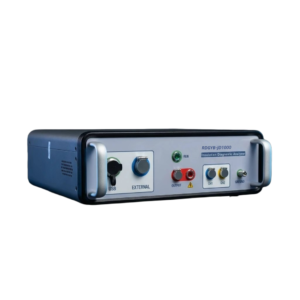
Click the image to know more about Wrindu Frequency Domain Dielectric Response Insulation Diagnostic Analyzer.
What Makes Transformer Bushing Insulation Difficult to Diagnose?
Why Can Bushing Failures Be Hard to Detect Early?
Transformer bushings usually contain complex insulation structures.
Common bushing types include:
- Oil-impregnated paper (OIP)
- Resin-impregnated paper (RIP)
- Resin-impregnated synthetic insulation (RIS)
Inside a bushing, insulation layers must withstand:
- High voltage stress
- Thermal cycling
- Environmental changes
- Mechanical vibration
Small defects may develop slowly before causing obvious symptoms.
For example:
- A small amount of moisture may reduce insulation performance.
- Aging products may increase dielectric losses.
- Local defects may change polarization behavior.
Because early problems are difficult to observe visually, advanced electrical diagnosis methods are required.
Why Are Traditional Bushing Capacitance and Tan Delta Tests Sometimes Limited?
Can One Tan Delta Measurement Fully Evaluate Bushing Condition?
Tan delta testing is one of the most common methods for bushing assessment.
It measures dielectric loss at a specific frequency and helps identify:
- Insulation contamination
- Aging
- Moisture influence
However, a single-frequency measurement may not provide complete information about:
- Moisture distribution
- Internal insulation condition
- Polarization characteristics
- Aging mechanism
Two bushings may have similar tan delta values but different internal conditions.
Frequency Domain Dielectric Response testing solves this limitation by analyzing the complete dielectric response curve.
How Does Frequency Domain Dielectric Response Testing Work for Bushings?
What Information Does FDS Provide During Bushing Testing?
FDS measures insulation characteristics at multiple frequencies.
During testing, the analyzer evaluates:
- Capacitance
- Dielectric loss
- Frequency response behavior
- Polarization characteristics
The measurement results provide information about:
- Insulation structure
- Moisture condition
- Oil conductivity
- Aging characteristics
The RDGYB-JD1000 supports a frequency range of 0.1 mHz to 10 kHz, allowing detailed analysis of insulation behavior.
What Can FDS Reveal About Transformer Bushing Insulation?
Can Frequency Response Detect Hidden Bushing Problems?
Yes.
FDS analysis can reveal insulation problems that may not be obvious from conventional testing.
It can help identify:
Moisture in Insulation Paper
Moisture changes dielectric response characteristics, especially in low-frequency areas.
Oil Condition Changes
Changes in oil conductivity may indicate insulation liquid degradation.
Uneven Moisture Distribution
Some bushings may experience localized moisture accumulation because of their internal structure.
Insulation Aging
Long-term operation changes the dielectric properties of insulation materials.
The RDGYB-JD1000 software can analyze:
- Cellulose moisture content
- Insulation liquid conductivity
- Uneven moisture distribution
- Dielectric loss characteristics
How Does Moisture Affect Transformer Bushing Performance?
Why Is Moisture One of the Main Causes of Bushing Aging?
Moisture is a major factor affecting oil-paper insulated bushings.
When moisture enters insulation materials, it can cause:
Reduced Electrical Strength
Wet insulation has lower breakdown resistance.
Increased Dielectric Loss
More energy is converted into heat during operation.
Faster Aging
Chemical and thermal degradation processes become faster.
Higher Failure Probability
Severe moisture conditions may lead to insulation breakdown.
Because moisture often exists inside solid insulation, direct detection is difficult.
FDS provides a non-destructive method to evaluate moisture-related changes.
How Can FDS Testing Identify Uneven Moisture Distribution?
Why Is Moisture Distribution Important in Bushing Diagnosis?
Moisture is not always evenly distributed inside insulation.
Some areas may become wetter because of:
- Temperature differences
- Insulation structure
- Aging processes
- Environmental conditions
Uneven moisture distribution can create local weak points.
For bushings with complex insulation structures, identifying moisture distribution is valuable for maintenance decisions.
The RDGYB-JD1000 provides uneven moisture distribution analysis to help identify localized insulation problems.
What Does a Real 220kV Transformer Bushing FDS Test Show?
How Was Frequency Domain Testing Applied in a High-Voltage Substation?
A field comparison test was performed on the middle-voltage side bushings of a 220kV transformer.
The test object was:
- 220kV transformer
- Oil-paper insulated bushing
- C, B, and A phase bushings
The testing evaluated:
- Capacitance
- Dielectric loss
- Cellulose moisture content
- Insulation oil conductivity
The test demonstrated that frequency domain dielectric response technology could provide detailed insulation condition information for high-voltage bushings.
What Were the Key Findings From the Bushing Comparison Test?
Did FDS Provide Reliable Insulation Evaluation Results?
The comparison test showed that different dielectric response analyzers provided similar conclusions regarding major insulation indicators.
The evaluation included:
- Power frequency capacitance
- Dielectric loss
- Paper moisture content
- Oil condition
For example, one tested bushing showed:
- Similar capacitance values
- Similar dielectric loss results
- Consistent cellulose moisture evaluation
The results confirmed the practical value of dielectric response testing for bushing condition assessment.
Why Is Low-Frequency Stability Important During Bushing Testing?
Why Does Low-Frequency Measurement Quality Affect Diagnosis Accuracy?
Low-frequency measurements contain important information about:
- Moisture
- Polarization
- Insulation aging
However, low-frequency testing is more sensitive to:
- Electromagnetic interference
- Environmental noise
- Measurement stability
During field testing, strong interference may affect measurement curves and analysis accuracy.
The comparison report showed the importance of low-frequency data stability and interference resistance when performing dielectric response diagnosis in substations.
How Does RDGYB-JD1000 Improve Bushing Insulation Testing?
What Features Help Engineers Perform Reliable Field Diagnosis?
The RDGYB-JD1000 is designed for high-voltage equipment condition assessment.
Important features include:
Integrated FDS and PDC Technologies
Combining two diagnostic methods provides more complete insulation information.
Wide Frequency Range
The analyzer supports:
- 0.1 mHz–10 kHz measurement range
- Multi-frequency analysis
Advanced Software Analysis
The software provides:
- Test project management
- Connection diagrams
- Real-time data display
- Automatic analysis reports
Strong Field Adaptability
The instrument provides:
- Portable design
- Noise-resistant measurement
- High-voltage substation application capability
How Can FDS Testing Improve Bushing Maintenance Decisions?
Can Frequency Domain Testing Help Prevent Unexpected Bushing Failure?
Yes.
FDS provides information that supports condition-based maintenance.
Instead of replacing bushings based only on operating years, utilities can make decisions based on actual insulation condition.
Testing results can help determine:
Continue Operation
When insulation condition remains healthy.
Increase Monitoring
When early degradation indicators appear.
Perform Maintenance
When moisture or aging becomes significant.
Replace Equipment
When insulation deterioration reaches critical levels.
What Are the Benefits of Regular Transformer Bushing Diagnosis?
Why Should Utilities Include FDS Testing in Maintenance Programs?
Regular bushing diagnosis helps:
Improve Equipment Reliability
Early detection reduces unexpected failures.
Extend Service Life
Proper maintenance prevents unnecessary replacement.
Reduce Downtime
Planned maintenance is safer than emergency repair.
Improve Asset Management
Condition data supports better investment decisions.
FAQs
What is transformer bushing insulation testing?
Transformer bushing insulation testing evaluates the electrical condition of bushing insulation systems to identify aging, moisture, and other defects.
What tests are commonly used for transformer bushings?
Common tests include:
- Capacitance measurement
- Tan delta testing
- Insulation resistance testing
- Frequency domain dielectric response testing
Why is FDS useful for bushing diagnosis?
FDS provides multi-frequency analysis and can evaluate moisture, oil conductivity, and insulation aging characteristics.
Can FDS detect moisture inside transformer bushings?
Yes. FDS analysis can estimate moisture content in cellulose insulation and identify moisture-related insulation changes.
What frequency range is used for bushing FDS testing?
The RDGYB-JD1000 supports a frequency range from 0.1 mHz to 10 kHz for dielectric response analysis.
How often should transformer bushings be tested?
Testing frequency depends on:
- Equipment age
- Voltage level
- Operating conditions
- Previous test results
Can FDS testing replace tan delta testing?
FDS does not replace tan delta testing completely. Instead, it provides additional diagnostic information for deeper insulation evaluation.
What information does an FDS report include?
An FDS report may include:
- Capacitance
- Dielectric loss
- Moisture assessment
- Oil conductivity
- Insulation condition evaluation
Conclusion
Transformer bushings are critical components that require accurate insulation diagnosis.
Traditional capacitance and tan delta tests provide valuable information, but frequency domain dielectric response testing offers a deeper understanding of insulation behavior.
By evaluating:
- Moisture condition
- Dielectric response characteristics
- Oil conductivity
- Insulation aging
FDS technology helps utilities detect problems earlier and improve high-voltage equipment reliability.
The RDGYB-JD1000 provides a comprehensive solution for transformer bushing insulation diagnosis and supports modern condition-based maintenance strategies.
