

How Does Polarization Depolarization Current Testing Evaluate Transformer Insulation Condition?
Learn how Polarization Depolarization Current (PDC) testing evaluates transformer insulation condition, detects moisture, analyzes aging, and supports predictive maintenance.
Transformer insulation plays a critical role in ensuring reliable power system operation.
During long-term service, insulation materials gradually deteriorate because of:
- Thermal stress
- Moisture absorption
- Oxidation
- Electrical aging
These factors can reduce insulation performance and increase the possibility of transformer failure.
Traditional insulation resistance tests provide basic information about insulation condition, but they may not fully reveal polarization behavior, moisture influence, and aging characteristics.
Polarization Depolarization Current (PDC) testing is an advanced dielectric response method that evaluates insulation condition by analyzing current changes during charging and discharging processes.
The Wrindu RDGYB-JD1000 Frequency Domain Dielectric Response Insulation Diagnostic Analyzer supports PDC analysis, helping engineers obtain deeper information about transformer insulation health.
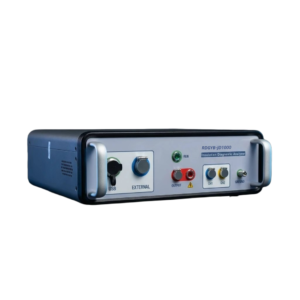
Click the image to know more about Wrindu Frequency Domain Dielectric Response Insulation Diagnostic Analyzer.
What Is Polarization Depolarization Current (PDC) Testing?
Polarization Depolarization Current testing is a dielectric response measurement method based on time-domain analysis.
The principle is to observe how insulation materials respond when a DC voltage is applied and removed.
The test includes two main stages:
Polarization Stage
During polarization:
- A DC voltage is applied to transformer insulation.
- The insulation absorbs electrical energy.
- The charging current changes over time.
The measured polarization current provides information about:
- Insulation conductivity
- Moisture condition
- Polarization characteristics
Depolarization Stage
During depolarization:
- The applied voltage is removed.
- The remaining discharge current is measured.
This current represents the release of stored electrical energy inside the insulation.
The depolarization current provides additional information about:
- Dielectric absorption behavior
- Insulation aging condition
- Internal polarization processes
How Does PDC Measure Transformer Insulation Condition?
PDC evaluates insulation condition by analyzing current curves over time.
Healthy insulation usually shows stable polarization characteristics.
When insulation deteriorates, the PDC curve may change because of:
- Increased moisture
- Higher conductivity
- Aging of cellulose materials
Engineers analyze parameters such as:
- Polarization current curve
- Depolarization current curve
- Current decay rate
- Conductivity characteristics
These results help determine whether insulation performance has changed.
Why Is Polarization Current Important for Transformer Diagnosis?
Polarization current reflects how charges move inside insulation materials.
Transformer insulation contains multiple dielectric layers, including:
- Paper insulation
- Pressboard
- Transformer oil
When a DC voltage is applied, different polarization processes occur at different speeds.
By measuring polarization current, engineers can understand:
- Insulation structure characteristics
- Moisture influence
- Aging effects
A higher polarization current may indicate increased moisture or insulation degradation.
What Information Can Depolarization Current Provide?
Depolarization current shows how insulation releases stored electrical energy after voltage removal.
It can reveal:
- Dielectric absorption characteristics
- Insulation recovery behavior
- Aging-related changes
Compared with a simple insulation resistance measurement, depolarization analysis provides more detailed information about insulation behavior over time.
How Does PDC Detect Moisture in Transformer Insulation?
Moisture affects the conductivity and polarization process of cellulose insulation.
When moisture increases:
- Polarization current becomes higher
- Current decay characteristics change
- Insulation response becomes different
By analyzing PDC curves, engineers can estimate moisture influence inside solid insulation materials.
This is especially useful for large transformers where internal moisture cannot be directly inspected.
How Does PDC Evaluate Transformer Aging?
Transformer aging mainly affects cellulose insulation.
During aging:
- Cellulose molecules break down
- Insulation structure changes
- Electrical characteristics deteriorate
PDC testing can identify aging trends by comparing:
- Current measurement results
- Historical test data
- Reference insulation models
This helps engineers evaluate whether insulation remains suitable for continued operation.
What Are the Advantages of PDC Testing Compared with Traditional Methods?
| Testing Method | Main Information |
|---|---|
| Insulation Resistance Test | Basic insulation resistance value |
| Polarization Index Test | Absorption ratio over time |
| PDC Test | Detailed polarization and depolarization behavior |
Compared with traditional methods, PDC provides:
- Time-dependent insulation information
- Better moisture evaluation capability
- More detailed aging analysis
How Does RDGYB-JD1000 Support PDC Insulation Diagnosis?
The Wrindu RDGYB-JD1000 integrates advanced dielectric response technologies for transformer condition assessment.
Its PDC functions help engineers analyze:
- Polarization current
- Depolarization current
- Insulation moisture influence
- Aging characteristics
The analyzer combines PDC and FDS technologies, allowing users to evaluate insulation from both time-domain and frequency-domain perspectives.
When Should Engineers Perform PDC Testing?
PDC testing is recommended for:
Aging Power Transformers
For transformers with long operating periods, PDC helps identify insulation deterioration risks.
Transformers with Possible Moisture Problems
PDC provides valuable information about moisture influence inside cellulose insulation.
Transformers After Abnormal Operation
After:
- Overloading
- High-temperature operation
- Electrical stress events
PDC testing can help evaluate possible insulation damage.
What Are the Practical Applications of PDC Testing?
PDC testing is commonly used for:
- Power transformers
- Distribution transformers
- Transformer bushings
- High-voltage insulation systems
Typical applications include:
- Factory acceptance testing
- Maintenance inspection
- Aging assessment
- Condition monitoring
FAQs
Q1: What is Polarization Depolarization Current testing?
A: PDC testing is a dielectric response method that evaluates insulation condition by measuring current changes during polarization and depolarization processes.
Q2: What can PDC testing detect in transformers?
A: PDC can help detect moisture influence, insulation aging, conductivity changes, and abnormal dielectric behavior.
Q3: How does PDC detect transformer moisture?
A: Moisture changes insulation conductivity and polarization characteristics. PDC identifies these changes by analyzing polarization and depolarization current curves.
Q4: Is PDC testing better than insulation resistance testing?
A: PDC provides more detailed information about insulation behavior, while insulation resistance testing mainly provides a basic insulation value.
Q5: Can PDC testing evaluate transformer aging?
A: Yes. PDC can identify aging-related changes by analyzing insulation polarization behavior and comparing historical test data.
Q6: Why combine PDC and FDS testing?
A: PDC provides time-domain information, while FDS provides frequency-domain analysis. Combining both methods gives a more complete insulation assessment.
Conclusion
Polarization Depolarization Current testing provides valuable information about transformer insulation condition by analyzing electrical behavior over time.
Unlike traditional insulation tests, PDC can reveal moisture influence, polarization characteristics, and aging trends.
By integrating PDC technology with FDS analysis, the Wrindu RDGYB-JD1000 Frequency Domain Dielectric Response Insulation Diagnostic Analyzer provides engineers with a comprehensive solution for transformer insulation evaluation and predictive maintenance.
