

FDS vs PDC Testing: What Is the Difference Between Two Dielectric Response Methods?
Learn the differences between Frequency Domain Dielectric Response (FDS) and Polarization Depolarization Current (PDC) testing. Understand how both methods evaluate transformer insulation condition.
Transformer insulation diagnosis has become increasingly important as power equipment continues to operate under higher loads and longer service periods.
Traditional electrical tests can provide basic information, but modern transformer maintenance requires deeper analysis to understand insulation condition, aging trends, and potential risks.
Two widely used dielectric response technologies are:
- Frequency Domain Dielectric Response (FDS)
- Polarization Depolarization Current (PDC)
Both methods analyze insulation characteristics, but they evaluate the dielectric behavior from different perspectives.
Understanding the difference between FDS and PDC helps engineers select the right diagnostic method and achieve more accurate transformer condition assessment.
The Wrindu RDGYB-JD1000 Frequency Domain Dielectric Response Insulation Diagnostic Analyzer integrates both FDS and PDC technologies, providing a comprehensive solution for transformer insulation evaluation.
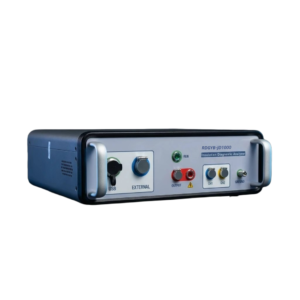
Click the image to know more about Wrindu Frequency Domain Dielectric Response Insulation Diagnostic Analyzer.
Why Are Dielectric Response Methods Used for Transformer Diagnosis?
Transformer insulation is a complex system consisting of:
- Cellulose materials
- Insulating oil
- Composite dielectric structures
During operation, insulation performance changes because of:
- Thermal stress
- Electrical stress
- Moisture influence
- Natural aging
The challenge is that insulation deterioration does not always create immediate failures.
Before breakdown occurs, insulation may already show changes in:
- Polarization behavior
- Dielectric loss
- Conductivity characteristics
Dielectric response methods provide additional diagnostic information by analyzing these electrical behaviors.
What Is Frequency Domain Dielectric Response (FDS) Testing?
Frequency Domain Dielectric Response testing evaluates insulation characteristics by measuring electrical responses at different frequencies.
Instead of observing insulation behavior only at one frequency point, FDS creates a frequency-dependent response curve.
The analysis focuses on:
- Dielectric loss variation
- Capacitance characteristics
- Frequency response behavior
Different frequency regions reveal different insulation information.
For example:
- Higher frequencies reflect fast dielectric responses
- Lower frequencies provide information related to slower polarization processes
FDS is widely used for:
- Transformer insulation evaluation
- Moisture condition assessment
- Aging analysis
The RDGYB-JD1000 supports a broad frequency measurement range from 0.1mHz to 10kHz, enabling detailed dielectric response analysis.
What Is Polarization Depolarization Current (PDC) Testing?
PDC testing evaluates insulation behavior by observing current changes during polarization and depolarization processes.
The basic process includes:
Polarization Stage
A DC voltage is applied to the insulation system.
The instrument records the charging current response over time.
Depolarization Stage
After removing the voltage, the remaining discharge current is measured.
The current behavior provides information about:
- Insulation polarization characteristics
- Dielectric absorption behavior
- Aging condition
PDC is especially useful for studying time-dependent insulation behavior.
What Are the Main Differences Between FDS and PDC?
Although both methods belong to dielectric response testing technology, their measurement approaches are different.
| Comparison | FDS | PDC |
|---|---|---|
| Measurement Domain | Frequency domain | Time domain |
| Testing Signal | AC voltage | DC voltage |
| Main Output | Frequency response curve | Polarization current curve |
| Analysis Method | Frequency characteristics | Time response behavior |
| Typical Application | Detailed dielectric analysis | Insulation condition evaluation |
FDS vs PDC: Which Method Provides Better Insulation Information?
There is no single method that is suitable for every diagnostic requirement.
Each technology has different advantages.
Advantages of FDS Testing
FDS provides:
- Wide frequency analysis
- Detailed dielectric characteristics
- Strong sensitivity to insulation changes
It is especially useful when engineers need to understand:
- Moisture influence
- Dielectric loss changes
- Frequency-dependent behavior
Advantages of PDC Testing
PDC provides:
- Time-based polarization information
- Direct observation of absorption and recovery behavior
- Useful insulation condition indicators
It is valuable for:
- Aging evaluation
- Comparative diagnosis
- Research analysis
Why Combine FDS and PDC Testing?
FDS and PDC analyze different aspects of insulation behavior.
Using only one method may provide incomplete information.
By combining both technologies, engineers can obtain:
- Frequency response characteristics
- Time response behavior
- More comprehensive insulation evaluation
The RDGYB-JD1000 integrates FDS and PDC technologies in one system, allowing users to perform multiple dielectric response analyses with a single instrument.
How Does RDGYB-JD1000 Support Both FDS and PDC Analysis?
The RDGYB-JD1000 is designed as a complete dielectric response diagnostic platform.
Its capabilities include:
Multiple Diagnostic Functions
The system combines:
- Frequency Domain Dielectric Response analysis
- Polarization Depolarization Current testing
This allows engineers to select the appropriate analysis method according to equipment condition.
Advanced Data Analysis
The analyzer supports evaluation of:
- Insulation characteristics
- Moisture influence
- Aging trends
- Dielectric behavior changes
The system can analyze cellulose moisture content, oil conductivity, and insulation distribution conditions through advanced models.
Application Flexibility
The technology can be applied to:
- Power transformers
- Transformer bushings
- Current transformers
- Rotating machines
- High-voltage cables
When Should Engineers Choose FDS Testing?
FDS is suitable when:
- Detailed insulation characteristics are required
- Moisture assessment is important
- Long-term aging evaluation is needed
- Frequency response analysis is required
Typical applications:
- Large power transformers
- Aging transformer assessment
- Research testing
When Should Engineers Choose PDC Testing?
PDC is suitable when:
- Time-domain insulation behavior needs evaluation
- Polarization characteristics are important
- Comparative diagnosis is required
Typical applications:
- Condition assessment
- Insulation research
- Maintenance evaluation
How Do FDS and PDC Support Predictive Maintenance?
Modern transformer maintenance is moving from scheduled maintenance toward condition-based maintenance.
Dielectric response technologies help engineers:
- Identify abnormal insulation behavior
- Monitor aging development
- Reduce unexpected failures
By understanding insulation trends, utilities can make better decisions regarding:
- Repair
- Replacement
- Continued operation
Practical Example: Selecting the Right Dielectric Response Method
For a newly installed transformer:
Focus:
- Establish baseline insulation condition
Recommended approach:
- FDS analysis
- Basic dielectric measurements
For an aging transformer:
Focus:
- Identify deterioration risks
Recommended approach:
- Combined FDS and PDC diagnosis
For a transformer with suspected moisture problems:
Focus:
- Evaluate insulation condition changes
Recommended approach:
- FDS-based analysis combined with insulation modeling
FAQs
What is the difference between FDS and PDC?
FDS analyzes insulation response in the frequency domain, while PDC evaluates insulation behavior through current changes over time.
Is FDS better than PDC testing?
Neither method is universally better. They provide different information, and combining both can achieve more complete diagnosis.
Why does RDGYB-JD1000 use both FDS and PDC?
Because different insulation problems appear differently in frequency and time domains. Combining both methods improves diagnostic accuracy.
Can FDS and PDC detect transformer aging?
Yes. Both technologies can provide information related to insulation degradation and aging behavior.
Which equipment can use FDS and PDC testing?
These methods are commonly used for transformers, bushings, current transformers, and other high-voltage insulation systems.
Conclusion
FDS and PDC are two important technologies for modern transformer insulation diagnosis.
FDS provides frequency-based dielectric analysis, while PDC focuses on time-dependent polarization characteristics.
Rather than replacing each other, these methods complement one another.
By integrating both technologies, the Wrindu RDGYB-JD1000 Frequency Domain Dielectric Response Insulation Diagnostic Analyzer provides engineers with a powerful solution for evaluating transformer insulation condition, supporting predictive maintenance, and improving power system reliability.
