

How Can Dielectric Response Testing Improve Transformer Predictive Maintenance Strategies?
Learn how dielectric response testing with FDS and PDC technologies helps monitor transformer insulation, detect aging, and improve predictive maintenance.
Transformer failures can cause serious power system interruptions and expensive maintenance costs.
As transformers operate for many years, insulation systems gradually deteriorate due to:
- Thermal aging
- Moisture contamination
- Electrical stress
- Oil degradation
- Overloading conditions
Traditional maintenance methods mainly rely on scheduled inspections or basic electrical tests. However, these methods may not always detect early insulation problems before failure occurs.
Modern power utilities are moving toward predictive maintenance, which uses condition monitoring technologies to identify potential risks before equipment failure.
Dielectric Response Testing, including Frequency Domain Dielectric Response (FDS) and Polarization Depolarization Current (PDC) analysis, provides deeper information about transformer insulation condition.
The Wrindu RDGYB-JD1000 Frequency Domain Dielectric Response Insulation Diagnostic Analyzer combines FDS and PDC technologies to support advanced transformer condition assessment and predictive maintenance.
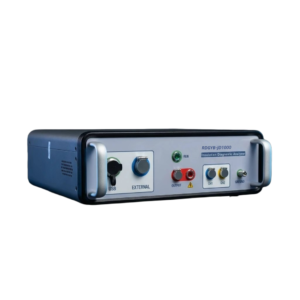
Click the image to know more about Wrindu Frequency Domain Dielectric Response Insulation Diagnostic Analyzer.
Why Is Predictive Maintenance Important for Power Transformers?
Power transformers are critical assets in electrical networks.
Unexpected transformer failures may result in:
- Unplanned power outages
- High repair costs
- Long equipment downtime
- Safety risks
Traditional maintenance strategies usually include:
- Regular visual inspection
- Scheduled testing
- Periodic component replacement
However, these methods may not accurately reflect the actual insulation condition.
Predictive maintenance focuses on:
- Real-time equipment condition
- Early fault identification
- Long-term aging trends
This approach helps utilities make better maintenance decisions.
What Role Does Transformer Insulation Condition Play in Predictive Maintenance?
Transformer insulation is one of the most important factors affecting transformer reliability.
The insulation system determines:
- Electrical strength
- Operating lifetime
- Failure probability
When insulation begins to deteriorate, changes may appear in:
- Dielectric properties
- Moisture content
- Polarization behavior
- Conductivity characteristics
Detecting these changes early allows engineers to take preventive actions before major failures occur.
How Does Dielectric Response Testing Support Predictive Maintenance?
Dielectric Response Testing evaluates insulation behavior by measuring electrical responses under different conditions.
It provides information about:
- Moisture condition
- Insulation aging
- Dielectric loss changes
- Polarization characteristics
Unlike traditional tests that provide limited data, dielectric response methods analyze insulation characteristics in more detail.
The collected data helps engineers:
- Identify abnormal conditions
- Compare historical performance
- Predict insulation deterioration trends
How Does FDS Help Improve Transformer Maintenance Decisions?
Frequency Domain Dielectric Response (FDS) analyzes insulation behavior across a wide frequency range.
It helps detect:
Moisture Problems
Moisture affects dielectric response, especially at low frequencies.
FDS analysis can reveal moisture influence inside cellulose insulation.
Aging Trends
Aging changes insulation structure and dielectric characteristics.
By comparing FDS curves over time, engineers can monitor insulation degradation.
Abnormal Insulation Conditions
Changes in dielectric loss or frequency response may indicate possible insulation problems.
This information helps determine whether further inspection is needed.
How Does PDC Testing Support Transformer Condition Monitoring?
Polarization Depolarization Current (PDC) testing evaluates insulation behavior over time.
It measures:
- Polarization current
- Depolarization current
- Charge absorption characteristics
PDC provides information about:
- Insulation conductivity
- Moisture influence
- Dielectric absorption behavior
By analyzing PDC results, engineers can better understand insulation aging processes and identify early degradation.
Why Combine FDS and PDC for Transformer Diagnosis?
FDS and PDC provide different perspectives on insulation behavior.
FDS focuses on:
- Frequency response characteristics
- Dielectric loss changes
- Moisture evaluation
PDC focuses on:
- Time-dependent polarization behavior
- Charge movement
- Insulation absorption characteristics
By combining both methods, engineers can obtain a more complete understanding of transformer insulation condition.
The Wrindu RDGYB-JD1000 integrates both technologies, allowing comprehensive insulation diagnosis with one testing system.
How Can Dielectric Response Testing Reduce Transformer Failure Risks?
Dielectric response testing helps reduce risks by identifying insulation problems before serious damage occurs.
It supports:
Early Problem Detection
Engineers can identify abnormal insulation behavior at an early stage.
Better Maintenance Planning
Testing results help determine whether a transformer requires:
- Further monitoring
- Repair
- Oil treatment
- Replacement planning
Reduced Unexpected Downtime
By understanding insulation condition, utilities can avoid sudden transformer failures.
When Should Utilities Perform Dielectric Response Testing?
During Commissioning of New Transformers
Testing establishes baseline insulation data for future comparison.
During Regular Maintenance
Periodic testing helps track insulation condition changes over time.
After Severe Operating Conditions
Testing is recommended after:
- Overload operation
- High-temperature events
- Long-term heavy loading
Before Extending Transformer Service Life
For aging transformers, dielectric response testing helps evaluate whether continued operation is safe.
How Does RDGYB-JD1000 Support Modern Transformer Maintenance?
The Wrindu RDGYB-JD1000 is designed for advanced transformer insulation assessment.
Key features include:
- FDS and PDC measurement capabilities
- Wide frequency response analysis
- Insulation condition evaluation
- Moisture and aging assessment
The system helps engineers transform traditional maintenance into data-driven predictive maintenance.
Practical Example: How Dielectric Response Testing Helps Maintenance Decisions
Scenario 1: New Transformer Installation
Goal:
Establish initial insulation condition.
Recommended Testing:
- Dielectric response measurement
- Baseline data recording
Future test results can be compared with initial data.
Scenario 2: Aging Transformer in Operation
Goal:
Evaluate remaining insulation condition.
Recommended Testing:
- FDS analysis
- PDC testing
- Historical data comparison
Results help determine whether continued operation is suitable.
Scenario 3: Transformer with Possible Moisture Problems
Goal:
Check insulation deterioration risk.
Recommended Testing:
- FDS moisture evaluation
- PDC polarization analysis
This helps identify internal insulation problems without dismantling the transformer.
FAQs
Q1: Why is dielectric response testing important for transformer maintenance?
A: It provides detailed information about insulation condition, helping engineers detect problems early and improve maintenance decisions.
Q2: Can dielectric response testing prevent transformer failures?
A: It cannot completely prevent failures, but it helps identify insulation deterioration risks before serious damage occurs.
Q3: What information can dielectric response testing provide?
A: It can provide information about moisture condition, insulation aging, dielectric loss, and polarization characteristics.
Q4: How often should transformers receive dielectric response testing?
A: Testing frequency depends on transformer age, operating conditions, importance, and maintenance strategy.
Q5: What is the advantage of combining FDS and PDC?
A: FDS analyzes frequency behavior, while PDC evaluates time response. Combining both provides a more complete insulation assessment.
Q6: Which transformers benefit most from dielectric response testing?
A: Large power transformers, aging transformers, and critical substation transformers benefit significantly from this diagnostic method.
Conclusion
Dielectric Response Testing provides a powerful approach for modern transformer predictive maintenance.
By analyzing insulation behavior through FDS and PDC technologies, engineers can detect moisture, monitor aging trends, and make better maintenance decisions.
The Wrindu RDGYB-JD1000 Frequency Domain Dielectric Response Insulation Diagnostic Analyzer combines advanced diagnostic methods to help utilities improve transformer reliability, reduce unexpected failures, and extend equipment service life.
