

CT Testing Checklist for Substation Maintenance Teams
Learn a practical CT testing checklist for substation maintenance, including inspection steps, key tests, records, and tips for reliable operation.
Why Do Substation Maintenance Teams Need CT Testing?
Current transformers (CTs) work continuously in substations to provide current signals for protection and measurement systems.
During long-term operation, CT performance may change because of:
- Equipment aging
- Environmental conditions
- Loose connections
- Increased secondary load
- Electrical stress
Regular CT testing helps maintenance teams find potential problems before they affect substation operation.
A clear testing checklist allows engineers to complete inspections in a more organized way.
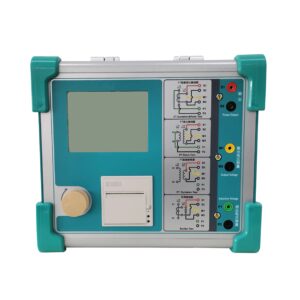
Click the image to know more about Wrindu CT and PT Analyzer.
When Should Engineers Perform CT Testing During Maintenance?
CT testing is not only required during initial commissioning.
Maintenance teams usually perform CT tests during:
- Scheduled maintenance
- Equipment upgrades
- Protection system checks
- Fault investigation
- After long-term operation
The testing frequency depends on:
- Utility maintenance plans
- Equipment condition
- Operating environment
- Project requirements
What Should Be Included in a CT Maintenance Checklist?
1. Check CT Technical Information
Before testing, engineers should confirm the basic CT information.
The checklist should include:
- Manufacturer
- Model number
- Serial number
- Primary current rating
- Secondary current rating
- Accuracy class
- Rated burden
- Installation location
Correct equipment information helps engineers compare test results accurately.
2. Perform Visual Inspection
A physical inspection is the first step of CT maintenance.
Engineers should check:
- CT body condition
- Insulation surface
- Terminal condition
- Cable connection
- Grounding connection
- Signs of overheating or damage
Visual inspection can help identify external problems before electrical testing.
3. Verify Secondary Circuit Condition
The CT secondary circuit directly affects measurement accuracy.
Maintenance teams should check:
- Terminal tightness
- Cable condition
- Connection points
- Shorting devices
- Grounding arrangement
Poor secondary connections may increase resistance and affect CT performance.
Which CT Tests Should Be Included in Maintenance?
CT Ratio Verification
The ratio test checks whether the CT still provides the correct current transformation.
Engineers compare:
- Measured ratio
- Rated ratio
- Previous test results
A significant change may indicate:
- Wiring problems
- Internal damage
- Incorrect connections
CT Polarity Verification
Polarity testing confirms that the CT sends current signals in the correct direction.
This check is important for:
- Differential protection
- Directional protection
- Metering systems
Incorrect polarity may affect relay operation.
CT Secondary Resistance Test
Resistance testing evaluates the condition of the secondary winding and circuit.
Engineers should compare resistance values between:
- Different phases
- Previous inspection records
- Manufacturer specifications
An abnormal value may indicate:
- Loose terminals
- Cable problems
- Winding issues
CT Burden Measurement
Burden testing checks the actual load connected to the CT secondary circuit.
The checklist should include:
- Relay load
- Meter load
- Cable resistance
- Total secondary burden
A burden value above the CT rating may reduce accuracy.
Excitation and Knee Point Testing
These tests help evaluate CT magnetic performance.
They are especially important for protection CTs.
Engineers use them to check:
- Core condition
- Saturation performance
- Fault current response
Changes in excitation characteristics may indicate aging or core problems.
How Should Engineers Record CT Maintenance Results?
Create Complete Test Reports
A good CT maintenance report should include:
- Equipment information
- Testing date
- Test method
- Test equipment
- Measured values
- Engineer comments
Complete records help teams understand CT condition over time.
Compare Current Results With Previous Data
Single test results may not show the complete condition.
Engineers should compare:
- Current test results
- Previous maintenance records
- Similar CT units
Trend analysis helps identify gradual performance changes.
Store Digital Testing Data
Modern maintenance teams increasingly use digital records.
A digital CT analyzer can store:
- Test results
- Measurement curves
- Equipment information
- Generated reports
This makes future inspections easier.
How Can a CT Analyzer Improve Maintenance Efficiency?
Traditional CT maintenance may require several instruments for different tests.
A multifunction CT analyzer combines several functions into one system.
It helps engineers complete:
- Ratio testing
- Polarity testing
- Excitation testing
- Knee point testing
- Resistance measurement
- Burden testing
Additional functions include:
- Automatic calculation
- Digital storage
- Report generation
This reduces manual work during maintenance inspections.
What Problems Can CT Maintenance Testing Find?
Regular CT testing helps identify:
Incorrect Ratio Performance
A ratio change may affect measurement and protection accuracy.
Polarity Errors
Wrong polarity may cause incorrect relay signals.
Core Saturation Problems
Poor excitation performance may reduce protection reliability.
Secondary Circuit Issues
High resistance or excessive burden may affect CT operation.
Aging Problems
Long-term changes may indicate the need for further inspection.
How Can Maintenance Teams Improve CT Testing Quality?
Follow a Standard Testing Process
A consistent workflow helps reduce missed inspection items.
The process should include:
- Preparation
- Safety checks
- Visual inspection
- Electrical testing
- Result evaluation
- Report storage
Use Suitable Testing Equipment
The CT analyzer should match the application requirements.
Engineers should consider:
- Testing functions
- Measurement range
- Accuracy
- Data management features
The right equipment helps improve testing reliability.
Keep Historical Maintenance Records
Long-term data helps engineers make better maintenance decisions.
Records can show:
- Performance changes
- Aging trends
- Repeated problems
This supports condition-based maintenance strategies.
CT Maintenance Testing FAQs
How often should maintenance teams test CTs?
The testing schedule depends on equipment condition, utility requirements, and maintenance plans.
What should engineers check before CT testing?
Engineers should check CT information, safety conditions, wiring, and test equipment before starting.
Which CT tests are important during maintenance?
Common tests include ratio, polarity, resistance, burden, excitation, and knee point tests.
Can CT testing detect aging problems?
Yes. Changes in resistance, excitation performance, and burden may indicate equipment aging.
Why should engineers keep CT test records?
Historical records help teams compare performance and identify long-term changes.
Can one CT analyzer complete maintenance testing?
Many multifunction CT analyzers can complete multiple CT tests with one instrument.
