

How Does Moisture Affect Transformer Oil BDV Test Results?
Learn how moisture affects transformer oil breakdown voltage, how to check water content, and which tests help identify the causes of low BDV results.
Moisture is an important factor in transformer oil insulation performance. Water in insulating oil can reduce its breakdown voltage, but the effect depends on the amount and state of the water, oil temperature, and the presence of other contaminants.
A low breakdown voltage (BDV) result can indicate a moisture problem, but it does not prove that moisture is the only cause. Engineers should combine BDV measurements with moisture analysis and other relevant test results.
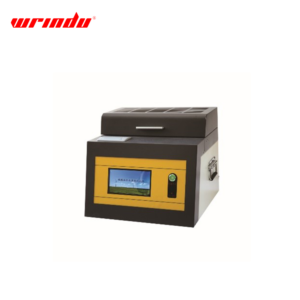
Click the image to know more about Wrindu Oil BDV Tester.
How Does Moisture Reduce Transformer Oil BDV?
Transformer oil provides electrical insulation between energized components. Water can change the electrical behavior of the insulating liquid and contribute to electrical breakdown under test conditions.
The effect depends on how water exists in the oil. Water may be dissolved in the liquid, associated with aging products, or present with solid particles such as cellulose fibers.
Moisture can also move between transformer oil and solid insulation as temperature changes. Therefore, an oil sample does not always show the total moisture condition of the transformer insulation system.
Can Moisture Cause a Low Transformer Oil BDV Result?
Yes. Moisture can contribute to a low BDV result, especially when it occurs with particles or other contaminants. ASTM D1816 specifically identifies sensitivity to moisture in solution, particularly when cellulosic fibers are present.
However, moisture is not the only possible cause. Dirty electrodes, air bubbles, sample contamination, and incorrect test conditions can also affect the measured result.
Engineers should not decide to dry or replace transformer oil based on one low BDV reading alone. First, verify the test procedure and investigate other possible causes.
How Can You Tell Whether Moisture Is Affecting BDV?
The most useful approach is to compare BDV results with a separate water content measurement. Karl Fischer titration, covered by ASTM D1533 for water in insulating liquids, is commonly used to determine water content. The result is generally reported in mg/kg, equivalent to ppm by mass.
| Test | What it measures | What it helps identify |
|---|---|---|
| BDV test | Breakdown voltage in kV | Resistance to electrical breakdown under specified conditions |
| Water content test | Water concentration in mg/kg or ppm by mass | Amount of water in the tested oil sample |
| Dissipation factor | Electrical energy loss under an applied field | Changes associated with contamination or deterioration |
| Acidity test | Acid content in mg KOH/g | Chemical changes related to oil aging |
These tests measure different properties and should not replace one another. A low BDV result combined with elevated water content provides stronger evidence of a moisture-related problem than BDV alone, but the full test conditions still matter.
Does Oil Temperature Affect Moisture Test Results?
Yes. Water solubility in insulating oil depends on temperature, oil type, and oil condition. As temperature changes, the distribution of water between the oil and solid insulation can also change.
For this reason, engineers should record sampling conditions and the test temperature where required. Water concentration in ppm and relative water saturation are different measures, so they should not be treated as interchangeable.
A single ppm value cannot fully describe the moisture condition of a transformer insulation system. For an accurate assessment, consider oil temperature, transformer operating conditions, and moisture in the solid insulation.
What Should You Do When Transformer Oil BDV Is Low?
Follow a consistent troubleshooting procedure before making maintenance decisions.
| Step | Action | Purpose |
|---|---|---|
| 1 | Review sample identification and collection records | Confirm that the sample represents the intended equipment |
| 2 | Inspect the test cell and electrodes | Identify contamination or setup problems |
| 3 | Repeat the test using the same required method | Check whether the low result is repeatable |
| 4 | Measure water content | Determine the amount of water in the oil sample |
| 5 | Review other oil test results | Check for additional signs of contamination or deterioration |
| 6 | Compare with historical results and applicable limits | Identify changes and assess their significance |
Do not change the test standard between measurements without documenting the change. Different procedures may produce results that cannot be compared directly.
When Should Transformer Oil Be Dried or Filtered?
Oil treatment should depend on the confirmed condition of the oil and the applicable maintenance requirements. Drying can reduce moisture, while filtration can remove certain suspended contaminants; the appropriate treatment depends on the problem being addressed.
Filtration alone does not necessarily remove dissolved water. If moisture is the main concern, engineers should select a suitable drying or oil-processing method and verify its effectiveness through follow-up testing.
The treatment decision should also consider the condition of the transformer’s solid insulation. Oil treatment does not automatically correct moisture held in paper insulation or resolve every underlying equipment problem.
Can a Wrindu Oil BDV Tester Measure Water Content?
An oil BDV tester measures breakdown voltage under its supported test conditions. It does not directly quantify water content unless the equipment includes a separate, specifically documented moisture measurement function.
The Wrindu RDJJD-100kV Oil BDV Tester can be evaluated for breakdown voltage testing. Its detailed standard support and measurement functions still require confirmation, so buyers should consult Wrindu’s product documentation before purchase.
For moisture diagnosis, confirm that the laboratory also has access to an appropriate water content test method, such as Karl Fischer analysis.
What Are the Main Lessons About Moisture and Transformer Oil BDV?
Moisture can reduce the breakdown voltage of transformer oil, but a low BDV result does not identify the cause on its own. Reliable diagnosis requires consistent BDV testing, appropriate moisture measurement, and consideration of temperature and sample condition.
Engineers should verify unusual results before choosing oil treatment or other corrective action. Combining test methods provides a more useful assessment than relying on one measurement alone.
