

How to Manage PCB-Contaminated Transformer Oil: Storage, Handling, and Disposal Requirements
Learn how to manage PCB-contaminated transformer oil, including waste classification, storage, transportation, treatment, and disposal requirements in major markets.
Why Does PCB-Contaminated Transformer Oil Need Special Waste Management?
PCB-contaminated transformer oil cannot automatically enter ordinary used-oil recycling systems.
PCBs are persistent organic pollutants. Improper handling or disposal can release these compounds into soil, water, and other environmental media.
The Stockholm Convention requires environmentally sound management of PCB-containing waste. Its international framework sets 2028 as an important target for the environmentally sound management of PCB waste.
The correct management route depends on PCB concentration, waste classification, and local environmental legislation.
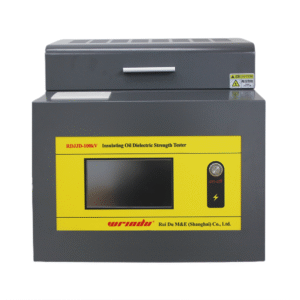
Click the image to know more about Wrindu Oil BDV Tester.
Which Transformer Oil Materials May Become PCB-Contaminated Waste?
PCB contamination may affect both liquid and solid materials associated with transformer maintenance.
| Material | Possible contamination source |
|---|---|
| Transformer insulating oil | Original PCB-containing fluid |
| Waste oil | Drainage from contaminated equipment |
| Flushing solvent | Contact with PCB residues |
| Oil filters | Retained contaminated oil |
| Gaskets and seals | Contact with insulating fluid |
| Cleaning cloths | Oil absorption during maintenance |
| Internal insulation | Long-term contact with PCB-containing oil |
Each waste stream should be assessed under the applicable waste classification procedure.
A laboratory result for transformer oil should not automatically be used to classify every solid component without considering the relevant sampling and assessment requirements.
How Should PCB-Contaminated Transformer Oil Be Stored?
PCB waste should be stored in a controlled area with suitable containment and identification.
Storage conditions must comply with the applicable local regulations.
| Storage requirement | Management purpose |
|---|---|
| Compatible sealed containers | Prevent leakage |
| Secondary containment | Control accidental spills |
| Weather protection | Prevent environmental exposure |
| Clear identification | Prevent mixing with ordinary oil |
| Restricted access | Control unauthorized handling |
| Waste inventory | Maintain quantity and storage records |
| Emergency materials | Support spill response |
In the United States, 40 CFR §761.65 establishes storage-for-disposal requirements for regulated PCB waste.
For applicable storage units, the regulation specifies a roof and walls, a containment floor, and minimum containment capacity based on the volume of stored PCB articles or containers.
How Are PCB-Contaminated Transformer Oil and Equipment Classified in Different Countries?
Waste classification should be based on the applicable national regulations rather than a single global concentration threshold.
| Market | Relevant regulatory framework | Important reference |
|---|---|---|
| United States | TSCA | 40 CFR Part 761 |
| India | Regulation of PCBs Order, 2016 | Environment (Protection) Act, 1986 |
| Vietnam | Environmental protection legislation and national PCB management plan | Decision 1598/QĐ-TTg and applicable waste regulations |
India’s 2016 Order distinguishes PCB-containing equipment at 500 mg/kg or above from PCB-contaminated equipment at 50 mg/kg to below 500 mg/kg.
Vietnam’s national plan identifies 50 mg/kg as an important threshold for its PCB phase-out and waste-management objectives. Specific waste classification must also follow current Vietnamese environmental requirements.
What Disposal Methods Are Available for PCB-Contaminated Transformer Oil?
PCB waste requires a treatment or disposal route authorized for the specific waste category.
Depending on the jurisdiction and waste type, approved methods may include:
-
High-temperature incineration.
-
Authorized thermal treatment.
-
Approved chemical treatment.
-
Other permitted destruction or irreversible transformation technologies.
In the United States, 40 CFR §761.60 establishes disposal requirements for PCB liquids and articles. The permitted route depends on the PCB waste category and applicable conditions.
In India, PCB waste management must follow the 2016 PCB Order and the applicable hazardous waste requirements.
In Vietnam, PCB-contaminated waste must be classified and transferred to organizations with the appropriate environmental authorization.
For example, Vietnam’s Ministry of Agriculture and Environment clarified in May 2026 that transformer casings and cores containing PCB-contaminated oil waste may fall under waste code 19 02 01 in Circular 02/2022/TT-BTNMT and must be transferred to an organization with the appropriate waste treatment function when classified as hazardous waste.
The owner should obtain confirmation of the authorized receiving facility before arranging waste transportation.
Can PCB-Contaminated Transformer Oil Be Reused After Filtration?
Ordinary oil filtration does not establish that PCB compounds have been removed.
Transformer oil filtration mainly targets suspended particles, moisture, and other contaminants according to the selected treatment system.
It should not be confused with a validated PCB destruction or decontamination process.
| Treatment method | Main purpose | PCB removal or destruction |
|---|---|---|
| Particle filtration | Removes suspended particles | Not established |
| Vacuum dehydration | Reduces moisture | Not established |
| Oil regeneration | Improves selected oil properties | Not automatically established |
| Approved PCB dechlorination | Chemical treatment of PCBs | Depends on validated process |
| Approved thermal destruction | Destroys PCB waste | Subject to regulatory conditions |
A treated oil sample requires appropriate analytical verification before any claim of PCB decontamination can be made.
What Documents Are Needed for PCB Waste Transportation and Disposal?
PCB waste movements should be traceable from the original equipment to the final treatment facility.
The required documents depend on the country and waste category.
| Document | Purpose |
|---|---|
| Equipment identification record | Identifies the source |
| PCB analytical report | Supports waste classification |
| Waste inventory | Records waste quantity and type |
| Transport documentation | Records waste movement |
| Contractor authorization | Verifies permitted activities |
| Receiving facility records | Confirms waste acceptance |
| Treatment or disposal certificate | Documents final management |
| Updated asset register | Records equipment retirement |
For international movements, the Basel Convention requirements and national transboundary waste controls should also be considered.
Conclusion
PCB-contaminated transformer oil requires a separate waste management route from ordinary used transformer oil. Equipment owners should confirm the waste classification, storage conditions, authorized transporter, and receiving facility before arranging treatment or disposal.
About Wrindu Transformer Oil Testing Equipment
Wrindu manufactures electrical testing instruments and provides testing solutions for transformer applications. Its product range includes equipment for measuring transformer oil breakdown voltage, moisture, acid value, and dielectric dissipation factor.
These instruments help laboratories, transformer manufacturers, and power utilities check the condition of insulating oil during routine maintenance and testing.
For PCB concentration analysis, a different testing method and specialized laboratory equipment are required. Wrindu’s transformer oil testers do not perform this type of analysis.
