

How Does Acoustic and Magnetic Cable Fault Pinpointing Work?
Learn how acoustic and magnetic cable fault pinpointing works, what equipment it uses, and how it helps find underground cable faults.
Finding the distance to an underground cable fault is only the first step. Before excavation, technicians also need to identify the fault’s exact position on the ground.
Acoustic and magnetic cable fault pinpointing helps locate this position. It detects the sound and electromagnetic signals produced when a high-voltage surge causes a discharge at the cable fault.
This method is commonly used after cable fault pre-location.
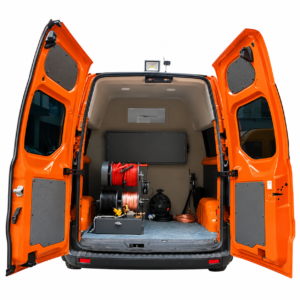
Click the image to know more about Wrindu RDCD-C Vehicle-Mounted Cable Fault Testing System.
What Is Acoustic and Magnetic Cable Fault Pinpointing?
Acoustic and magnetic cable fault pinpointing is a ground-level detection method for underground cable faults.
During high-voltage surge testing, a suitable cable fault may break down and produce an electrical discharge. This discharge generates two signals:
- Acoustic signal: The discharge creates a sound wave that travels through the cable insulation, soil, and surrounding ground.
- Magnetic signal: The discharge produces an electromagnetic signal that can be detected by a magnetic sensor.
A cable fault locator uses acoustic and magnetic sensors to detect these signals. By comparing their arrival times and signal strength, technicians can narrow down the fault position.
The method helps identify the ground location for excavation. It does not replace the initial fault distance measurement.
How Does Acoustic and Magnetic Cable Fault Pinpointing Work?
The method uses the relationship between the acoustic and magnetic signals generated by a cable discharge.
When a high-voltage surge reaches a suitable fault point, the insulation may break down and create a discharge. The discharge produces sound and electromagnetic signals.
The magnetic signal travels much faster than the acoustic wave. A locator can use the magnetic signal as a timing reference and detect the later-arriving acoustic signal.
A typical pinpointing process includes:
- Apply a high-voltage surge: The surge generator applies a suitable impulse to the faulty cable.
- Create a discharge: The voltage causes breakdown at the fault point, if the fault condition allows it.
- Detect the magnetic signal: The magnetic sensor detects the electromagnetic signal from the discharge.
- Detect the acoustic signal: The acoustic sensor picks up the sound wave through the ground.
- Compare signal timing: The instrument helps the operator identify the discharge sound associated with the magnetic trigger.
- Move along the cable route: The operator checks nearby positions to find the strongest and most consistent acoustic response.
The fault is usually close to the position where the acoustic response is strongest and the signal timing is consistent.
Why Does Acoustic and Magnetic Detection Use Two Signals?
Using both signals helps technicians distinguish the fault discharge from background noise.
An acoustic sensor alone may pick up traffic, machinery, construction activity, or other environmental sounds. These noises can make it difficult to identify the actual discharge.
The magnetic signal provides a reference for the discharge event. The instrument can use this reference to help the operator recognize the related acoustic signal.
| Signal | Main function | What it helps identify |
|---|---|---|
| Acoustic signal | Detects the sound produced by discharge | The ground position with a strong discharge sound |
| Magnetic signal | Detects the electromagnetic pulse | The timing reference for the discharge event |
The two signals work together to improve fault identification, especially in areas with background noise.
What Equipment Is Needed for Acoustic and Magnetic Cable Fault Pinpointing?
A typical setup includes a high-voltage surge generator, an acoustic-magnetic locator, and suitable sensors.
| Equipment | Main function |
|---|---|
| High-voltage surge generator | Applies a high-voltage impulse to create a discharge at a suitable fault point |
| Acoustic-magnetic locator | Receives and processes acoustic and magnetic signals |
| Acoustic sensor | Detects sound waves from the underground discharge |
| Magnetic sensor | Detects the electromagnetic signal from the discharge |
| Connecting cables | Connect the sensors to the locator |
| Ground probes | Help detect signals on different ground surfaces |
The sensor type should match the testing environment. Soft soil, concrete roads, asphalt, and grass may require different sensor arrangements.
How Do You Pinpoint an Underground Cable Fault on the Ground?
Technicians normally perform ground pinpointing after estimating the fault distance with a cable fault pre-locator.
A practical process includes:
Step 1: Pre-locate the fault distance
Use TDR, ARM, or another suitable method to estimate the distance from the test end to the fault.
Step 2: Trace the cable route
Use a cable path detector to identify the cable direction and avoid searching in the wrong area.
Step 3: Connect the acoustic-magnetic locator
Connect the sensors and check that the instrument receives both acoustic and magnetic signals.
Step 4: Apply the high-voltage surge
Operate the surge generator according to the equipment instructions. The surge should produce a detectable discharge at the fault point when conditions are suitable.
Step 5: Move the sensor along the cable route
Check different positions near the estimated fault area. Compare the acoustic response and magnetic trigger at each position.
Step 6: Confirm the fault position
Repeat measurements around the suspected location. A strong and consistent acoustic response helps identify the likely excavation point.
Technicians should confirm the cable route and site conditions before excavation.
What Factors Affect Acoustic and Magnetic Fault Pinpointing Accuracy?
The quality of ground pinpointing depends on the fault discharge, cable installation, soil conditions, and surrounding noise.
| Factor | Effect on measurement |
|---|---|
| Fault resistance | A fault that cannot produce a clear discharge may be difficult to pinpoint |
| Surge energy | Insufficient energy may not create a detectable discharge; excessive energy may damage the cable |
| Soil type | Different ground materials affect sound transmission |
| Burial depth | Deeper cables may produce weaker acoustic signals at the surface |
| Background noise | Traffic and machinery can interfere with acoustic detection |
| Sensor contact | Poor contact with the ground can reduce signal quality |
| Cable route accuracy | Incorrect route information can lead technicians to the wrong search area |
Technicians should select suitable surge settings and sensor probes for the cable and site conditions.
What Is the Difference Between Cable Fault Pre-Location and Acoustic Pinpointing?
Pre-location and pinpointing are two different stages of cable fault location.
Pre-location estimates the distance to the fault along the cable. Pinpointing identifies the likely ground position for excavation.
| Comparison | Fault Pre-Location | Acoustic-Magnetic Pinpointing |
|---|---|---|
| Main purpose | Estimate fault distance | Find the ground position |
| Measurement method | Electrical pulse reflection or other electrical methods | Acoustic and magnetic signal detection |
| Main equipment | TDR cable fault locator or suitable pre-locator | Acoustic-magnetic cable fault locator |
| Test result | Distance from the test end | Likely fault position on the ground |
| Main application | Narrow down the search area | Guide excavation |
For example, a TDR test may estimate that a fault is 800 meters from the test end. Technicians can then use acoustic-magnetic pinpointing to identify the fault position along the cable route.
Both methods are important in a complete underground cable fault location process.
What Are the Advantages and Limitations of Acoustic-Magnetic Pinpointing?
| Advantages | Limitations |
|---|---|
| Helps identify the ground fault position | Requires a suitable discharge signal |
| Uses both acoustic and magnetic signals | Background noise can affect acoustic detection |
| Supports excavation planning | Soil and burial conditions affect signal strength |
| Works with high-voltage surge testing | Requires trained operators and high-voltage safety procedures |
| Can be used after electrical pre-location | Does not replace fault distance pre-location |
The method is useful when technicians need to narrow down the excavation area. However, results depend on the fault condition and the ability to generate and detect a discharge.
How Does the RC11 Acoustic-Magnetic Cable Fault Locator Work?
The Wrindu RDCD-C Vehicle-Mounted Cable Fault Testing System includes the RDCD-III/RC11 cable fault locator for acoustic-magnetic pinpointing.
The RC11 receives acoustic and magnetic signals during cable fault testing. Its technical features include:
| Parameter | Specification |
|---|---|
| Acoustic sensor frequency range | 100–1500 Hz |
| Sound channel dynamic range | Greater than 104 dB |
| Magnetic channel dynamic range | Greater than 110 dB |
| Display resolution | 320 × 240 |
| Signal processing | Background noise reduction and trigger adjustment |
| Sensor options | Probes for soft ground, hardened roads, and lawns |
The different probes help technicians work on different ground surfaces. Background noise reduction and trigger adjustment also support signal analysis during field testing.
The RC11 is used for ground pinpointing after the fault distance has been estimated. It works with the system’s other modules to support the cable fault location process.
Frequently Asked Questions About Acoustic and Magnetic Cable Fault Pinpointing
What is acoustic cable fault pinpointing?
It is a method that detects the sound produced by an electrical discharge at an underground cable fault. Technicians use the acoustic signal to identify the likely fault position on the ground.
Why does a cable fault locator need a magnetic sensor?
The magnetic sensor detects the electromagnetic signal generated by the discharge. This signal provides a timing reference that helps distinguish the fault sound from background noise.
Can acoustic and magnetic methods locate high-resistance cable faults?
They can help pinpoint a high-resistance fault if the applied surge produces a detectable discharge. If the fault cannot break down under the selected test conditions, pinpointing may be difficult.
Does acoustic-magnetic pinpointing measure the fault distance?
No. It mainly identifies the ground position. TDR or another suitable pre-location method is normally used to estimate the fault distance first.
Can acoustic sensors work through asphalt or concrete?
Yes, suitable ground probes can be used on hardened surfaces. However, surface material and sensor contact can affect signal strength.
What causes inaccurate acoustic fault pinpointing?
Common factors include background noise, weak discharge signals, incorrect cable route information, poor sensor contact, and unsuitable surge settings.
Is high-voltage surge testing required for acoustic pinpointing?
A detectable discharge is normally needed. A high-voltage surge generator is commonly used to create this discharge during cable fault testing.
About Wrindu Cable Fault Testing Equipment
Wrindu is a Chinese OEM manufacturer of electrical testing equipment and power testing solutions. Its cable fault testing equipment supports fault pre-location, high-voltage testing, ground pinpointing, and cable route detection.
The RDCD-C Vehicle-Mounted Cable Fault Testing System combines the RA40 operation console, RC11 acoustic-magnetic cable fault locator, and R30 cable path detector. The system supports different stages of underground cable fault diagnosis.
The vehicle is not included in the standard system supply. Customers can select a suitable vehicle for installation according to their field requirements.
For more information, visit the RDCD-C Vehicle-Mounted Cable Fault Testing System product page.
