

How Does Cable Wave Velocity Affect Underground Cable Fault Location?
Learn how cable wave velocity affects fault distance calculations, TDR measurements, and calibration in underground power cable fault testing.
Cable fault location instruments use electrical pulse signals to estimate the distance between the test point and a cable fault. Wave propagation velocity is an important value in this calculation. If the velocity setting is incorrect, the displayed fault distance may differ from the actual distance. Engineers need to select or calibrate the correct velocity before interpreting the test waveform.
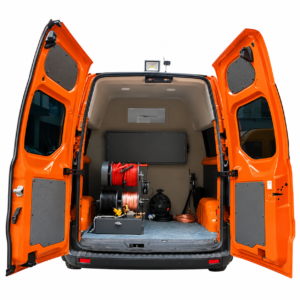
Click the image to know more about Wrindu RDCD-C Vehicle-Mounted Cable Fault Testing System.
What Is Cable Wave Propagation Velocity?
Cable wave propagation velocity is the speed at which an electrical pulse travels through a cable. Different cable structures and insulation materials can have different propagation velocities. The cable length and electrical characteristics also affect the measured waveform. The instrument uses this velocity to calculate the distance to a reflection point.
How Is Cable Fault Distance Calculated?
Time Domain Reflectometry (TDR) calculates fault distance by measuring the time required for a pulse to travel to a reflection point and return.
The basic formula is:
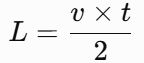
[
L=\frac{v\times t}{2}
]
Where:
- L = Distance to the reflection point (m)
- v = Pulse propagation velocity (m/s)
- t = Round-trip travel time (s)
The calculation divides the total travel distance by two because the pulse travels to the fault and then returns to the test end.
Why Is Wave Velocity Calibration Important?
An incorrect wave velocity setting causes errors in the calculated cable distance.
For example, if the selected velocity is higher than the actual cable velocity, the instrument may display a longer fault distance.
Engineers should use the cable manufacturer’s technical data or a suitable calibration procedure to establish the correct velocity.
What Factors Affect Cable Wave Velocity?
Several factors can affect pulse propagation in underground power cables.
| Factor | Effect on Measurement |
|---|---|
| Insulation material | Different dielectric properties affect propagation velocity |
| Cable construction | Cable geometry and structure affect electrical characteristics |
| Cable type | Different cable designs may require different velocity settings |
| Velocity setting | An incorrect setting produces a distance calculation error |
| Waveform quality | Signal attenuation and noise can make reflection points harder to identify |
Engineers should consider these factors when comparing measured distances with cable route records.
How Do Cable Fault Testers Use Wave Velocity Calibration?
A cable fault tester sends a low-voltage pulse into the cable and records the reflected waveform.
The operator identifies the reflection point and uses the selected propagation velocity to calculate the distance.
The WRINDU RDCD-C uses the RA40 operation console for cable length measurement, wave velocity calibration, fault pre-location, and waveform analysis.
Its stated test distance is 5 m–100 km. The actual measurable distance depends on cable length, signal attenuation, fault type, and test conditions.
What Is the Difference Between Cable Length Measurement and Fault Distance Measurement?
These two measurements have different purposes.
| Measurement | Purpose |
|---|---|
| Cable length measurement | Determines the total cable length |
| Fault distance measurement | Estimates the distance from the test point to the fault |
| Wave velocity calibration | Provides the velocity value used in distance calculations |
Accurate cable length information can help engineers interpret test waveforms and check whether the estimated fault position matches the cable route.
How Can Engineers Improve Cable Fault Distance Measurement?
Engineers should follow several basic steps:
- Confirm the cable type and available technical data.
- Set the appropriate wave propagation velocity.
- Check the cable connection before testing.
- Analyze the reflected waveform carefully.
- Compare the estimated distance with cable route records.
- Use a suitable pinpointing method to find the physical fault position.
Pre-location provides an estimated distance. It does not always identify the exact excavation point.
Frequently Asked Questions
Does cable length affect wave velocity?
Cable length does not directly determine the propagation velocity. However, longer cables may experience greater signal attenuation, which can make waveform interpretation more difficult.
Why is the fault distance different from the actual cable route distance?
Possible reasons include an incorrect velocity setting, waveform interpretation errors, cable routing differences, and signal attenuation.
Can TDR locate every underground cable fault?
No. TDR works well for many open-circuit, short-circuit, and low-resistance faults. Some high-resistance faults require high-voltage testing or other methods.
Does the RDCD-C support wave velocity calibration?
Yes. The RA40 operation console supports cable length measurement and wave velocity calibration for cable fault pre-location.
About Wrindu Cable Fault Testing Equipment
Wrindu is a Chinese OEM manufacturer of electrical testing equipment, established in 2014. Its product range includes cable fault testing systems, high-voltage testing equipment, and transformer testing instruments.
The RDCD-C Vehicle-Mounted Cable Fault Testing System integrates the RA40 for cable length measurement, wave velocity calibration, and fault pre-location.
Contact Wrindu for RDCD-C technical specifications and system configuration details.
