

Underground Cable Depth Measurement: How Does a Cable Locator Measure Burial Depth?
Learn how cable locators measure underground cable depth, what affects measurement results, and how engineers check cable burial depth.
Knowing the burial depth of an underground power cable helps engineers understand the cable layout before excavation or maintenance. It also helps identify the approximate position of a cable below ground.
A cable path detector can provide burial depth information during route tracing. However, the displayed depth is a measurement result, and engineers should consider site conditions before using it to plan excavation.
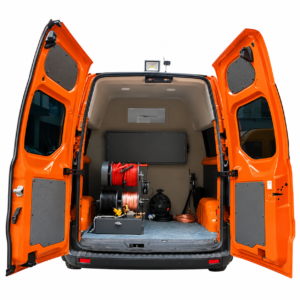
Click the image to know more about Wrindu RDCD-C Vehicle-Mounted Cable Fault Testing System.
Why Is Underground Cable Depth Measurement Important?
Underground power cables are installed at different depths depending on the installation design and site conditions.
Knowing the approximate burial depth helps engineers:
- Understand the underground cable layout.
- Estimate the cable position before excavation.
- Check cable installation conditions.
- Support underground cable maintenance.
- Reduce the risk of damaging nearby underground facilities.
Depth information is particularly useful when several cables or other underground utilities occupy the same area.
How Does a Cable Locator Measure Underground Cable Depth?
A cable path detector uses electromagnetic signals to detect the position of an underground cable. Its receiver processes the detected signal and provides route and depth information.
The operator first identifies the cable route and then takes a depth measurement at the selected position.
The exact measurement principle and calculation method depend on the equipment design. Therefore, engineers should refer to the manufacturer’s manual for the specific measurement procedure.
What Factors Can Affect Cable Depth Measurement?
The displayed depth may be affected by several site conditions.
| Factor | Possible Effect |
|---|---|
| Nearby underground cables | Signals from other cables may affect detection |
| Metallic structures | May interfere with electromagnetic signals |
| Cable position | Incorrect positioning of the receiver may affect the reading |
| Signal strength | Weak or unstable signals may make detection difficult |
| Ground conditions | Site conditions may affect signal detection |
| Cable layout | Closely spaced or crossing cables may complicate measurement |
Engineers should check the measurement conditions before relying on a displayed depth value.
How Do You Measure Underground Cable Burial Depth?
A basic field procedure includes the following steps:
Step 1: Confirm the target cable
Check available cable drawings and identify the cable to be measured.
Step 2: Introduce a detection signal
Select a suitable signal connection method. The available methods include direct connection, clamp coupling, and induction.
Step 3: Trace the cable route
Move the receiver along the expected route and monitor the signal strength and direction.
Step 4: Identify the measurement position
Select a suitable position where the receiver provides a stable cable detection result.
Step 5: Read the displayed depth
Use the cable locator’s depth measurement function according to the equipment manual.
Step 6: Verify the result
Repeat the measurement when necessary and compare the result with available installation records.
How Can Engineers Improve Cable Depth Measurement Results?
Engineers should follow several basic practices to reduce measurement errors.
| Recommended Practice | Purpose |
|---|---|
| Confirm the target cable | Reduces the risk of measuring a nearby cable |
| Use a suitable signal connection method | Helps establish a detectable signal |
| Check signal strength and direction | Supports correct cable positioning |
| Keep the receiver in the required measurement position | Reduces operator-related errors |
| Repeat measurements | Helps identify inconsistent readings |
| Check underground cable records | Provides additional installation information |
A single depth reading should not be treated as confirmation of the exact cable position, especially in complex underground networks.
Can a Cable Locator Measure the Depth of Multiple Underground Cables?
A cable locator can help engineers trace and measure the depth of detected cables. However, several cables running close together may create signal interference or make individual cable identification difficult.
Engineers should identify the target cable before taking a depth measurement. Active signal injection into the selected cable can help distinguish it from surrounding cables when a suitable connection method is available.
Does the RDCD-III/R30 Support Underground Cable Depth Measurement?
Yes. The WRINDU RDCD-III/R30 cable path detector supports underground cable burial depth measurement.
Its receiver provides several types of field information:
| Function | Purpose |
|---|---|
| Route tracing | Follows the underground cable path |
| Burial depth measurement | Estimates the cable’s underground depth |
| Cable identification | Helps distinguish the target cable |
| Signal strength display | Shows the detected signal level |
| Direction indication | Helps the operator follow the cable |
| Position display | Supports field route tracking |
The RDCD-III/R30 also supports 10 active frequencies, 2 passive frequencies, and three signal connection methods: direct connection, clamp coupling, and induction.
Can Underground Cable Depth Measurement Replace Excavation?
No. A cable locator provides detection and depth information, but it does not replace underground utility verification or safe excavation procedures.
Before excavation, engineers should check available utility records, confirm the detected cable route, and follow local excavation and electrical safety requirements.
Frequently Asked Questions
Is cable locator depth measurement exact?
The displayed depth is an instrument measurement, not a guarantee of the cable’s exact physical position. Accuracy depends on equipment specifications, measurement conditions, and correct operation.
Can a cable locator measure the depth of an energized cable?
A cable locator may detect suitable signals from energized cables. Whether it can measure depth under specific conditions depends on the equipment and signal characteristics.
Why does a cable locator show different depth readings at different positions?
Different cable positions, nearby conductive objects, signal conditions, and receiver placement can affect the measurement. Engineers should repeat measurements under suitable conditions.
Does the RDCD-III/R30 have a cable depth measurement function?
Yes. The RDCD-III/R30 supports underground cable burial depth measurement and displays depth information during field detection.
About Wrindu Underground Cable Detection Equipment
Wrindu is a Chinese OEM manufacturer of electrical testing equipment and power testing solutions. Established in 2014, Wrindu develops equipment for cable testing, transformer testing, and high-voltage applications.
The RDCD-III/R30 cable path detector supports underground route tracing, cable identification, and burial depth measurement. It is also integrated into the RDCD-C Vehicle-Mounted Cable Fault Testing System.
