

Askarel vs PCB-Contaminated Transformer Oil: What Is the Difference?
Understand the difference between Askarel insulating liquids and PCB-contaminated transformer oil, including their composition, historical applications, and identification.
Askarel and PCB-contaminated transformer oil are related terms, but they do not describe exactly the same type of insulating liquid. Askarel historically referred to certain synthetic electrical insulating liquids, many of which contained PCBs as major components. PCB-contaminated transformer oil, on the other hand, usually refers to conventional insulating oil that contains PCBs as contaminants. This distinction is important when evaluating older transformers, reviewing equipment records, and planning laboratory analysis.
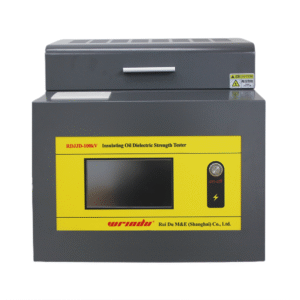
Click the image to know more about Wrindu Oil BDV Tester.
What Is Askarel Insulating Liquid?
Askarel is a historical term used for certain synthetic electrical insulating liquids developed for electrical equipment. Many Askarel formulations contained polychlorinated biphenyls (PCBs), often combined with other chemical components such as chlorinated benzenes. These liquids were used in some transformers and capacitors because of their electrical insulation and fire-resistant properties. Unlike conventional mineral insulating oil, Askarel formulations were not simply petroleum-derived transformer oils. The exact composition depended on the original product and manufacturer.
What Is PCB-Contaminated Transformer Oil?
PCB-contaminated transformer oil usually refers to conventional insulating oil that contains PCBs. The original insulating liquid may have been mineral oil, but PCB contamination can occur through different historical circumstances. For example, equipment may have received contaminated replacement oil or experienced contamination during maintenance. The original mineral oil and PCB compounds remain chemically distinct components of the resulting liquid. This means PCB-contaminated mineral oil should not automatically be classified as an original Askarel formulation.
What Is the Difference Between Askarel and PCB-Contaminated Mineral Oil?
The main difference is their original composition and the way PCB compounds are present in the liquid.
| Comparison | Askarel insulating liquid | PCB-contaminated mineral oil |
|---|---|---|
| Original liquid | Synthetic insulating formulation | Petroleum-based mineral oil |
| PCB presence | Often intentionally included in historical formulations | Present as contamination |
| Main composition | PCB compounds and other formulation components | Mineral oil with PCB contaminants |
| Historical application | Transformers and capacitors | Conventional oil-filled electrical equipment |
| Original purpose | Electrical insulation and fire resistance | Electrical insulation and cooling |
| PCB source | Original formulation | Subsequent contamination |
| Identification | Historical product and equipment records plus analysis | Equipment records and laboratory analysis |
The exact chemical composition cannot be determined from the equipment name alone. Laboratory analysis is necessary when the PCB status of an insulating liquid is uncertain.
Why Were Askarel Liquids Used in Older Electrical Equipment?
Askarel liquids were historically used in some electrical equipment because they offered properties suitable for specific applications. One important characteristic was their resistance to ignition compared with conventional mineral insulating oil. This made PCB-containing insulating liquids attractive for certain installations where fire safety was an important design consideration. However, PCBs were later recognized as persistent environmental pollutants with significant health and environmental concerns. Their production and use have subsequently been restricted or prohibited under various national and international regulatory frameworks.
Can Askarel and Mineral Oil Be Used Interchangeably?
No. Askarel and mineral insulating oil have different chemical compositions and physical properties. They should not be treated as interchangeable insulating liquids without an engineering assessment.
| Property | Askarel-based liquid | Mineral insulating oil |
|---|---|---|
| Chemical base | Historical synthetic formulation | Petroleum-derived hydrocarbons |
| PCB content | Often intentionally formulated with PCBs | Normally not intentionally formulated with PCBs |
| Fire behavior | Many formulations had fire-resistant properties | Generally combustible |
| Chemical composition | Depends on original formulation | Depends on refining and oil specification |
| Equipment compatibility | Designed for specific equipment | Designed for compatible mineral-oil equipment |
Transformer manufacturers specify insulating liquids according to equipment design and operating requirements. Replacing one liquid with another requires consideration of material compatibility, insulation performance, cooling requirements, and applicable standards.
Can Old Transformers Contain PCB-Contaminated Mineral Oil Without Using Askarel?
Yes. A transformer does not need to have been originally filled with Askarel to contain PCBs. Conventional mineral oil may become PCB-contaminated during its service life. This distinction is particularly important when reviewing older electrical equipment. A transformer nameplate identifying mineral oil does not independently establish that the oil is PCB-free. Likewise, an old transformer should not automatically be classified as PCB-containing based only on its manufacturing date. Equipment history and appropriate laboratory testing provide more reliable evidence.
How Can You Identify Whether an Old Transformer Contains Askarel or PCB-Contaminated Oil?
Identification should combine historical equipment information with suitable analytical evidence. The following information can help establish the original insulating liquid and its possible PCB status.
| Information source | What to check |
|---|---|
| Transformer nameplate | Original insulating liquid type |
| Manufacturer documents | Original liquid specification |
| Historical maintenance records | Previous oil replacement or servicing |
| Equipment labels | Historical fluid or PCB warnings |
| Oil purchase records | Original product name and specification |
| Laboratory report | Measured PCB concentration and analytical method |
Historical product labels may provide useful clues, but they should not replace laboratory confirmation. For older equipment with incomplete records, the original liquid type and current PCB concentration should be evaluated separately.
Why Is It Important to Distinguish Askarel from PCB-Contaminated Oil?
The distinction helps engineers understand the equipment’s original design and the possible source of PCB contamination.
It also provides useful information when reviewing equipment history and planning maintenance or environmental assessments.
Three points should be considered:
-
Original Askarel formulation does not mean every PCB-containing sample has the same composition.
-
Mineral oil can contain PCBs even if the transformer was not originally designed for Askarel.
-
Equipment history alone cannot always establish the current PCB concentration.
Accurate identification requires both historical records and appropriate analytical evidence.
Can Routine Transformer Oil Testing Identify Askarel or PCB-Contaminated Oil?
Routine transformer oil testing cannot independently identify the chemical composition of Askarel or confirm PCB contamination. Different oil testing instruments measure different physical, chemical, and electrical properties.
| Routine test | Measurement | Can it identify Askarel or PCBs? |
|---|---|---|
| BDV test | Breakdown voltage | No |
| Moisture test | Water content | No |
| Acid value test | Oil acidity | No |
| Tan delta test | Dielectric dissipation factor | No |
| PCB chromatographic analysis | PCB compounds | Yes, using a suitable analytical method |
Routine oil tests help evaluate the condition of insulating liquids, but they do not replace chemical identification.
When PCB analysis is required, laboratories need a dedicated analytical procedure.
What Transformer Oil Testing Equipment Does Wrindu Manufacture?
Wrindu is a China OEM manufacturer of high-voltage electrical testing equipment and power testing solutions. Established in 2014, Wrindu provides equipment design, research and development, production, and OEM/ODM services. The company operates a manufacturing facility covering more than 50,000 m², with 6 production lines and over 200 employees. Its products are exported to more than 120 countries.
Wrindu provides instruments for routine transformer oil testing:
| Product category | Main testing function |
|---|---|
| Oil BDV Tester | Measures dielectric breakdown voltage |
| Micro-Water Tester | Measures water content |
| Oil Acid Value Tester | Measures acidity |
| Transformer Tan Delta Tester | Measures dielectric dissipation factor |
These instruments support routine oil condition monitoring for power utilities, transformer manufacturers, and electrical laboratories.
Wrindu does not manufacture Askarel identification systems or PCB concentration analyzers. PCB analysis requires separate laboratory equipment and a suitable validated method.
Frequently Asked Questions About Askarel and PCB-Contaminated Transformer Oil
Is Askarel the same as PCB oil?
Askarel is a historical term for certain synthetic insulating liquid formulations, many of which contained PCBs. However, the exact composition depends on the original formulation.
Does every old transformer contain Askarel?
No. Many older transformers used conventional mineral insulating oil or other insulating liquids. Manufacturing date alone cannot establish the original liquid type.
Can mineral transformer oil become PCB-contaminated?
Yes. Mineral oil can become contaminated through historical oil handling, servicing, or other contamination sources.
Is PCB-contaminated mineral oil the same as Askarel?
No. PCB-contaminated mineral oil is originally mineral oil containing PCB contaminants, while Askarel refers to certain historical synthetic insulating formulations.
Can a BDV tester identify PCB contamination?
No. A BDV tester measures the breakdown voltage of insulating oil. It cannot identify PCB compounds or determine their concentration.
