

Power Quality vs. Power Factor: What Is the Difference?
Learn the difference between power quality and power factor, their causes, effects, measurement methods, and how to improve electrical system performance.
Power quality and power factor are two important concepts in electrical systems. They are related, but they do not describe the same thing.
Power quality describes the overall condition of electrical power, including voltage stability, frequency, harmonics, and waveform distortion. Power factor shows how effectively an electrical system uses the supplied apparent power.
Understanding the difference helps engineers identify electrical problems, improve system efficiency, and select the right testing methods.
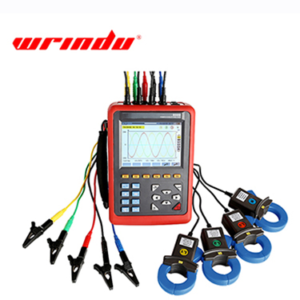
Click the image to know more about Wrindu Power Quality Analyzer.
What Is Power Quality?
Power quality refers to how stable and suitable the electrical supply is for connected equipment.
A good-quality power supply should have stable voltage and frequency, with limited waveform distortion and electrical disturbances.
Common power quality problems include:
- Voltage sag and swell
- Harmonic distortion
- Voltage fluctuations
- Frequency variations
- Three-phase imbalance
- Transient overvoltage
These problems can affect motors, transformers, drives, and electronic equipment. For example, harmonic distortion may cause transformer overheating, while voltage sags may interrupt industrial production.
Power quality testing checks these conditions and helps engineers find the source of electrical problems.
What Is Power Factor?
Power factor (PF) measures the relationship between active power and apparent power in an electrical system.
It is calculated as:
[PF=\frac{P}{S}]
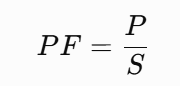
Where:
- P = Active power (kW)
- S = Apparent power (kVA)
Power factor ranges from 0 to 1 in the usual operating range. A value closer to 1 means the system uses apparent power more effectively.
For example, if a system consumes 80 kW of active power and has 100 kVA of apparent power:
[PF=\frac{80}{100}=0.8]
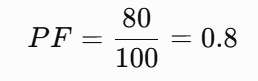
This means the power factor is 0.8.
A low power factor means the system needs more current to deliver the same active power at a given voltage. This can increase cable losses and reduce the available capacity of transformers and distribution equipment.
What Is the Difference Between Power Quality and Power Factor?
The main difference is their measurement scope. Power quality covers several electrical conditions, while power factor focuses on the relationship between active and apparent power.
| Comparison | Power Quality | Power Factor |
|---|---|---|
| Meaning | Overall condition of electrical power | Efficiency of apparent power utilization |
| Main Focus | Voltage, current, frequency, harmonics, and disturbances | Active power and apparent power |
| Common Problems | Voltage sag, harmonics, flicker, imbalance | Low power factor |
| Measurement | Multiple electrical parameters | PF and DPF |
| Main Effects | Equipment malfunction, overheating, interruptions | Higher current and increased system losses |
| Improvement Methods | Harmonic filters, voltage regulation, load balancing | Capacitor banks, reactive power compensation |
A system can have a high power factor but still suffer from harmonic distortion or voltage fluctuations. Likewise, a system with stable voltage and low harmonic distortion may still have a low power factor.
Therefore, power factor alone cannot represent the overall power quality of an electrical system.
What Causes Low Power Factor?
Low power factor is common in electrical systems with inductive loads.
Typical causes include:
1. Inductive Motors
Induction motors require reactive power to establish their magnetic fields. Motors operating under light loads may have a particularly low power factor.
2. Transformers
Transformers also require magnetizing current. When operating with little load, their power factor may be relatively low.
3. Welding Equipment
Some welding machines draw fluctuating current and reactive power, which can affect the power factor of an industrial electrical system.
4. Insufficient Reactive Power Compensation
If an electrical system does not have suitable compensation equipment, it may draw excessive reactive power from the supply.
Can Good Power Factor Guarantee Good Power Quality?
No. Power factor is only one part of power system performance.
For example, a factory may have a power factor of 0.98 but still experience high current harmonics caused by variable frequency drives and switching power supplies.
Similarly, voltage imbalance or frequent voltage sags may affect equipment operation even when the power factor is close to 1.
Engineers should check other electrical parameters, including:
- Voltage and current waveforms
- Voltage and current THD
- Individual harmonic components
- Three-phase voltage and current imbalance
- Voltage fluctuations and transient events
These measurements provide a more complete picture of the electrical system.
How to Measure Power Quality and Power Factor?
A power quality analyzer can measure both power factor and other electrical conditions during the same test.
A typical testing process includes:
- Connect the voltage test leads to the correct phase and neutral terminals.
- Install current clamps on the corresponding phase conductors.
- Check that the voltage and current channels match the correct phases.
- Start the measurement and check voltage, current, active power, reactive power, and apparent power.
- Review PF, DPF, harmonic components, and THD.
- Record the results and compare them with the applicable requirements.
For three-phase systems, engineers should check all phases rather than rely on a single reading.
What Is the Difference Between PF and DPF?
Power factor (PF) considers the relationship between active power and apparent power. It can be affected by both phase displacement and waveform distortion.
Displacement power factor (DPF) measures the cosine of the phase angle between the fundamental voltage and fundamental current.
Its formula is:
[DPF=\cos\varphi]
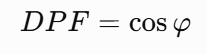
In a system with significant harmonics, PF and DPF may have different values. Comparing them helps engineers understand whether low power factor mainly comes from phase displacement or waveform distortion.
How to Improve Power Factor and Power Quality?
Different electrical problems require different solutions.
| Problem | Common Solution |
|---|---|
| Low Power Factor | Install suitable capacitor banks or reactive power compensation equipment |
| Harmonic Distortion | Use harmonic filters or suitable power converters |
| Voltage Sag | Check supply capacity, connections, and load starting conditions |
| Three-Phase Imbalance | Redistribute loads across the three phases |
| Voltage Fluctuation | Check unstable loads and improve voltage regulation |
| Transient Overvoltage | Use suitable surge protection and investigate switching events |
One solution cannot correct every power quality problem. For example, adding capacitor banks may improve power factor, but it does not automatically remove harmonic distortion. In some systems, capacitor banks may even create harmonic resonance if they are not properly selected.
Engineers should measure the electrical system first and choose corrective equipment based on the test results.
Which Instrument Can Measure Power Quality and Power Factor?
A digital power quality analyzer can measure voltage, current, active power, reactive power, apparent power, PF, DPF, harmonics, and THD.
The Wrindu RDCR5000 Digital Power Quality Analyzer supports four voltage channels and four current channels for three-phase testing. It can display real-time waveforms, harmonic charts, and phasor diagrams.
It also supports three-phase imbalance measurement, voltage flicker analysis, transient recording, and long-term trend recording.
These functions allow engineers to check power factor together with other electrical parameters instead of evaluating system performance from a single measurement.
Frequently Asked Questions
Is power factor part of power quality?
Yes. Power factor is one of the electrical parameters related to power system performance, but it does not represent the entire power quality condition.
Is a power factor of 0.8 good?
A power factor of 0.8 may be acceptable in some applications, but it is relatively low compared with a value closer to 1. The actual requirement depends on the electrical system and utility regulations.
Can harmonics affect power factor?
Yes. Harmonic distortion can increase RMS current and apparent power without a corresponding increase in active power. This can reduce true power factor.
Does improving power factor reduce electricity costs?
It may reduce reactive power charges or power factor penalties where utilities apply them. It can also reduce current and associated losses. Actual savings depend on the tariff structure and electrical system.
Can a capacitor bank improve power quality?
A capacitor bank can improve power factor by supplying reactive power locally. However, it does not solve all power quality problems. Harmonic conditions should be checked before installing capacitor banks.
Conclusion
Power quality and power factor are related but different. Power quality covers the overall condition of electrical power, while power factor measures the relationship between active and apparent power.
A high power factor does not always mean good power quality. Engineers should check voltage, current, harmonics, imbalance, and other parameters to understand the full condition of an electrical system.
