

PCB Testing Methods for Transformer Oil: GC-ECD vs GC-MS
Compare GC-ECD and GC-MS for PCB testing in transformer oil. Learn about detection methods, analytical differences, sample preparation, and equipment selection.
Polychlorinated biphenyls (PCBs) are chemical contaminants that may be present in insulating oil from older electrical equipment. Identifying PCB contamination requires a specific analytical method because routine transformer oil tests do not measure PCB concentration.
Gas chromatography is widely used for PCB analysis in insulating liquids. Two analytical systems commonly considered for this work are gas chromatography with an electron capture detector (GC-ECD) and gas chromatography-mass spectrometry (GC-MS).
Although both systems can analyze PCB compounds, they use different detection principles and provide different analytical information.
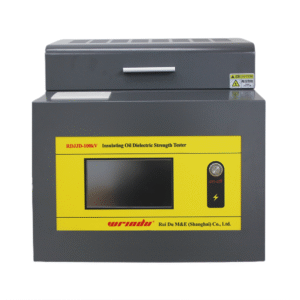
Click the image to know more about Wrindu Oil BDV Tester.
What Are the Main Methods for Testing PCBs in Transformer Oil?
PCB testing in transformer oil mainly relies on laboratory analytical methods.
The selection depends on the required detection sensitivity, target PCB compounds, reporting requirements, and applicable standards.
| Testing method | Detection principle | Main application |
|---|---|---|
| GC-ECD | Electron capture detection | PCB concentration measurement |
| GC-MS | Mass spectrometry | PCB identification and quantification |
| HPLC | Liquid chromatography | Selected PCB analytical applications |
| Rapid screening kits | Method-specific chemical reaction | Preliminary screening |
GC-ECD and GC-MS are the main chromatographic systems to consider for laboratory PCB analysis.
A screening kit may help identify samples requiring further investigation, but its results should not automatically replace laboratory confirmation.
How Does GC-ECD Detect PCBs in Transformer Oil?
GC-ECD combines gas chromatographic separation with an electron capture detector.
The gas chromatograph separates PCB compounds according to their chromatographic behavior. The ECD then detects compounds that capture electrons, making it suitable for analyzing many chlorinated compounds.
PCB compounds contain chlorine atoms, which contribute to their response in an electron capture detector.
IEC 61619:1997 specifies a method for determining PCB concentration in non-halogenated insulating liquids using high-resolution capillary column gas chromatography with ECD. The method can determine total PCB content and is useful when detailed PCB congener analysis is required.
GC-ECD is suitable for laboratories that routinely analyze PCB contamination in insulating liquids using an established analytical procedure.
However, detector response can vary between PCB isomers. The calibration standards and PCB composition of the sample must therefore be considered when calculating the final concentration.
How Does GC-MS Detect PCBs in Transformer Oil?
GC-MS combines gas chromatographic separation with mass spectrometry.
The GC separates individual compounds in the sample. The mass spectrometer then analyzes their mass-to-charge characteristics to support compound identification and quantification.
GC-MS provides additional information about the chemical identity of detected compounds.
It is useful when laboratories need to investigate PCB compositions, distinguish target compounds, or analyze samples with more complex chemical backgrounds.
The laboratory must select a validated analytical method, suitable calibration standards, and appropriate sample preparation procedures.
What Is the Difference Between GC-ECD and GC-MS for PCB Analysis?
GC-ECD and GC-MS can both support PCB analysis, but their analytical functions are different.
| Comparison | GC-ECD | GC-MS |
|---|---|---|
| Detection principle | Electron capture | Mass spectrometry |
| Main detection basis | Electron-capturing compounds | Mass-to-charge characteristics |
| PCB analysis | Yes | Yes |
| Compound identification | Based on chromatographic retention and method-specific identification | Supported by mass spectral information |
| Quantification | Requires suitable calibration | Requires suitable calibration |
| Main consideration | Detector response and PCB mixture composition | Mass spectral identification and matrix interference |
| Typical application | Routine PCB concentration analysis | Detailed compound identification and analysis |
There is no universal rule that one system is always better.
GC-ECD is a suitable choice when the laboratory follows an applicable PCB method based on electron capture detection.
GC-MS may be more appropriate when compound identification and additional chemical information are important.
The final choice should follow the required analytical method rather than equipment specifications alone.
What Is the Role of Sample Preparation in PCB Analysis?
Sample preparation is an important part of PCB analysis because transformer oil contains a complex mixture of hydrocarbons and other substances.
A typical laboratory workflow includes:
-
Receiving and identifying the oil sample.
-
Checking sample condition and documentation.
-
Preparing the sample according to the selected analytical method.
-
Removing interfering substances when required.
-
Preparing calibration standards and quality-control samples.
-
Performing chromatographic analysis.
-
Calculating PCB concentration and preparing the report.
IEC 61619 includes requirements covering sample preparation, chromatographic operation, instrument performance checks, calculation, and reporting.
Sample cleanup is particularly important when other compounds in the insulating oil may interfere with chromatographic separation or detection.
Why Is ASTM D4059 Used for PCB Testing in Insulating Liquids?
ASTM D4059 is a standard test method for determining PCB concentrations in electrical insulating liquids by gas chromatography.
It covers quantitative PCB analysis in insulating liquids and also addresses PCB-containing askarel mixtures.
The method discusses the use of PCB reference mixtures, including Aroclors 1242, 1254, and 1260.
One important limitation is that its established precision and bias apply to specified insulating liquid matrices, including mineral oils and silicones. Other liquids may require pretreatment or a different validated method.
Laboratories should confirm the applicable edition and scope of ASTM D4059 before establishing their testing procedures.
Can a Conventional Transformer Oil Tester Replace GC-ECD or GC-MS?
No. Conventional transformer oil testers cannot replace chromatographic PCB analysis.
Each instrument measures a different oil property.
| Equipment | Measurement | Can it determine PCB concentration? |
|---|---|---|
| Oil BDV tester | Breakdown voltage | No |
| Moisture tester | Water content | No |
| Acid value tester | Oil acidity | No |
| Tan delta tester | Dielectric dissipation factor | No |
| DGA chromatograph | Dissolved gases | No, unless a separate validated PCB method is available |
| GC-ECD | PCB compounds | Yes |
| GC-MS | PCB compounds | Yes |
Routine oil testing helps evaluate electrical and chemical oil condition. PCB analysis requires a separate analytical procedure.
How Should a Laboratory Select a PCB Testing Method?
A laboratory should evaluate its testing objectives before selecting a chromatographic system.
| Laboratory requirement | Suggested consideration |
|---|---|
| Routine PCB concentration analysis | Evaluate a validated GC-ECD method |
| Detailed PCB compound identification | Evaluate GC-MS |
| Compliance testing | Follow the applicable regulatory method |
| Complex oil samples | Evaluate sample cleanup and matrix interference |
| Long-term laboratory operation | Consider calibration, reference standards, and quality control |
The laboratory should also consider instrument maintenance, operator training, analytical workload, and reporting requirements.
What Transformer Oil Testing Equipment Does Wrindu Provide?
Wrindu is a China OEM manufacturer of high-voltage electrical testing equipment and power testing solutions.
Established in 2014, the company provides product design, research and development, manufacturing, and OEM/ODM services. Its manufacturing facility covers more than 50,000 m², with 6 production lines and over 200 employees.
Wrindu supplies instruments for routine transformer oil testing, including:
-
Oil breakdown voltage testers.
-
Karl Fischer moisture testers.
-
Transformer oil acid value testers.
-
Transformer oil tan delta testers.
These instruments measure routine insulating oil properties. They are not designed to measure PCB concentration or replace GC-ECD and GC-MS analytical systems.
For PCB analysis, laboratories should select a dedicated chromatographic system based on the applicable analytical method.
Frequently Asked Questions About PCB Testing Methods
Can GC-ECD measure total PCB concentration?
Yes. GC-ECD can determine PCB concentration when the laboratory follows an appropriate validated method, such as IEC 61619.
Is GC-MS suitable for PCB analysis?
Yes. GC-MS can identify and quantify PCB compounds using suitable analytical procedures and calibration standards.
Can DGA detect PCB contamination?
No. Conventional dissolved gas analysis measures gases dissolved in transformer oil, not PCB concentration.
Which standard is used for PCB testing in transformer oil?
IEC 61619 and ASTM D4059 are relevant standards for PCB determination in insulating liquids. Their analytical scopes and procedures should be checked before testing.
