

Phasing Stick Selection & Maintenance Guide
Learn the core principles of phasing stick selection, daily maintenance tips, common fault solutions and service life extension methods to ensure safe and efficient use of your phasing stick.
Choosing the right phasing stick and maintaining it properly are key to ensuring safe and efficient work. This guide covers selection tips, daily maintenance, fault solutions, and service life extension methods, helping you use the phasing stick correctly and prolong its service life.
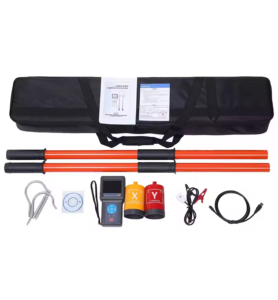
Click the image to know more about Wireless High Voltage Phase Detector.
1. Core Principles of Phasing Stick Selection
When selecting a phasing stick, you need to focus on your actual work needs. The core principles are to match the use scenario, meet precision requirements, and ensure safety and portability.
First, match the use scenario: If you work in high-voltage environments such as substations, choose a high-voltage phasing stick with strong insulation performance; if you need to work in different places, select a lightweight and portable model that is easy to carry. Second, pay attention to precision indicators: The clarity of the pointer and the accuracy of the measurement are crucial—choose products with clear pointer display and stable performance to avoid errors in judgment. Finally, prioritize safety: Ensure the product has good insulation, anti-slip design, and meets relevant safety standards to prevent electric shock accidents.
2. Key Selection Notes
Many people easily fall into misunderstandings when choosing a phasing stick. Here are the key points to avoid mistakes:
-
Do not ignore precision for low price: A phasing stick with poor precision will lead to wrong judgment of phase, affecting work safety. Choose products with reliable precision indicators.
-
Do not neglect safety performance: High-voltage work requires a phasing stick with strong insulation. Do not use low-quality products that do not meet safety standards.
-
Match the power system needs: For substations, choose a phasing stick with a wide voltage range; for ordinary power maintenance, a portable and easy-to-operate model is more suitable.
According to your actual work scenario (such as high-voltage or low-voltage, fixed or mobile operation), selecting the right type can improve work efficiency and reduce potential risks.
3. Daily Maintenance & Care
Proper maintenance can effectively extend the service life of the phasing stick. Follow these simple steps:
-
Meter calibration: Calibrate the meter every 6 months to ensure the accuracy of the pointer and measurement results, avoiding errors caused by inaccurate calibration.
-
Cleaning of test rods: After each use, wipe the test rods with a dry cloth to remove dust, dirt and moisture, and avoid corrosion of the metal parts.
-
Storage requirements: Store the phasing stick in a dry, cool and ventilated place, away from high temperature, humidity and direct sunlight. Do not place heavy objects on it to prevent damage.
-
Inspection of ground wires: Regularly check the ground wire for looseness, aging or damage. Replace it in time if any problem is found to ensure safe use.
4. Factors Affecting Service Life & Extension Tips
The service life of a phasing stick is closely related to operation norms, storage environment and maintenance frequency. Here are the key points to extend its service life:
-
Operate in accordance with the guidelines: Do not use the phasing stick beyond its voltage range, and avoid violent collision or falling.
-
Control the storage environment: Keep it away from moisture and high temperature, and store it in a dedicated tool box to prevent damage.
-
Regular maintenance: Inspect the equipment every 3 months, check the wiring and components, and solve small problems in time to avoid major faults.
5. Common Faults & Solutions
When using the phasing stick, some small faults may occur. Here are the common problems and simple solutions to help you solve them quickly without affecting work:
|
Common Faults
|
Troubleshooting Steps
|
|---|---|
|
Pointer failure (no response or inaccurate display)
|
Check if the battery is fully charged; re-calibrate the meter; check if the wiring is loose.
|
|
Loose wiring
|
Turn off the power first; re-fix the wiring and check if the connection is firm; test again after fixing.
|
|
Abnormal display
|
Check if the storage environment is too humid; wipe the meter with a dry cloth; re-calibrate if necessary.
|
By following the above selection and maintenance methods, you can not only choose a suitable phasing stick, but also extend its service life, ensuring that it can better serve power maintenance work. Remember, correct selection and regular maintenance are the keys to reducing use costs and improving work efficiency.
