

How Does Hipot Testing Work in Safety and Manufacturing
Learn how hipot testing works in electrical manufacturing to ensure insulation safety and reliability. Discover AC vs DC hipot testing, step-by-step procedures, safety rules, equipment, and applications in transformers, cables, and industrial systems.
Hipot testing (high potential testing) is widely used in electrical manufacturing to verify whether insulation can safely withstand high voltage. It helps prevent electric shock, fire risks, and equipment failure by applying controlled high voltage and measuring leakage current.
This test is a key quality control step for OEM factories, wholesalers, and industrial manufacturers, ensuring safe delivery and long-term product reliability.
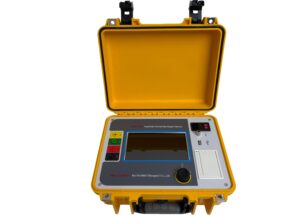
What Is Hipot Testing and Why Is It Used?
Hipot testing is a dielectric strength test used to check insulation performance in electrical products.
It is commonly applied to:
Transformers
Cables
Circuit breakers
Relays
Batteries
Electrical assemblies
The test does not guarantee a product is perfect. Instead, it confirms that insulation can survive a specified voltage level for a defined time without breakdown.
Wrindu uses this method as part of quality assurance in high-voltage testing solutions for industrial clients.
Why Is Hipot Testing Important in Electrical Manufacturing?
Hipot testing helps manufacturers detect insulation weaknesses before products leave the factory.
It can identify:
Damaged wiring
Poor assembly quality
Contamination inside insulation
Design defects
For export and bulk orders, this reduces product returns, improves safety, and increases customer trust.
It also supports compliance with international safety expectations such as IEC and UL standards.
What Is the Difference Between AC Hipot and DC Hipot Testing?
AC and DC hipot testing are used for different applications.
AC hipot uses alternating voltage similar to real operating conditions.
DC hipot uses direct voltage and provides stable leakage readings.
Comparison Table:
| Type | Best Application | Main Advantage | Limitation |
|---|---|---|---|
| AC Hipot | Transformers, motors, AC equipment | Realistic operating simulation | Higher capacitive current |
| DC Hipot | Cables, high-capacitance devices | Stable leakage measurement | Requires discharge after test |
Choosing the correct method depends on product type, standards, and engineering requirements.
How Is a Hipot Test Performed Step by Step?
A proper hipot test follows a controlled safety procedure:
Check test equipment and safety systems
Ensure the device under test is powered off
Connect high-voltage and return leads correctly
Set voltage, leakage limit, and test time
Start the test from a safe distance
Monitor leakage current during testing
Stop the test, discharge the device, and record results
Consistency is essential in production environments to ensure repeatable quality results.
When Should AC or DC Hipot Be Used?
AC hipot is preferred when the product operates under AC power conditions.
DC hipot is better for long cables or high-capacitance products.
In general:
Use AC for real operating simulation
Use DC for stable leakage measurement
Selecting the wrong method may lead to inaccurate results or unnecessary stress on the product.
What Safety Rules Are Required for Hipot Testing?
Hipot testing involves dangerous high voltage, so strict safety rules are required.
Operators must never touch test terminals during operation.
The test area must be clearly marked and restricted.
Basic safety requirements include:
Insulated gloves
Protective eyewear
Non-conductive footwear
Fire-resistant clothing (if required)
Emergency stop access
Dry and clean workspace
Factories often include automatic interlocks and discharge systems to improve operator safety.
What Equipment Is Needed for Hipot Testing?
A complete hipot test system usually includes:
High-voltage transformer
Voltage regulator
Leakage current measurement system
Test chamber or fixture
Control unit with pass/fail indication
Safety interlock system
Modern production lines often integrate data logging and barcode tracking for quality traceability.
Which Products Require Hipot Testing?
Hipot testing is used for many electrical and industrial products, including:
Power transformers
Switchgear and circuit breakers
Power cables
Lightning arresters
Relays and control systems
Energy storage batteries
Industrial electrical assemblies
Any product with insulation that may fail under voltage stress requires testing.
Why Do Manufacturers in China Use Hipot Testing Widely?
Manufacturers in China use hipot testing because it supports:
Large-scale production quality control
Export compliance requirements
OEM customization projects
Industrial safety verification
Factories often integrate full testing systems into production lines for consistency and efficiency.
How Can Manufacturers Improve Hipot Test Efficiency?
Production efficiency improves when factories:
Standardize testing procedures
Train operators properly
Maintain test equipment regularly
Track failure patterns
Use automated testing systems
Hipot testing should be part of overall quality engineering, not just a final inspection step.
How Should Suppliers Be Evaluated for Hipot Testing Equipment?
When choosing a supplier, focus on technical capability instead of price alone.
Key evaluation points include:
Voltage range and leakage accuracy
OEM customization capability
Safety design features
After-sales service and training
Compliance certifications (ISO, IEC, CE)
A reliable manufacturer should also support documentation and integration into production systems.
Expert Insight from Wrindu
“Hipot testing is not only about applying voltage—it is about controlling risk and ensuring consistent product quality. In modern factories, safety, repeatability, and traceability are just as important as electrical performance. The best solutions are those that integrate smoothly into production workflows.”
FAQs About Hipot Testing (Long-Tail Questions)
What is the main purpose of hipot testing in electrical products?
It is used to verify insulation strength and ensure products can safely withstand high voltage conditions without failure.
Does hipot testing damage electrical equipment?
No, when performed correctly within rated limits, it is a non-destructive test.
What is the difference between leakage current and insulation failure?
Leakage current is small and acceptable flow, while insulation failure means breakdown occurs under voltage stress.
Can hipot testing be automated in factory production lines?
Yes, many OEM factories use automated systems with data logging and barcode tracking.
Who is qualified to perform hipot testing safely?
Only trained personnel familiar with high-voltage safety procedures should operate the equipment.
Why is hipot testing important for export products?
Because international buyers require documented proof of electrical safety and insulation reliability.
Conclusion
Hipot testing is a critical safety and quality control process in electrical manufacturing. It ensures insulation integrity before products are shipped to customers, reducing risk and improving reliability.
Proper selection of AC or DC testing, strict safety procedures, and consistent factory workflows make hipot testing an essential part of modern industrial production.
