

How to Choose the Right Ground Resistance Tester for Accurate Earth Resistance Measurement
Learn how to choose the right ground resistance tester for electrical safety applications. Understand key features, testing methods, accuracy requirements, and field application tips.
Why Is Choosing the Right Ground Resistance Tester Important?
A reliable ground resistance tester is essential for evaluating the performance of grounding systems.
Grounding systems protect electrical equipment and personnel by providing a safe path for fault current to flow into the earth.
However, inaccurate measurements may lead to incorrect decisions, such as:
- Accepting an unsafe grounding system
- Performing unnecessary maintenance
- Missing potential grounding problems
Selecting the correct testing instrument helps engineers obtain reliable results and maintain electrical safety.
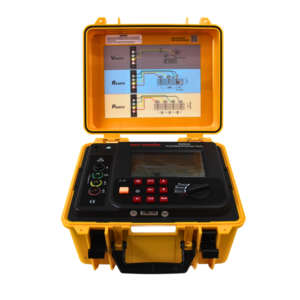
Click the picture to know more about Wrindu Earth Resistance Tester.
What Does a Ground Resistance Tester Measure?
A ground resistance tester measures the resistance between a grounding electrode and the earth.
The measurement result is usually expressed in:
Ohms (Ω)
A lower resistance value generally indicates that electrical current can flow more easily into the ground.
The tester evaluates whether a grounding system can effectively handle:
- Fault current
- Leakage current
- Lightning discharge current
What Types of Ground Resistance Testers Are Available?
Different applications require different testing methods.
What Is a 3-Point Ground Resistance Tester?
A 3-point ground resistance tester uses the fall-of-potential method.
It requires:
- Test electrode
- Current electrode
- Potential electrode
This method is widely used because it provides direct measurement of grounding resistance.
Common applications include:
- Power substations
- Transformer grounding systems
- Industrial grounding networks
What Is a Clamp Ground Resistance Tester?
A clamp ground tester measures grounding resistance without disconnecting the grounding conductor.
Advantages include:
- Faster testing
- Easier operation
- Suitable for routine inspections
However, it requires an existing grounding loop and may not replace traditional methods for all applications.
What Is a Multifunction Ground Tester?
A multifunction ground tester combines several measurement functions in one instrument.
Depending on the model, it may support:
- Ground resistance testing
- Soil resistivity measurement
- Ground voltage measurement
- Continuity testing
This type of equipment is useful for engineers who need multiple testing capabilities in the field.
What Features Should a Professional Ground Resistance Tester Have?
Choosing a suitable tester requires considering measurement performance, operating environment, and user requirements.
Why Is Measurement Accuracy Important?
Accuracy directly affects the reliability of grounding evaluations.
A professional ground resistance tester should provide:
- Stable measurement results
- Low measurement error
- Reliable performance under different conditions
High accuracy is especially important for:
- High-voltage substations
- Industrial facilities
- Critical infrastructure
Why Is Noise Rejection Important During Ground Resistance Testing?
Electrical environments often contain interference from nearby equipment.
Sources include:
- Power lines
- Transformers
- Motors
- Industrial machines
Advanced testers with interference rejection technology can reduce the influence of unwanted signals and improve measurement reliability.
Why Does Test Current Frequency Matter?
Ground resistance testers usually use AC test signals instead of direct current.
AC testing helps reduce:
- Polarization effects
- Electrochemical influence
- Measurement instability
Selecting an instrument with suitable test frequency improves field measurement performance.
How Do You Select a Ground Resistance Tester for Different Applications?
The best tester depends on the working environment and testing requirements.
Which Ground Resistance Tester Is Suitable for Substations?
Substations require accurate and reliable testing because grounding performance directly affects safety.
Recommended features include:
- High measurement accuracy
- Strong interference resistance
- Data recording capability
- Multiple testing modes
Which Ground Resistance Tester Is Suitable for Industrial Plants?
Industrial environments usually contain electrical noise from machines and power systems.
A suitable tester should provide:
- Stable readings
- Simple operation
- Portable design
- Strong protection features
Which Tester Is Suitable for Renewable Energy Projects?
Solar farms and wind power systems often cover large areas.
Important features include:
- Long test cable compatibility
- Reliable outdoor performance
- Easy transportation
- Multiple grounding measurement functions
How Does Measurement Range Affect Ground Resistance Testing?
Different grounding systems require different measurement ranges.
Why Is a Wide Measurement Range Useful?
A wider range allows testing of various grounding conditions, from:
- Small equipment grounding
- Building grounding systems
- Large substations
A suitable measurement range prevents inaccurate results caused by instrument limitations.
What Safety Features Should a Ground Resistance Tester Include?
Electrical testing involves potential risks, especially in high-voltage environments.
Why Are Overvoltage Protection Features Important?
Protection functions help protect:
- Testing personnel
- Measurement equipment
- Connected electrical systems
Why Is a Durable Design Important for Field Testing?
Ground resistance testing is often performed outdoors.
A field-ready instrument should handle:
- Dust
- Temperature changes
- Transportation conditions
- Long working periods
How Can Ground Resistance Test Results Be Improved?
Accurate equipment alone is not enough.
Correct testing procedures are also important.
How Does Proper Electrode Installation Improve Accuracy?
Incorrect electrode placement can create measurement errors.
Engineers should ensure:
- Correct electrode spacing
- Good soil contact
- Stable connections
Why Should Test Results Be Recorded and Compared?
Tracking historical data helps identify grounding system changes.
Comparing results over time can reveal:
- Ground electrode aging
- Corrosion problems
- Grounding performance degradation
What Are Common Mistakes When Using a Ground Resistance Tester?
Using the Wrong Testing Method
Different grounding systems require different measurement approaches.
For example:
- New grounding design → soil resistivity testing
- Installed grounding verification → ground resistance testing
Ignoring Environmental Conditions
Factors such as:
- Rainfall
- Soil moisture
- Temperature
can affect measurement results.
Poor Cable and Electrode Connections
Loose connections may cause unstable readings.
Before testing:
- Check cables
- Clean connection points
- Confirm electrode installation
How Does Wrindu Ground Resistance Testing Equipment Support Field Applications?
Wrindu provides professional electrical testing solutions for power utilities, industrial companies, and engineering organizations.
Wrindu ground resistance testers are designed to support:
- Accurate earth resistance measurement
- Reliable field testing
- Efficient maintenance work
- Practical operation in different environments
With professional testing technology and quality control, Wrindu helps users improve grounding system inspection and electrical safety management.
Frequently Asked Questions About Ground Resistance Testers
What Is a Ground Resistance Tester Used For?
A ground resistance tester is used to measure the resistance between a grounding system and the earth to verify grounding performance.
What Is the Difference Between a Ground Resistance Tester and a Multimeter?
A multimeter mainly measures voltage, current, and continuity, while a ground resistance tester is specifically designed to evaluate earth resistance.
Which Ground Resistance Testing Method Is Most Accurate?
The 3-point fall-of-potential method is widely recognized as one of the most accurate methods for measuring installed grounding resistance.
Can One Ground Resistance Tester Perform Different Tests?
Some advanced models can perform multiple measurements, including ground resistance testing and soil resistivity testing.
How Often Should Ground Resistance Testing Equipment Be Used?
Testing frequency depends on system importance, environmental conditions, and maintenance requirements.
Critical electrical systems usually require regular inspection.
What Causes Incorrect Ground Resistance Measurements?
Common causes include:
- Incorrect electrode spacing
- Electrical interference
- Poor connections
- Changing soil conditions
Why Is Data Storage Important in a Ground Resistance Tester?
Data storage allows engineers to compare historical measurements and monitor grounding system condition over time.
How Do I Choose the Best Ground Resistance Tester?
The selection should consider:
- Testing method
- Accuracy requirements
- Measurement range
- Application environment
- Safety features
Conclusion
Choosing the right ground resistance tester is an important step in maintaining electrical safety and reliable grounding performance.
Different applications require different testing methods and instrument features.
For professional users, factors such as accuracy, interference resistance, measurement range, safety protection, and field usability should all be considered.
A suitable ground resistance tester helps engineers obtain reliable data, identify grounding problems early, and maintain safe operation of electrical systems.
