

How to Select the Right Circuit Breaker for Electrical Protection Systems
Learn how to choose the correct circuit breaker for electrical systems based on load current, breaking capacity, and application type. Explore selection tips, safety factors, and how Wrindu testing tools support accurate breaker sizing and system protection.
Choosing the correct circuit breaker is essential for ensuring safe and stable operation in any electrical system. A properly selected breaker protects wiring, equipment, and personnel from electrical faults such as overload, short circuit, and voltage instability.
However, selecting the wrong breaker rating or type can lead to nuisance tripping, equipment damage, or even system failure. This article explains how to choose the right circuit breaker based on electrical load, environment, and application requirements.
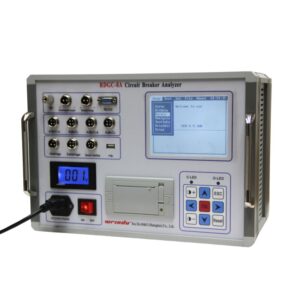
Click the image to know more about Circuit Breaker Comprehensive Tester.
Why Is Circuit Breaker Selection So Important?
A circuit breaker is not just a switching device—it is a safety protection component.
Correct selection helps to:
- Prevent unnecessary tripping
- Avoid overheating of cables
- Protect sensitive equipment
- Improve system stability
- Reduce maintenance costs
Incorrect selection may lead to frequent downtime or safety risks.
How Do You Determine the Correct Current Rating?
The most important factor in breaker selection is the rated current.
The breaker must match the expected load current while considering safety margins.
Key Considerations:
- Total connected load (in amperes)
- Cable current-carrying capacity
- Startup current of motors or transformers
- Continuous operating conditions
A breaker should normally be rated slightly above the normal operating current but below the maximum cable limit.
What Types of Circuit Breakers Are Available?
Different applications require different breaker types. Choosing the correct type ensures proper protection behavior.
Common Types Include:
- Miniature Circuit Breaker (MCB) – for residential and small commercial use
- Molded Case Circuit Breaker (MCCB) – for industrial and higher current systems
- Air Circuit Breaker (ACB) – for large power distribution systems
- Residual Current Circuit Breaker (RCCB) – for leakage protection
- RCBO – combined overload and leakage protection
Each type has different breaking capacity and protection features.
How Does Breaking Capacity Affect Safety?
Breaking capacity refers to the maximum fault current a breaker can safely interrupt.
If the fault current exceeds the breaker’s rating, it may fail to protect the system.
Selection Tip:
- Small buildings → lower breaking capacity MCB
- Industrial systems → higher capacity MCCB or ACB
- High fault level areas → always calculate short-circuit current
Should You Consider Load Type When Choosing a Breaker?
Yes. The type of load directly affects breaker performance.
Common Load Types:
- Resistive load (lighting, heaters)
- Inductive load (motors, transformers)
- Capacitive load (UPS, electronic systems)
Motor loads require breakers that can handle high starting current without false tripping.
How Does Environmental Condition Affect Selection?
Environmental conditions significantly influence breaker reliability and lifespan.
Important Factors:
- High temperature environments may require derating
- Dusty or humid areas need better enclosure protection
- Corrosive environments require sealed or coated breakers
- Outdoor systems may require IP-rated protection
Ignoring environmental conditions may reduce breaker performance.
What Role Does Protection Coordination Play?
In complex electrical systems, multiple breakers are used in series.
Proper coordination ensures:
- Only the nearest breaker trips during a fault
- System-wide shutdown is avoided
- Fault isolation is faster
This is critical in factories, substations, and distribution networks.
How Can Testing Improve Breaker Selection Accuracy?
Even if a breaker is correctly selected, testing is important to verify system compatibility.
Electrical testing helps confirm:
- Actual load current behavior
- Insulation condition of connected circuits
- Fault level estimation
- Contact performance under load
Accurate testing reduces the risk of incorrect breaker sizing.
How Wrindu Testers Stand Out
Wrindu provides professional electrical testing instruments designed to support breaker selection, testing, and system analysis.
Key Advantages:
- Accurate electrical measurement
- Stable field performance
- Fast diagnostic capability
- Suitable for industrial environments
- Supports preventive system design
- Easy operation for engineers
Wrindu equipment is widely used in:
- Circuit breaker testing and analysis
- Power distribution system evaluation
- Transformer and cable testing
- Electrical maintenance diagnostics
- Fault detection and troubleshooting
These tools help engineers make more reliable and data-driven protection decisions.
FAQs
How do I know what size circuit breaker I need?
You should calculate the total load current and choose a breaker slightly above the normal operating current while ensuring cable safety limits are not exceeded.
Can I use a higher-rated breaker for safety?
Not recommended. Oversized breakers may fail to protect cables during overload conditions.
What happens if a breaker is too small?
It will trip frequently, even under normal load conditions.
Do all breakers protect against short circuits?
Yes, but the breaking capacity must match the system fault level.
Why does motor load need special breaker selection?
Motors have high inrush current during startup, which requires breakers with proper trip characteristics.
Can environmental conditions affect breaker performance?
Yes. Heat, humidity, dust, and corrosion can significantly impact breaker reliability.
How often should breaker selection be reviewed?
It should be reviewed during system upgrades, load changes, or periodic maintenance planning.
What testing helps confirm correct breaker selection?
Load testing, insulation resistance testing, and fault level analysis are commonly used for verification.
