

Limitations of Insulation Resistance Testers: Accuracy Issues and Testing Tips
Understand the limitations of insulation resistance testers, including environmental effects, fault detection limits, and inaccurate readings. Learn how to improve IR testing accuracy for electrical systems.
Insulation Resistance (IR) testers are essential tools for ensuring electrical safety and maintaining power systems. However, like any diagnostic equipment, they have specific boundaries. Knowing these limitations helps you achieve more accurate readings and better maintain your electrical infrastructure.
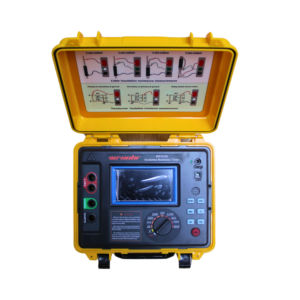
Click the image to know more about Wrindu IR Tester.
How Do Environmental Conditions Affect Test Results?
Environmental factors like temperature, humidity, and dirt heavily impact the accuracy of an insulation resistance tester.
-
High Humidity: Moisture creates a conductive path on the surface of the insulation, which lowers the resistance reading.
-
Contamination: Dust, oil, and dirt on the insulation surfaces can cause surface leakage currents, leading to falsely low insulation resistance measurements.
To get reliable data, it is crucial to account for these environmental variables or use advanced equipment with environmental compensation features.
What Are the Technical Limitations of IR Testers?
While IR testers are excellent for measuring high resistance values (typically up to gigaohms), they cannot detect every type of electrical fault.
-
No Early Breakdown Detection: An IR tester cannot identify insulation breakdown before the resistance drops significantly.
-
Specific Fault Types: These devices cannot detect complex issues such as partial discharges or internal moisture content within the equipment.
For a complete safety assessment, you should complement IR testing with other diagnostic tools, such as dielectric or partial discharge testing platforms.
Which Applications Are Unsuitable for Insulation Resistance Testers?
IR testers are designed for periodic maintenance checks rather than real-time diagnostics.
-
Continuous Monitoring: They are not suitable for systems that require real-time, continuous insulation fault detection in critical industrial environments.
-
High-Voltage Equipment: They cannot completely replace comprehensive dielectric testing for high-voltage assets.
Why Do Insulation Resistance Testers Give Misleading Readings?
Misleading test results usually happen because of poor setup or physical interference during the test.
-
Surface Leakage & Capacitive Effects: If the equipment is not pre-conditioned or cleaned before testing, surface currents and capacitive currents can distort the final value.
-
Improper Setup: Failing to properly connect the tester or test leads can lead to false readings that confuse maintenance teams.
How Can You Improve the Accuracy of Your Testing Equipment?
You can minimize these limitations and improve accuracy by following a few standard maintenance practices:
-
Keep test leads clean and dry.
-
Ensure test objects are free of contaminants before starting.
-
Perform regular calibration (at least annually) according to manufacturer guidelines.
FAQs: Frequently Asked Questions
What is the main limitation of an insulation resistance tester?
The main limitation is its inability to detect all types of insulation faults, such as partial discharges or hidden moisture content, which limits its overall diagnostic scope.
Can weather and environment change my insulation test results?
Yes. Changes in humidity, ambient temperature, and surface contamination can significantly alter the insulation resistance readings, often making them appear lower than they actually are.
Are insulation resistance testers suitable for real-time continuous monitoring?
No, these testers are built for periodic maintenance and spot-checks. They are not designed for real-time, continuous fault monitoring.
How often should an insulation resistance tester be calibrated?
It is highly recommended to calibrate your tester at least once a year, or according to the specific guidelines provided by the manufacturer, to ensure ongoing accuracy.
