

What CT Tests Are Required Before Substation Commissioning?
Learn the main CT commissioning tests, including ratio, polarity, excitation, resistance, and burden testing for reliable substation operation.
Why Should CTs Be Tested Before Substation Operation?
Current transformers are important components in substations.
They provide current signals for protection relays, meters, and control systems. Therefore, incorrect CT performance can affect the entire protection and measurement system.
Before energizing a substation, engineers usually perform CT testing to confirm that the transformers meet the project requirements.
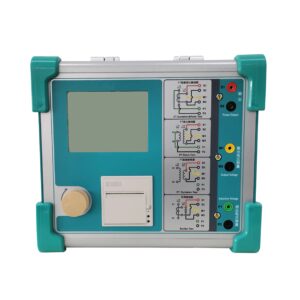
Click the image to know more about Wrindu CT and PT Analyzer.
What Are the Main CT Commissioning Tests?
CT commissioning usually includes several electrical tests.
Common tests include:
- Ratio testing
- Polarity testing
- Excitation testing
- Knee point testing
- Secondary resistance testing
- Burden testing
Each test checks a different part of CT performance.
How Is CT Ratio Testing Performed?
CT ratio testing checks whether the actual transformation ratio matches the specified value.
For example, a CT with a 1000/5 A ratio should provide the expected secondary current based on the primary current.
If the measured ratio is different from the specification, engineers should investigate the cause before operation.
Why Is CT Polarity Testing Needed?
Polarity determines the current direction relationship between the CT primary and secondary sides.
Incorrect polarity can affect protection logic and measurement results.
Therefore, engineers should confirm CT polarity during installation and commissioning.
How Does CT Resistance Testing Support Commissioning?
Secondary winding resistance testing provides information about the CT secondary circuit.
An abnormal resistance value may indicate:
- Connection problems
- Winding issues
- Incorrect wiring
Therefore, resistance testing helps engineers check the condition of the CT circuit.
Why Should Engineers Test CT Burden?
CT burden represents the total load connected to the secondary circuit.
The burden includes:
- Protection relays
- Measuring devices
- Secondary cables
If the burden exceeds the CT capability, measurement accuracy may decrease.
Therefore, burden testing helps confirm that the CT can work correctly with connected equipment.
What Should Engineers Prepare Before CT Testing?
Before testing, engineers should prepare:
- CT technical documents
- Test equipment
- Safety protection
- Connection diagrams
- Test procedures
In addition, engineers should confirm that the transformer is isolated from the energized system.
How Does CT Testing Improve Substation Safety?
CT testing helps identify installation problems before the substation starts operation.
Therefore, engineers can correct problems in a controlled environment instead of during normal operation.
This process improves commissioning quality and reduces future maintenance risks.
FAQs About CT Commissioning Tests
Why test CTs before substation energization?
CT testing confirms that protection and measurement transformers work correctly before operation.
What is included in CT commissioning?
CT commissioning usually includes ratio, polarity, excitation, resistance, burden, and knee point tests.
How often should CTs be tested?
The testing frequency depends on equipment condition, maintenance plans, and project requirements.
Can CT testing improve protection system reliability?
Yes. Accurate CT performance helps protection relays receive reliable current signals.
