

How Does CT Accuracy Affect Power Measurement and Protection?
Understand CT accuracy, ratio error, and phase displacement, and learn how CT testing improves power measurement and protection reliability.
Why Is CT Accuracy Important?
Current transformers convert high current into measurable secondary current.
The accuracy of this conversion affects the information received by meters and protection devices.
If a CT produces inaccurate signals, connected equipment may not display or respond correctly.
Therefore, CT accuracy is important for both measurement and protection applications.
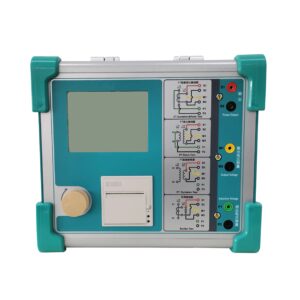
Click the image to know more about Wrindu CT and PT Analyzer.
What Is CT Ratio Error?
CT ratio error describes the difference between the actual transformation ratio and the rated ratio.
A small ratio error means the CT output is closer to the expected value.
However, a larger ratio error can affect measurement accuracy.
Therefore, engineers check ratio error when evaluating CT performance.
What Is CT Phase Displacement?
Phase displacement refers to the angle difference between the primary current and secondary current.
This difference can influence measurement accuracy, especially in applications that require precise power calculations.
Therefore, engineers may check phase displacement during CT testing.
What Is the Difference Between Measurement CT and Protection CT?
Measurement CTs focus on accurate current measurement.
They are commonly used with:
- Energy meters
- Power meters
- Monitoring systems
Protection CTs focus on providing reliable signals during abnormal conditions.
They are commonly used with:
- Protection relays
- Fault detection systems
Because their purposes are different, their performance requirements are also different.
How Do CT Accuracy Classes Work?
CT accuracy classes describe the expected measurement performance.
Different applications require different accuracy levels.
For example, measurement systems usually require high accuracy during normal operating conditions.
Protection systems need reliable performance during fault conditions.
Therefore, engineers should select CTs according to the application requirements.
How Can Engineers Check CT Accuracy?
CT analyzers can measure important characteristics such as:
- Ratio error
- Phase displacement
- Excitation performance
- Polarity
- Resistance
These results help engineers confirm whether the CT meets the required specifications.
Why Should CT Accuracy Be Checked During Maintenance?
CT performance may change over time because of aging, environmental conditions, or electrical stress.
Regular testing allows engineers to compare current results with previous data.
Therefore, maintenance testing helps detect performance changes early.
How Does Accurate CT Performance Support Power Systems?
Accurate CT signals help measurement systems provide correct data.
At the same time, reliable CT performance allows protection systems to respond correctly during abnormal conditions.
Therefore, CT accuracy is an important factor in stable and safe power system operation.
FAQs About CT Accuracy Testing
What is CT ratio error?
CT ratio error is the difference between the actual transformation ratio and the rated ratio.
Why is phase displacement important?
Phase displacement affects measurement accuracy because it changes the relationship between primary and secondary current.
Are protection CTs and measurement CTs the same?
No. Protection CTs and measurement CTs have different design purposes and performance requirements.
How can engineers test CT accuracy?
Engineers can use CT analyzers to measure ratio error, phase displacement, excitation characteristics, and other parameters.
