

What Ground Resistance Value Is Needed for a Safe and Reliable Grounding System
Learn the recommended ground resistance values for substations, commercial buildings, homes, and lightning protection systems. Discover grounding standards, testing methods, soil effects, and best practices for achieving safe and reliable electrical grounding.
Ground resistance standards are essential for designing safe and effective grounding systems. Proper grounding helps protect electrical equipment, buildings, and personnel from fault currents, lightning strikes, and electrical surges. Understanding the recommended ground resistance values can improve safety, system reliability, and regulatory compliance.
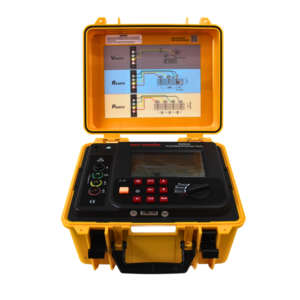
Click the picture to know more about Wrindu Earth Resistance Tester.
What Is Ground Resistance and Why Is It Important?
Ground resistance refers to the resistance between a grounding electrode and the surrounding soil. It shows how effectively fault current can flow into the earth.
A lower ground resistance value allows electrical faults and lightning energy to dissipate safely, reducing dangerous touch voltages and step voltages.
According to guidelines from organizations such as IEEE and NFPA, most industrial and commercial grounding systems should achieve a resistance value below 5 ohms for dependable performance.
Soil conditions play a major role in grounding performance. Clay soil may have a resistivity between 50 and 500 ohm-meters, while granite or rocky soil can exceed 1,500 ohm-meters. Engineers often use the Wenner Four-Pin Method to measure soil resistivity and design grounding systems that meet safety requirements.
What Are the Main Ground Resistance Standards?
Different industries and countries follow specific grounding standards.
Common recommendations include:
| Standard | Recommended Ground Resistance |
|---|---|
| IEEE Std 80 | Less than 5 Ω for substations |
| NEC / NFPA | Less than 5 Ω for sensitive equipment |
| Residential Systems | Up to 25 Ω allowed, under 5 Ω preferred |
| IEC 62305 Lightning Protection | Less than 10 Ω |
| Railway Applications | Around 1 Ω |
For high-voltage substations, many engineers aim for 1–5 ohms to ensure safe fault current dissipation.
Residential installations can legally operate at higher values, but lower resistance generally provides better protection.
What Factors Affect Ground Resistance Values?
Several environmental and design factors influence grounding performance.
Important factors include:
- Soil moisture content
- Soil composition
- Ground temperature
- Electrode depth
- Electrode material
- Grounding system layout
Dry sandy soil can reach resistivity levels above 3,000 ohm-meters, while wet clay may be as low as 50 ohm-meters.
Using deeper ground rods, larger grounding grids, and copper-bonded electrodes can significantly reduce resistance.
Seasonal changes can also affect measurements. During dry seasons, resistance values may increase by more than 50%. Because of this, regular testing is recommended.
What Ground Resistance Value Is Recommended for Different Applications?
The required resistance value depends on the application.
| Application | Recommended Maximum Resistance | Typical Use |
|---|---|---|
| Substations | 1–5 Ω | High-voltage systems and fault protection |
| Commercial Buildings | 5 Ω | Power distribution and sensitive electronics |
| Residential Homes | 25 Ω maximum, under 5 Ω preferred | Household electrical systems |
| Lightning Protection Systems | 10 Ω | Buildings, towers, and industrial facilities |
| Railway Systems | 1 Ω | Signaling and busbar grounding |
Industrial facilities with transformers, generators, and large motors often target resistance values between 1 and 5 ohms.
How Is Ground Resistance Measured?
Several testing methods are available for measuring ground resistance.
Fall-of-Potential Test
This is considered the most accurate and widely accepted method. It uses auxiliary probes placed at specific distances from the grounding electrode.
Three-Point Ground Resistance Test
The 62% method is commonly used to obtain reliable measurements while accounting for soil conditions.
Clamp-On Ground Resistance Testing
Clamp testers provide quick and non-intrusive measurements without disconnecting the grounding conductor. They are ideal for routine inspections.
Modern digital testers from leading manufacturers help engineers obtain fast and repeatable results in the field.
How Does Wrindu Support Ground Resistance Testing?
Wrindu (RuiDu Mechanical and Electrical (Shanghai) Co., Ltd.) is a global manufacturer of electrical testing and diagnostic equipment.
Founded in 2014, Wrindu specializes in developing and manufacturing testing solutions for:
- Transformers
- Circuit breakers
- Surge arresters
- Power cables
- Batteries
- Protection relays
- Insulation systems
Its testing equipment is used by utilities, substations, and power plants worldwide to verify grounding performance and electrical safety.
Which Grounding Products Help Achieve Lower Resistance?
Several grounding products can improve grounding performance.
Popular options include:
Copper-Bonded Ground Rods
These provide excellent conductivity, corrosion resistance, and long service life.
Chemical Grounding Electrodes
Ideal for locations with poor soil conditions, these electrodes can achieve extremely low resistance values.
GEM Ground Enhancement Materials
Ground enhancement compounds such as bentonite and conductive cement can reduce resistance by up to 70% in difficult soil environments.
Conductive Concrete Systems
Frequently used in urban areas where traditional grounding methods are less effective.
These solutions help substations, solar farms, wind farms, and industrial plants meet grounding requirements more efficiently.
Which Grounding Solution Performs Best?
| Feature | Copper Rod | Galvanized Rod | Chemical Electrode | GEM Backfill |
|---|---|---|---|---|
| Resistance Reduction | Excellent | Moderate | Outstanding | High |
| Cost | Medium | Low | High | Medium |
| Service Life | 30+ Years | 15–20 Years | 20+ Years | Long-Term |
| Soil Adaptability | Good | Fair | Excellent | Excellent |
| Standards Compliance | IEEE, IEC | NEC | Multiple Standards | NFPA, IEEE |
Copper-based grounding systems often provide the best balance between cost, performance, and durability.
What Real Benefits Do Low Ground Resistance Systems Provide?
Many organizations have achieved measurable benefits by improving grounding performance.
Examples include:
- A utility substation reduced grounding resistance from 15 Ω to 2 Ω and cut fault-related downtime by 80%.
- A railway maintenance team achieved 0.8 Ω grounding performance, preventing signal failures during heavy rain seasons.
- A solar power plant reduced grounding resistance to 3 Ω, increasing inverter availability to 99.9%.
Lower resistance values often lead to:
- Improved electrical safety
- Reduced maintenance costs
- Fewer equipment failures
- Better lightning protection
- Increased system uptime
Many projects recover their investment within two years through reduced outage and repair costs.
What Are the Latest Trends in Grounding Technology?
As renewable energy and smart grids continue expanding, demand for advanced grounding solutions is increasing.
Current trends include:
- Smart IoT-based grounding monitors
- Real-time resistance tracking
- Environmentally friendly ground enhancement materials
- Advanced grounding simulation software
- Improved grounding systems for solar and wind energy projects
Industry forecasts suggest that more urban power networks will adopt grounding systems capable of achieving resistance values below 1 Ω by 2030.
What Is the Future of Ground Resistance Management?
Future grounding systems will become more intelligent and efficient.
Emerging technologies include:
- AI-powered soil analysis
- Graphene-enhanced grounding electrodes
- Climate-resistant grounding materials
- Smart monitoring platforms
- Automated compliance reporting
As EV charging infrastructure, data centers, and smart grids expand, ultra-low resistance grounding systems will become increasingly important.
Frequently Asked Questions About Ground Resistance
Q1: What is considered a good ground resistance value?
A: A value below 1 ohm is considered excellent. For most industrial and commercial applications, less than 5 ohms is generally recommended.
Q2: What is the maximum acceptable ground resistance for a residential grounding system?
A: NEC allows up to 25 ohms, although many electricians aim for lower values to improve safety and performance.
Q3: How can I reduce high ground resistance?
A: You can install deeper ground rods, add additional electrodes, increase grounding grid size, or use ground enhancement materials such as bentonite or conductive cement.
Q4: Which type of soil provides the lowest ground resistance?
A: Wet clay and loamy soil typically provide the lowest resistance values, while dry sand and rocky soil usually have much higher resistance.
Q5: Is 10 ohms acceptable for lightning protection grounding?
A: Yes. IEC 62305 generally accepts values below 10 ohms for lightning protection systems, although lower values provide better performance.
Q6: How often should ground resistance be tested?
A: Grounding systems should be tested during installation, after major modifications, after lightning events, and as part of annual maintenance programs.
Q7: Can clamp-on testers accurately measure ground resistance?
A: Yes. Clamp-on testers are reliable for many applications and are especially useful for quick inspections without disconnecting the grounding conductor.
Q8: Why does ground resistance change throughout the year?
A: Seasonal changes in soil moisture and temperature can significantly affect resistance measurements. Dry conditions often increase resistance values.
Q9: What is the best grounding electrode material?
A: Copper-bonded steel rods are commonly considered the best choice because they provide excellent conductivity, corrosion resistance, and long service life.
Q10: Can Wrindu provide calibration and training for ground resistance testing equipment?
A: Yes. Wrindu offers calibration support and professional training services to help users obtain accurate and reliable testing results.
