

Why Is Transformer Oil BDV Low? Causes, Troubleshooting, and Corrective Actions
Discover the causes of low transformer oil BDV, including moisture, particles, and testing errors. Learn how to troubleshoot results and identify corrective actions.
A low transformer oil breakdown voltage (BDV) result indicates that the oil sample has limited resistance to electrical breakdown under the conditions of the selected test method. It does not, by itself, identify the cause or prove that the transformer is unsafe to operate.
Moisture, suspended particles, sample contamination, and testing errors can all affect the result. Engineers should investigate the sample and test conditions before deciding whether oil treatment or further transformer inspection is necessary.
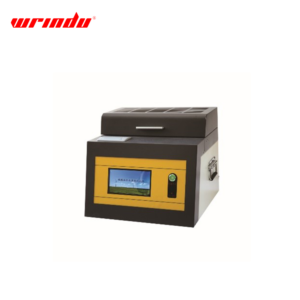
Click the image to know more about Wrindu Oil BDV Tester.
What Causes Low Transformer Oil BDV?
The main causes to investigate are moisture, solid contamination, unsuitable sample handling, and problems with the test setup. ASTM D1816 identifies moisture sensitivity as an important characteristic of its breakdown voltage test method.
| Possible cause | What to check | Next action |
|---|---|---|
| Moisture in the oil | Water content test and sample history | Investigate moisture ingress and oil condition |
| Solid particles or fibers | Sample appearance and contamination sources | Check sampling practices and consider appropriate oil analysis |
| Air bubbles in the test cell | Filling and settling procedure | Prepare the cell again according to the standard |
| Dirty electrodes or test cell | Residue, deposits, and cleaning records | Clean and inspect the cell and electrodes |
| Incorrect electrode spacing | Actual spacing versus the selected method | Correct the setup before retesting |
| Incorrect test settings | Voltage ramp, method selection, and instrument configuration | Verify the test procedure and instrument settings |
| Inconsistent sample handling | Container condition and time between collection and testing | Review the sampling and transport process |
These are possible explanations, not diagnoses. A low BDV result should be interpreted alongside the test method, individual readings, and other relevant oil-condition data.
Can Moisture Cause Low Transformer Oil BDV?
Yes. Moisture can adversely affect the dielectric breakdown performance of insulating oil, and its effect may be particularly important when cellulosic fibers are also present. ASTM D1816 explicitly addresses this sensitivity.
However, BDV is not a direct measurement of water concentration. If moisture is suspected, use a suitable water-content test, such as Karl Fischer titration under the applicable method, to obtain additional evidence.
A moisture result should also be interpreted in context. Oil temperature, oil type, and the condition of the transformer insulation system can affect the significance of the measured water content.
Can Testing Errors Cause a Low BDV Result?
Yes. Incorrect electrode spacing, contamination in the test cell, air bubbles, or inconsistent test settings can affect the measured breakdown voltage.
Check the instrument configuration against the selected standard. ASTM D1816 and IEC 60156 do not represent interchangeable test procedures, so the correct method must be identified before comparing results.
If a result is unexpectedly low, inspect the test cell and electrodes, verify the voltage application procedure, and review the sample handling record. Repeat the test under the prescribed conditions when appropriate.
Do not keep repeating the test until a higher value appears. The purpose of retesting is to investigate an anomaly using a valid procedure, not to select a preferred result.
What Should You Do When Transformer Oil BDV Is Below the Required Limit?
Use a step-by-step investigation rather than immediately assuming that the oil needs filtration or replacement.
Check the selected standard, sample identity, electrode spacing, and instrument settings.
Inspect the sample and review its collection, transport, and preparation history.
Consider water content and other oil-condition tests appropriate to the suspected problem.
Qualified maintenance personnel should decide whether further sampling, oil treatment, or transformer inspection is required.
The acceptance limit must come from the applicable specification, oil type, transformer condition, and maintenance requirements. There is no single BDV threshold that applies to every transformer oil and every service condition.
Should Transformer Oil Be Filtered After a Low BDV Result?
Not automatically. Oil filtration, dehydration, or other treatment should be selected according to the identified contamination and the required oil-treatment process.
If the main issue is moisture or suspended particles, an appropriate treatment may improve the oil’s breakdown performance. However, a BDV test alone cannot establish which treatment is necessary or confirm that all other oil properties meet requirements.
After treatment, obtain a representative sample and test it using the specified method. Compare the results with the applicable acceptance criteria and any previous measurements.
How Can You Prevent Repeated Low BDV Results?
Use a documented sampling and testing procedure. Keep the sample containers, test cell, electrodes, and instrument configuration consistent with the applicable method.
Record individual breakdown values rather than retaining only the final average. A change in the pattern of results may justify checking the test setup or investigating the oil further.
Trend analysis is also useful. Comparing results from the same transformer over time can help maintenance teams identify changes that require attention, even when a single reading does not establish a fault.
Which Equipment Helps Troubleshoot Low Oil BDV?
An oil BDV tester should support the required test method and electrode configuration, provide controlled voltage application, and record the results needed for analysis.
The Wrindu Oil Dielectric Strength Tester can be evaluated for this application. Confirm the exact model’s supported standards, test-cell configuration, voltage range, and data-recording functions before purchase.
Conclusion
Low transformer oil BDV can result from oil contamination, moisture, sample-handling problems, or an incorrect test setup. The correct response is to verify the test, investigate the cause, and apply corrective action based on supporting evidence.
BDV testing is an important diagnostic tool, but it should be combined with other relevant oil tests and transformer maintenance information when evaluating equipment condition.
