

What Is Open Circuit Potential and How Does It Affect High-Voltage Systems
Learn what open circuit potential (OCP) is and how it works in electrochemical and high-voltage systems. Discover OCP measurement methods, influencing factors, applications in battery testing, corrosion monitoring, and electrical equipment diagnostics.
Open circuit potential (OCP) is the voltage measured between two terminals of an electrochemical system when no external current is flowing. It represents the natural balance between oxidation and reduction reactions at the electrode surfaces.
In simple terms, OCP shows the “resting voltage” of a system when it is not under load. It is widely used in electrochemistry, battery testing, corrosion analysis, and high-voltage equipment diagnostics.
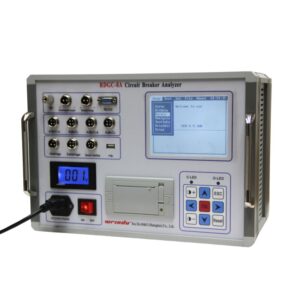
Click the image to know more about Circuit Breaker Comprehensive Tester.
What Does Open Circuit Potential Mean?
Open circuit potential (OCP) is the natural voltage difference between electrodes when no current is applied.
This voltage is formed because:
- Chemical reactions occur at the electrode surface
- Charges separate at the electrode–electrolyte interface
- A stable equilibrium is reached over time
OCP is commonly used to evaluate:
- Material stability
- Corrosion tendency
- Battery condition
- Electrical system health
For power and industrial users, OCP helps identify early signs of failure in high-voltage systems.
Why Is Open Circuit Potential Important in Electrical Systems?
OCP is important because it provides a non-destructive way to monitor system health.
It helps engineers:
- Detect corrosion early
- Identify battery degradation
- Evaluate electrode stability
- Improve maintenance planning
- Reduce unexpected failures
In industries like power utilities and manufacturing, OCP testing improves safety and reliability of equipment such as transformers, cables, and protection devices.
How Does Open Circuit Potential Work?
OCP is measured when electrodes are placed in an electrolyte solution without any external current.
The process works like this:
- Electrodes are immersed in electrolyte
- Chemical reactions begin at the surface
- Charges naturally separate
- Voltage stabilizes over time
Once equilibrium is reached, the system reaches a stable OCP value.
Chinese manufacturers often use digital potentiostats to monitor this process automatically in laboratory and industrial testing environments.
What Factors Affect Open Circuit Potential?
Many factors can change OCP values.
Electrode Material
Different materials behave differently.
- Noble metals usually show higher OCP values
- Less stable materials show lower values
pH of Electrolyte
- Acidic conditions often lower OCP
- Alkaline conditions may increase stability
Temperature
Higher temperature usually increases reaction activity and can shift OCP.
Surface Condition
- Clean surfaces produce stable readings
- Contaminated or oxidized surfaces may change OCP behavior
Immersion Time
OCP changes over time until the system stabilizes.
How Can Open Circuit Potential Be Measured?
OCP is measured using:
- High-impedance voltmeter
- Potentiostat system
- Three-electrode setup (working, reference, counter electrodes)
Steps include:
- Connect electrodes correctly
- Immerse in electrolyte
- Wait for stabilization
- Record stable voltage
Typical stabilization time is:
30 \text{ to } 60 \text{ minutes}
Modern industrial instruments from companies like Wrindu can automatically detect stabilization and record data in real time.
Where Is Open Circuit Potential Used?
OCP is widely used in:
- Battery health testing
- Corrosion monitoring
- Transformer diagnostics
- Cable quality inspection
- Sensor calibration
- High-voltage system maintenance
It is especially useful for non-destructive testing in industrial environments.
Why Is OCP Drift Monitoring Important?
OCP is not always constant. It may slowly change over time, known as OCP drift.
Monitoring drift helps detect:
- Corrosion development
- Surface contamination
- Material aging
- Chemical instability
Early detection helps prevent system failures and supports predictive maintenance strategies.
What Is the Difference Between OCP and Corrosion Potential?
Although related, they are not the same:
- OCP: General natural voltage with no current
- Corrosion potential (E_corr): Specific OCP where corrosion reactions balance
In short:
- OCP is a general measurement
- Corrosion potential is related specifically to corrosion activity
How Do High-Voltage Industries Use OCP?
In high-voltage systems, OCP is used for:
- Transformer condition monitoring
- Cable insulation assessment
- Circuit breaker evaluation
- Battery system testing
Manufacturers use OCP data to improve product reliability before delivery.
FAQs About Open Circuit Potential
Q1: What is open circuit potential in simple terms?
It is the natural voltage of a system when no current is flowing.
Q2: What units are used for OCP?
OCP is measured in volts (V) or millivolts (mV).
Q3: Is OCP testing destructive?
No. OCP testing is non-destructive and safe for equipment.
Q4: How long does OCP take to stabilize?
Usually between 30 and 60 minutes depending on the system.
Q5: Can OCP indicate battery health?
Yes. Changes in OCP can show battery aging or degradation.
Q6: Why is OCP important in corrosion testing?
It helps detect early corrosion activity before visible damage occurs.
Q7: What equipment is used for OCP measurement?
Common tools include potentiostats and high-impedance voltmeters.
Q8: Why is OCP useful in high-voltage systems?
It helps detect insulation problems, material aging, and system instability early.
Conclusion
Open circuit potential (OCP) is an important electrochemical parameter used to measure the natural voltage of a system without current flow. It plays a key role in battery testing, corrosion monitoring, and high-voltage equipment diagnostics.
By analyzing OCP and its changes over time, engineers can better understand system health, prevent failures, and improve maintenance planning in industrial and power applications.
