

Field Test Report: Frequency Domain Dielectric Response Analysis of 220kV Transformer Bushing
Explore a 220kV transformer bushing FDS testing case study using Frequency Domain Dielectric Response technology. Learn how dielectric response analysis evaluates insulation moisture, oil condition, and equipment reliability.
Transformer bushings are critical insulation components that connect high-voltage conductors between transformers and external circuits.
During long-term operation, bushings are exposed to:
- Electrical stress
- Thermal cycling
- Environmental moisture
- Insulation aging
Any insulation deterioration inside a bushing may lead to:
- Increased dielectric loss
- Partial insulation breakdown
- Flashover accidents
- Unexpected transformer shutdown
Therefore, regular insulation condition assessment is essential for ensuring transformer reliability.
Traditional capacitance and tan delta tests can identify some insulation problems, but advanced diagnostic methods are required to obtain deeper information about moisture and aging.
Frequency Domain Dielectric Response (FDS) technology provides a more comprehensive solution by analyzing insulation behavior across a wide frequency range.
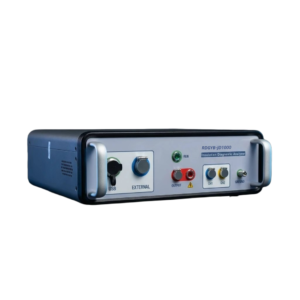
Click the image to know more about Wrindu Frequency Domain Dielectric Response Insulation Diagnostic Analyzer.
What Was the Purpose of This 220kV Transformer Bushing FDS Test?
A field test was performed on the medium-voltage side bushings of a 220kV transformer at a substation.
The objective was to evaluate:
- Bushing insulation condition
- Moisture content of cellulose insulation
- Insulation oil condition
- Dielectric response characteristics
The test used Frequency Domain Dielectric Response technology to compare insulation analysis results and verify the reliability of dielectric response diagnosis.
The tested equipment was:
- Transformer voltage level: 220kV
- Insulation type: Oil-paper insulation
- Test object: Transformer bushing main insulation (C1)
The field test was performed at a transformer substation environment with a test temperature of approximately 33℃.
How Was the Frequency Domain Dielectric Response Test Performed?
What Testing Parameters Were Used?
During the test, the FDS measurement was configured with:
- Start frequency: 1mHz
- End frequency: 1000Hz
- Test voltage: 200V peak
- Connection method: UST (Ungrounded Specimen Test)
The measurement focused on the main insulation condition of the transformer bushing.
How Does FDS Technology Analyze Transformer Bushing Insulation?
Frequency Domain Dielectric Response testing measures dielectric properties at different frequencies.
The analyzer records:
- Capacitance response
- Dielectric loss curve
- Frequency characteristics
The data is then analyzed using insulation models to determine:
- Moisture content
- Oil conductivity
- Insulation condition
Compared with traditional tests, FDS provides more detailed information about insulation materials and helps identify hidden problems before failures occur.
What Were the Main Results of the 220kV Bushing Test?
Did the FDS Test Confirm Good Insulation Condition?
Yes.
The test results showed that the transformer bushings maintained good insulation performance.
For the tested C phase bushing:
| Parameter | Test Result |
|---|---|
| Power frequency capacitance | Approximately 581.6 pF |
| Dielectric loss (tan δ) | Approximately 0.284% |
| Cellulose moisture content | 0.2% |
| Insulation paper condition | New condition |
| Oil conductivity | 0.001 pS/m |
| Oil condition | New condition |
The analysis indicated that:
- Insulation moisture level was very low
- Oil condition was excellent
- No abnormal insulation aging was detected
How Did FDS Improve the Accuracy of Insulation Diagnosis?
Why Are Frequency Response Curves Important?
A single tan delta value only shows insulation performance at one frequency.
However, insulation materials respond differently under different frequencies.
FDS curves provide additional information about:
- Moisture movement
- Polarization behavior
- Insulation material characteristics
This allows engineers to better understand the actual condition of the insulation system.
How Does RDGYB-JD1000 Improve Field Diagnostic Reliability?
The Wrindu RDGYB-JD1000 Frequency Domain Dielectric Response Insulation Diagnostic Analyzer is designed for accurate field insulation assessment.
Its advantages include:
Strong Anti-Interference Capability
High-voltage substations often have complex electromagnetic environments.
The RDGYB-JD1000 uses:
- Clean AC voltage output
- Advanced filtering technology
- Noise-resistant measurement methods
to improve test reliability.
Accurate Moisture and Aging Evaluation
The system combines:
- FDS technology
- PDC technology
- Advanced insulation models
to analyze:
- Cellulose moisture content
- Oil conductivity
- Insulation aging
How Does FDS Compare With Traditional Bushing Tests?
Why Is Traditional Tan Delta Testing Sometimes Not Enough?
Tan delta testing is widely used for transformer bushings.
However, it mainly provides:
- One frequency measurement
- Overall dielectric loss value
It may not fully identify:
- Moisture distribution
- Insulation material changes
- Aging mechanisms
FDS provides a complete dielectric response curve, making it a more advanced diagnostic method.
What Problems Can FDS Detect in Transformer Bushings?
Frequency Domain Dielectric Response analysis can help identify:
Moisture Ingress
Water inside insulation changes dielectric behavior, especially at low frequencies.
Insulation Aging
Aging changes polarization characteristics and dielectric losses.
Uneven Moisture Distribution
Some insulation structures may experience localized moisture accumulation.
The RDGYB-JD1000 can analyze uneven moisture distribution, especially in equipment with voltage grading foils such as condenser bushings and instrument transformers.
Why Is RDGYB-JD1000 a Reliable Solution for Power Utilities?
Wrindu provides professional high-voltage testing solutions for global electrical industries.
The RDGYB-JD1000 offers:
Comprehensive Diagnosis
One system provides:
- FDS testing
- PDC testing
- Tan delta analysis
- Moisture evaluation
- Insulation condition assessment
Portable Field Operation
The compact analyzer design allows engineers to perform onsite testing efficiently.
Features include:
- Tablet/laptop control
- Simple connection guidance
- Automatic analysis software
Wide Application Range
The system can be applied to:
- Power transformers
- Transformer bushings
- Rotating machines
- High-voltage cables
What Does This 220kV Transformer Bushing Test Case Prove?
This field test demonstrates that Frequency Domain Dielectric Response technology can provide reliable insulation diagnosis for high-voltage equipment.
The test results confirmed:
- Accurate capacitance measurement
- Reliable dielectric loss evaluation
- Low moisture content detection
- Good insulation condition assessment
The comparison test showed that FDS analysis can provide consistent and meaningful diagnostic results for transformer insulation evaluation.
FAQs
What is transformer bushing FDS testing?
Transformer bushing FDS testing uses dielectric response analysis to evaluate insulation condition by measuring dielectric characteristics at different frequencies.
Why test transformer bushings with FDS?
FDS provides deeper information about moisture, aging, and insulation condition compared with traditional single-point tests.
Can FDS detect moisture inside transformer bushings?
Yes. FDS can evaluate cellulose moisture content by analyzing dielectric response characteristics.
What information can RDGYB-JD1000 provide after testing?
The analyzer can provide:
- Moisture content
- Oil conductivity
- Tan delta results
- Insulation condition evaluation
- Moisture distribution analysis
Is FDS testing suitable for high-voltage substations?
Yes. With strong noise immunity and advanced filtering technology, RDGYB-JD1000 is suitable for HV and EHV substation environments.
