

How Does Temperature Correction Improve Transformer Insulation Diagnosis Accuracy?
Learn why temperature correction is important in transformer insulation diagnosis and how dielectric response testing improves moisture assessment and condition evaluation accuracy.
Why Does Temperature Matter in Transformer Insulation Testing?
Transformer insulation diagnosis is an important part of power equipment maintenance.
However, insulation characteristics are not constant. They change according to environmental and operating conditions.
Among all influencing factors, temperature has one of the biggest impacts on dielectric measurement results.
The same transformer may show different insulation test results when measured at:
- Low temperature during winter
- High temperature during operation
- Different ambient conditions
Without temperature correction, engineers may misunderstand insulation condition and make incorrect maintenance decisions.
For example:
- A healthy transformer may appear to have higher dielectric loss because of temperature effects.
- A moisture problem may be underestimated if temperature influence is ignored.
Frequency Domain Dielectric Response (FDS) testing improves insulation diagnosis by analyzing dielectric behavior over a wide frequency range. However, accurate interpretation requires proper temperature correction.
The RDGYB-JD1000 Frequency Domain Dielectric Response Insulation Diagnostic Analyzer provides temperature correction functions based on advanced analysis models to improve insulation condition evaluation accuracy.
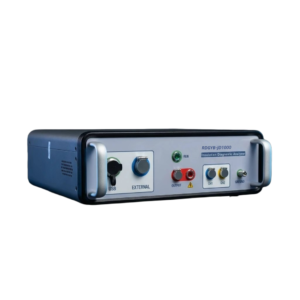
Click the image to know more about Wrindu Frequency Domain Dielectric Response Insulation Diagnostic Analyzer.
Why Does Temperature Affect Transformer Insulation Characteristics?
How Does Temperature Change Dielectric Response Behavior?
Transformer insulation is mainly composed of:
- Transformer oil
- Cellulose paper
- Pressboard materials
These materials have temperature-dependent electrical properties.
When temperature increases:
- Molecular movement becomes faster.
- Conductivity increases.
- Polarization processes change.
- Dielectric loss may increase.
When temperature decreases:
- Moisture distribution changes.
- Polarization processes slow down.
- Dielectric response characteristics change.
Therefore, a dielectric measurement without considering temperature may not accurately represent the actual insulation condition.
Why Can Different Temperatures Produce Different Test Results?
Can the Same Transformer Have Different FDS Results at Different Temperatures?
Yes.
Temperature affects several important dielectric parameters:
Dielectric Loss (Tan Delta)
Higher temperatures often increase dielectric losses because electrical conduction becomes stronger.
Insulation Resistance
Resistance values normally decrease as temperature increases.
Polarization Response
Temperature changes affect how charges move inside insulation materials.
Moisture Distribution
Temperature influences the balance of moisture between oil and cellulose insulation.
Because of these effects, comparing test results from different temperatures without correction can lead to incorrect conclusions.
Why Is Temperature Correction Necessary for Transformer Condition Assessment?
How Does Temperature Correction Improve Diagnosis Reliability?
Transformer condition assessment depends on comparing measured data with:
- Reference values
- Historical records
- Insulation models
However, temperature differences can make two tests appear different even when insulation condition has not changed.
Temperature correction converts measurement results to a standard reference temperature.
This allows engineers to compare:
- Different seasons
- Different operating conditions
- Different transformers
more accurately.
What Is Temperature Correction in FDS Testing?
How Does Temperature Correction Work in Dielectric Response Analysis?
Temperature correction is a process that adjusts dielectric response data according to temperature influence.
The purpose is to remove the effect of temperature changes and highlight actual insulation condition.
The correction process considers:
- Measurement temperature
- Insulation characteristics
- Frequency response behavior
- Reference temperature conditions
The RDGYB-JD1000 uses temperature correction based on the Arrhenius equation to improve analysis accuracy.
Why Is the Arrhenius Equation Used for Temperature Correction?
How Does the Arrhenius Model Help Transformer Insulation Analysis?
The Arrhenius equation describes how temperature affects chemical and physical processes.
In insulation diagnosis, it helps explain:
- Conductivity changes
- Polarization behavior
- Aging-related processes
As temperature changes, insulation response changes according to temperature-dependent relationships.
Using this model allows test results to be normalized and compared under similar conditions.
This improves confidence when evaluating:
- Moisture content
- Aging level
- Insulation deterioration trends
How Does Temperature Affect Transformer Moisture Assessment?
Why Is Temperature Correction Important for Moisture Diagnosis?
Moisture is one of the most important factors affecting transformer insulation life.
However, moisture distribution changes with temperature.
At higher temperatures:
- Moisture moves from cellulose into oil.
At lower temperatures:
- Moisture moves from oil back into cellulose.
This means oil moisture measurements may vary depending on temperature.
FDS analysis combined with temperature correction provides a more accurate evaluation of:
- Cellulose moisture content
- Moisture distribution
- Insulation condition
The RDGYB-JD1000 can analyze cellulose moisture content and insulation liquid conductivity using dielectric response methods.
Why Is Temperature Correction Important for Aging Transformer Evaluation?
Can Temperature Influence the Judgment of Insulation Aging?
Yes.
Transformer aging is closely related to temperature.
Long-term high-temperature operation accelerates:
- Paper degradation
- Oil oxidation
- Insulation deterioration
During testing, temperature effects may make insulation appear worse or better than its actual condition.
Temperature correction helps separate:
Temporary temperature effects
from
Permanent insulation degradation
This allows engineers to better evaluate aging trends.
How Does Temperature Correction Improve Maintenance Decisions?
Can Corrected Data Help Utilities Avoid Wrong Decisions?
Accurate diagnostic data is essential for maintenance planning.
Without temperature correction, engineers may:
- Replace healthy transformers too early.
- Miss developing insulation problems.
- Schedule unnecessary maintenance.
With corrected data, utilities can make better decisions:
Continue Operation
If insulation condition is stable.
Increase Monitoring
If early degradation appears.
Perform Maintenance
If insulation deterioration is confirmed.
Replace Equipment
When reliability risks become unacceptable.
How Does RDGYB-JD1000 Support Temperature-Compensated Testing?
What Features Help Improve Measurement Accuracy?
The RDGYB-JD1000 is designed for professional transformer insulation diagnosis.
Key functions include:
Advanced Temperature Correction
Uses temperature correction models to improve evaluation accuracy.
FDS and PDC Integration
Provides both frequency-domain and time-domain insulation analysis.
Moisture Evaluation
Analyzes:
- Cellulose moisture content
- Insulation liquid conductivity
- Moisture distribution
Wide Frequency Range
Supports:
- 0.1 mHz–10 kHz measurement range
Field Testing Capability
Suitable for:
- Transformer testing
- Bushing diagnosis
- High-voltage equipment assessment
What Happens If Temperature Correction Is Ignored?
What Problems Can Incorrect Temperature Evaluation Cause?
Ignoring temperature effects may lead to:
Incorrect Moisture Assessment
Moisture estimation may become inaccurate.
Wrong Aging Judgment
Insulation may appear older or healthier than it really is.
Poor Comparison Between Tests
Historical data becomes difficult to compare.
Incorrect Maintenance Planning
Resources may be used inefficiently.
For critical transformers, accurate temperature compensation is essential.
How Does Temperature Correction Support Long-Term Transformer Monitoring?
Why Is Consistent Data Important for Asset Management?
Transformer condition monitoring requires comparing test results over many years.
However, measurements may be performed under different conditions:
- Different seasons
- Different ambient temperatures
- Different operating loads
Temperature-corrected data creates a consistent basis for comparison.
Engineers can track:
- Moisture changes
- Aging trends
- Insulation deterioration speed
This supports long-term asset management strategies.
What Does Field Testing Show About Temperature Effects?
Why Is Temperature Considered During Real Substation Testing?
A field comparison test was performed on a 220kV transformer bushing using frequency domain dielectric response technology.
The evaluation included:
- Capacitance measurement
- Dielectric loss analysis
- Cellulose moisture assessment
- Oil conductivity evaluation
The test demonstrated the importance of accurate dielectric response measurement and analysis under practical field conditions.
Temperature influence must be considered to ensure reliable insulation evaluation.
Why Is Temperature Correction a Key Feature in Modern FDS Equipment?
What Should Engineers Look for in a Dielectric Response Analyzer?
When selecting FDS equipment, engineers should consider:
Temperature Compensation Capability
Ensures reliable comparison of results.
Measurement Accuracy
Improves confidence in diagnosis.
Moisture Analysis Function
Supports insulation condition assessment.
Software Intelligence
Provides automatic analysis and reports.
Field Reliability
Works under real substation conditions.
The RDGYB-JD1000 combines these functions to support advanced transformer insulation diagnosis.
FAQs
Why does temperature affect transformer insulation testing?
Temperature changes electrical conductivity, polarization behavior, and moisture distribution inside insulation materials.
What is temperature correction in FDS testing?
Temperature correction adjusts dielectric response results to compensate for temperature influence and improve comparison accuracy.
Why is the Arrhenius equation used for temperature correction?
The Arrhenius model describes temperature-related changes in physical and chemical processes affecting insulation behavior.
Can temperature affect transformer moisture measurement?
Yes. Temperature changes moisture distribution between oil and cellulose insulation.
What happens if temperature correction is not applied?
Test results may be misinterpreted, leading to inaccurate insulation condition evaluation.
Does RDGYB-JD1000 support temperature correction?
Yes. RDGYB-JD1000 provides temperature correction functions to improve transformer insulation diagnosis accuracy.
Why is temperature correction important for aging transformers?
It helps distinguish actual insulation deterioration from temporary temperature-related changes.
Can temperature correction improve maintenance decisions?
Yes. Corrected data helps utilities make more accurate decisions about monitoring, repair, and replacement.
Conclusion
Temperature is one of the most important factors influencing transformer insulation measurements.
Without correction, dielectric response results may not accurately represent real insulation conditions.
Temperature-corrected FDS testing provides more reliable information about:
- Moisture content
- Aging condition
- Dielectric behavior
- Insulation health
The RDGYB-JD1000 Frequency Domain Dielectric Response Insulation Diagnostic Analyzer combines advanced FDS technology, PDC analysis, and temperature correction functions to help utilities achieve more accurate transformer condition assessment and improve long-term equipment reliability.
