

How Can Frequency Domain Dielectric Response Data Help Predict Transformer Remaining Life?
Discover how Frequency Domain Dielectric Response data helps evaluate transformer aging, insulation condition, and remaining service life.
Introduction
Transformer replacement decisions are often difficult for power utilities.
A transformer may continue operating normally while internal insulation gradually loses strength.
Replacing equipment too early increases costs, while operating damaged transformers increases failure risks.
Modern asset management requires accurate condition assessment methods.
Frequency Domain Dielectric Response testing provides valuable information for evaluating transformer insulation aging and supporting remaining life decisions.
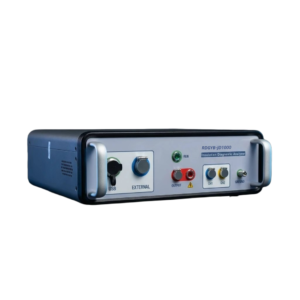
Click the image to know more about Wrindu Frequency Domain Dielectric Response Insulation Diagnostic Analyzer.
Why Is Transformer Remaining Life Difficult to Estimate?
The service life of a transformer mainly depends on insulation condition.
The most important aging factors include:
- Thermal stress
- Moisture
- Electrical stress
- Chemical degradation
Among these factors, cellulose insulation aging has the greatest influence because paper insulation cannot be easily replaced.
What Insulation Changes Indicate Transformer Aging?
During aging, transformer insulation experiences:
Chemical Degradation
Cellulose molecules gradually break down.
Reduced Mechanical Strength
Aged paper becomes weaker and more fragile.
Increased Dielectric Loss
Electrical characteristics change as insulation deteriorates.
How Does FDS Detect Aging Characteristics?
FDS evaluates insulation aging through dielectric behavior changes.
Important indicators include:
Frequency Response Variation
Aged insulation produces different response patterns compared with healthy insulation.
Polarization Characteristics
Changes in polarization behavior may indicate insulation deterioration.
Dielectric Loss Changes
Increasing dielectric losses can suggest insulation degradation.
How Can Utilities Use FDS Results for Asset Management?
FDS data helps engineers make better decisions:
Continue Operation
If insulation condition remains acceptable.
Increase Monitoring Frequency
If early deterioration is detected.
Perform Maintenance
If insulation problems become significant.
Replace Equipment
If remaining life becomes limited.
Why Is Condition-Based Maintenance Better Than Time-Based Maintenance?
Traditional maintenance depends on operating years.
However, two transformers with the same age may have different conditions.
FDS allows maintenance teams to focus on actual insulation health rather than only equipment age.
What Transformers Benefit Most From FDS Life Assessment?
FDS evaluation is especially useful for:
- Old power transformers
- High-value grid transformers
- Critical industrial transformers
- Transformers with unknown history
FAQs
Q1: Can FDS predict the exact remaining life of a transformer?
FDS does not directly calculate exact years of remaining life but provides important insulation condition information for evaluation.
Q2: Why is insulation condition important for transformer life?
Insulation degradation is one of the main factors limiting transformer service life.
Q3: Can FDS identify early transformer aging?
Yes. FDS can detect changes in dielectric characteristics before severe insulation failure occurs.
Q4: Is FDS useful for old transformers?
Yes. It is especially valuable for aging transformer assessment and life extension planning.
