

Why Do Power Utilities Use Vehicle-Mounted Cable Fault Testing Systems?
Discover how the Wrindu RDCD-C combines fault pre-location, high-voltage testing, acoustic-magnetic pinpointing, and cable route detection.
Power utilities maintain underground cables across cities, industrial areas, and power distribution networks. When a cable fails, maintenance teams need to identify the fault distance, find the damaged section, and repair it.
A portable tester may handle one testing task, but a complete cable fault location job can require several instruments. A vehicle-mounted cable fault testing system combines these instruments in one mobile setup.
The Wrindu RDCD-C Vehicle-Mounted Cable Fault Testing System integrates cable fault pre-location, high-voltage testing, acoustic-magnetic pinpointing, and cable route detection. It helps field teams handle different stages of underground cable fault location with one system.
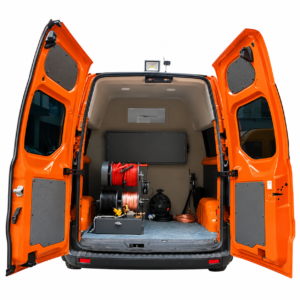
Click the image to know more about Wrindu RDCD-C Vehicle-Mounted Cable Fault Testing System.
Why Do Power Utilities Need Vehicle-Mounted Cable Fault Testing Systems?
Underground cable faults are difficult to locate because cables are buried beneath roads, buildings, and other infrastructure.
A maintenance team may need to perform several tasks before excavation:
- Identify the correct underground cable.
- Measure cable length and estimate fault distance.
- Apply a suitable test method for the fault.
- Pinpoint the damaged section above ground.
- Confirm the cable route before excavation.
These tasks may require different instruments. A vehicle-mounted system brings the equipment together, making it easier to transport and use at different work sites.
What Problems Can a Vehicle-Mounted Cable Fault Testing System Help Solve?
A vehicle-mounted system supports several common cable maintenance tasks.
| Field Problem | Required Testing Function | RDCD-C Equipment |
|---|---|---|
| Unknown cable length | Cable length measurement | RA40 |
| Unclear fault distance | Fault pre-location | RA40 |
| High-resistance fault | Suitable high-voltage testing | High-voltage unit |
| Uncertain fault position on the ground | Acoustic-magnetic pinpointing | RC11 |
| Unknown cable route | Cable route detection | R30 |
| Several cables in one trench | Cable identification | R30 |
Each instrument has a separate role. The operator selects the appropriate method according to the fault condition and cable requirements.
What Are the Advantages of the Wrindu RDCD-C Vehicle-Mounted Cable Fault Testing System?
The RDCD-C combines four main testing components in one system. Its advantages come from the combination of these instruments and their different functions.
1. Multiple Testing Functions in One System
The RDCD-C integrates the RA40 operation console, high-voltage unit, RC11 acoustic-magnetic locator, and R30 cable path detector.
This configuration supports several testing stages:
- Cable length measurement.
- Fault distance pre-location.
- High-voltage testing.
- Acoustic-magnetic fault pinpointing.
- Cable route tracing.
- Target cable identification.
Technicians do not need to build a complete testing setup from unrelated instruments for every job. The integrated configuration provides a more organized field testing solution.
2. Supports Different Cable Fault Testing Methods
Different cable faults require different testing methods.
The RA40 uses low-voltage pulse testing to analyze reflected signals and estimate fault distance. For suitable high-resistance faults, the high-voltage unit provides high-voltage testing support.
The RDCD-C high-voltage unit has the following published specifications:
| Parameter | Specification |
|---|---|
| Output Voltage | 0–32 kV |
| Maximum Impulse Energy | 2048 J |
| Impulse Interval | 1–10 s |
| Capacitor Configuration | 4 μF / 32 kV |
| Capacitor Configuration | 16 μF / 16 kV |
| Capacitor Configuration | 64 μF / 8 kV |
The selected test method depends on the fault condition and cable requirements. Not every fault requires high-voltage testing.
3. Combines Fault Pre-Location and Ground-Level Pinpointing
Finding the approximate fault distance is not the same as finding the exact position on the ground.
The RDCD-C uses two different instruments for these tasks:
| Instrument | Function |
|---|---|
| RA40 | Estimates the fault distance along the cable |
| RC11 | Detects acoustic and magnetic signals to help pinpoint a suitable discharge fault |
After pre-location, technicians can use the RC11 to search along the cable route.
The RC11 detects acoustic signals in the 100–1500 Hz range. Its sound channel dynamic range is more than 104 dB, and its magnetic channel dynamic range is more than 110 dB.
This combination helps technicians narrow down the position of a suitable discharge fault before excavation.
4. Traces Cable Routes and Identifies Target Cables
In urban distribution networks, several underground cables may run through the same trench or cable corridor.
Technicians must identify the correct cable before testing or excavation.
The RDCD-III/R30 cable path detector supports:
- 10 active frequencies.
- 2 passive frequencies.
- Direct connection, clamp coupling, and induction.
- Cable route tracing.
- Burial depth measurement.
- Energized and de-energized cable identification.
- Pre-calibration for up to 10 cables.
The R30 displays signal strength, direction, depth, and relative position. These functions help technicians follow the target cable and reduce the risk of working on the wrong cable.
5. One Mobile Setup for Field Work
The RDCD-C integrates its testing equipment inside a vehicle supplied by the customer.
This arrangement allows maintenance teams to transport the RA40, high-voltage unit, RC11, R30, and related accessories together.
Customers can select a suitable vehicle according to local road conditions, available space, and installation requirements.
The vehicle is not included in the RDCD-C supply. Wrindu provides the testing system for installation inside the customer’s vehicle.
How Does the RDCD-C Support Different Cable Maintenance Tasks?
The system can be used for different stages of underground cable maintenance.
| Maintenance Task | RDCD-C Function | Practical Purpose |
|---|---|---|
| Cable inspection | Cable length measurement | Check cable length and wave velocity |
| Fault diagnosis | Low-voltage pulse testing | Analyze cable reflections |
| High-resistance fault testing | High-voltage testing | Test suitable insulation faults |
| Fault position search | Acoustic-magnetic detection | Narrow down the discharge location |
| Cable identification | Route and cable detection | Identify the target cable |
| Pre-excavation work | Route and depth measurement | Help plan the excavation position |
The actual testing process depends on the fault type, cable condition, and site environment.
Where Can Power Utilities Use the RDCD-C System?
The RDCD-C can support field cable testing and maintenance in underground power distribution networks.
Urban Underground Cable Networks
Urban power cables often run beneath roads, sidewalks, and buildings.
When a fault occurs, technicians need to estimate the fault distance and identify the correct cable before excavation.
The RDCD-C combines pre-location, pinpointing, and cable route detection functions to support this work.
Power Distribution Substations and Cable Corridors
Substations and cable corridors may contain several underground cable connections.
The R30 helps technicians trace cable routes and identify target cables. The RA40 supports cable measurement and fault pre-location.
The required cable configuration and test conditions should be checked before use.
Industrial Power Networks
Factories and industrial facilities may have underground cables connecting substations, distribution equipment, and production buildings.
When a cable fault interrupts power supply, maintenance teams need to locate the damaged section before repair.
The RDCD-C provides several testing functions in one mobile setup for field maintenance work.
Railway and Infrastructure Cable Maintenance
Railway and infrastructure projects may use underground power and control cables.
Cable fault testing equipment can help maintenance teams locate faults and identify cable routes. The cable type, voltage level, and required testing method must match the equipment specifications.
What Is the Difference Between Portable Cable Testers and the RDCD-C?
Portable testers and vehicle-mounted systems serve different maintenance needs.
| Comparison | Portable Cable Testers | RDCD-C Vehicle-Mounted System |
|---|---|---|
| Equipment Setup | Individual instruments or small combinations | Integrated testing system |
| Transportation | Carried by operators | Installed inside a customer-provided vehicle |
| Fault Pre-Location | Depends on the instrument | RA40 |
| High-Voltage Testing | Depends on the instrument | High-voltage unit |
| Acoustic-Magnetic Pinpointing | May require separate equipment | RC11 |
| Cable Route Detection | May require separate equipment | R30 |
| Cable Identification | Depends on the instrument | R30 |
| Typical Use | Individual testing tasks | Multiple field testing stages |
Portable equipment is suitable for teams that need to perform specific tests or carry instruments by hand.
The RDCD-C is more suitable for maintenance teams that need several testing functions in one mobile setup.
What Should Utilities Check Before Choosing a Vehicle-Mounted Cable Fault Testing System?
Before purchasing a system, utilities should check the following points:
| Selection Factor | Questions to Ask |
|---|---|
| Cable requirements | Does the system match the cable type and voltage level? |
| Fault types | Can it test the expected open-circuit, short-circuit, and high-resistance faults? |
| Pre-location | Which methods are available for estimating fault distance? |
| High-voltage output | Are the output voltage and impulse energy suitable? |
| Pinpointing | Does the system include acoustic-magnetic detection? |
| Cable identification | Can it trace routes and distinguish nearby cables? |
| Vehicle installation | Is there enough space for the equipment and accessories? |
| Technical support | Are installation guidance, training, and after-sales support available? |
For a vehicle-mounted system, installation requirements are also important. Buyers should confirm the vehicle dimensions, equipment layout, power supply, and cable connections before installation.
Frequently Asked Questions About Vehicle-Mounted Cable Fault Testing Systems
What is the main advantage of a vehicle-mounted cable fault testing system?
It combines several testing instruments in one mobile setup. Technicians can perform fault pre-location, high-voltage testing, pinpointing, and cable route detection without transporting each instrument separately.
Can the RDCD-C locate high-resistance cable faults?
The RDCD-C includes a high-voltage unit for suitable high-resistance fault testing. The actual method depends on the fault condition and cable requirements.
Can the RDCD-C identify underground cable routes?
Yes. The RDCD-III/R30 traces underground cable routes, measures burial depth, and supports target cable identification.
Does the RDCD-C include a vehicle?
No. The customer provides the vehicle, and the RDCD-C testing equipment is installed inside it.
Can one RDCD-C system perform fault pre-location and pinpointing?
Yes. The RA40 performs fault pre-location, while the RC11 detects acoustic and magnetic signals to help pinpoint suitable discharge faults.
Is a vehicle-mounted system suitable for every cable maintenance team?
Not necessarily. It is more suitable for teams that perform different cable testing tasks across multiple field locations. Teams with only occasional or single-function testing needs may prefer portable equipment.
About Wrindu – Cable Fault Testing Equipment Manufacturer
Wrindu is a Chinese OEM manufacturer of electrical testing equipment and power testing solutions. Established in 2014, the company has more than 50,000 m² of manufacturing space, six production lines, and over 200 employees. Its products are exported to more than 120 countries.
Wrindu provides cable testing equipment, transformer testing instruments, and high-voltage testing systems. The company also supports OEM, ODM, and customized equipment solutions.
The RDCD-C Vehicle-Mounted Cable Fault Testing System combines the RA40 operation console, high-voltage unit, RC11 acoustic-magnetic locator, and R30 cable path detector in one integrated setup.
For technical specifications, system configuration, and vehicle installation guidance, visit the Wrindu RDCD-C Vehicle-Mounted Cable Fault Testing System.
