

Capacitance and Tan Delta Test vs Dielectric Response Analysis for Transformer Bushing Diagnosis
Compare capacitance testing, tan delta testing, and dielectric response analysis for transformer bushing diagnosis. Learn the advantages, limitations, and best testing methods for insulation assessment.
Transformer bushings play a vital role in safely transferring electrical energy between transformer windings and external power lines. Because bushings operate under continuous electrical and thermal stress, their insulation gradually changes over time.
Regular testing helps engineers evaluate insulation condition before a failure occurs. Among the most widely used methods are capacitance testing, tan delta (power factor) testing, and Frequency Domain Dielectric Response (FDS) analysis.
Each method provides different information about insulation performance. Understanding their differences helps utilities choose the right diagnostic approach and improve maintenance decisions.
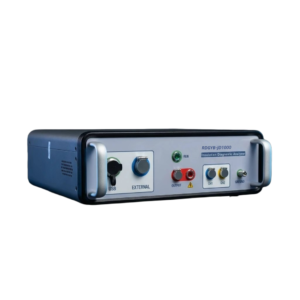
Click the image to know more about Wrindu Frequency Domain Dielectric Response Insulation Diagnostic Analyzer.
What Does a Transformer Bushing Capacitance Test Measure?
Capacitance testing measures the electrical capacitance between the bushing conductor and the grounded flange.
A healthy bushing has a stable capacitance value that changes very little during normal service.
When the measured value changes noticeably, it may indicate:
- Internal insulation damage
- Layer displacement
- Moisture contamination
- Mechanical deformation
Because capacitance values remain relatively stable throughout a bushing’s service life, comparing current measurements with historical records is an effective way to identify abnormal changes.
Why Is Tan Delta Testing Important for Transformer Bushings?
Tan delta testing measures dielectric loss, which reflects the efficiency of the insulation system.
As insulation ages, dielectric losses usually increase because more electrical energy is converted into heat.
Higher tan delta values may indicate:
- Moisture inside insulation
- Paper aging
- Oil contamination
- Thermal deterioration
- Internal defects
For this reason, tan delta testing has become a standard preventive maintenance procedure for high-voltage transformers and bushings.
What Are the Limitations of Capacitance and Tan Delta Testing?
Although both tests are widely used, they cannot always identify the root cause of insulation deterioration.
For example, two bushings may show similar tan delta values while having completely different internal insulation conditions.
Some insulation problems develop slowly without causing obvious changes in capacitance or dielectric loss during the early stages.
These methods also provide measurements at a single test frequency, offering only a limited view of insulation behavior.
As a result, engineers often combine them with more advanced diagnostic techniques.
How Does Dielectric Response Analysis Work?
Frequency Domain Dielectric Response (FDS) evaluates insulation by applying multiple frequencies instead of only one.
The insulation reacts differently at different frequencies.
By measuring these responses, engineers can study how insulation characteristics change across the entire frequency range.
This approach provides much more information about insulation condition than traditional single-frequency measurements.
Dielectric response analysis is especially useful for evaluating oil-paper insulation systems commonly found in transformer bushings.
What Can Dielectric Response Analysis Detect?
Unlike conventional electrical tests, dielectric response analysis can identify several insulation conditions simultaneously.
These include:
- Moisture content
- Insulation aging
- Dielectric polarization characteristics
- Oil-paper insulation condition
- Abnormal dielectric response
Instead of relying on one electrical parameter, engineers evaluate the complete dielectric response curve to understand insulation health.
This helps detect problems at an earlier stage before conventional measurements become abnormal.
Which Testing Method Provides Better Diagnostic Results?
Each testing method serves a different purpose.
| Test Method | Main Purpose | Advantages | Limitations |
|---|---|---|---|
| Capacitance Test | Detect structural changes | Fast and simple | Limited insulation information |
| Tan Delta Test | Measure dielectric loss | Good for routine maintenance | May not identify the cause of deterioration |
| Dielectric Response Analysis | Evaluate overall insulation condition | Detects moisture, aging, and dielectric changes | Requires specialized equipment and analysis |
Rather than replacing traditional tests, dielectric response analysis complements them by providing additional diagnostic information.
Using multiple methods together usually results in a more reliable condition assessment.
When Should Utilities Use Dielectric Response Analysis?
Dielectric response analysis is particularly valuable when:
- A transformer has been in service for many years.
- Tan delta values begin to increase.
- Moisture contamination is suspected.
- Maintenance decisions require more detailed insulation information.
- Conventional test results are inconsistent.
It is also useful for evaluating critical transformers where unexpected outages would have significant operational or financial consequences.
How Does the RDGYB-JD1000 Support Bushing Diagnosis?
The Wrindu RDGYB-JD1000 Frequency Domain Dielectric Response Insulation Diagnostic Analyzer is designed for advanced insulation testing of oil-paper insulated equipment.
Its key features include:
- Frequency range from 0.1mHz to 10kHz
- High-resolution dielectric response measurement
- Comprehensive insulation condition analysis
- Portable design for field testing
- Suitable for transformers, bushings, current transformers, and other high-voltage insulation systems
By combining dielectric response technology with traditional maintenance practices, engineers can gain a deeper understanding of insulation health and make more informed maintenance decisions.
Why Is Combining Multiple Test Methods the Best Practice?
No single test can evaluate every aspect of transformer bushing insulation.
Each diagnostic method focuses on a different characteristic.
For example:
- Capacitance testing detects structural changes.
- Tan delta testing evaluates dielectric losses.
- Partial discharge testing identifies localized defects.
- Dielectric response analysis studies insulation behavior across multiple frequencies.
Combining these methods provides a more complete picture of equipment condition, reduces diagnostic uncertainty, and supports better maintenance planning.
FAQs
What is the difference between capacitance testing and tan delta testing?
Capacitance testing measures the electrical capacitance of the bushing, while tan delta testing evaluates dielectric losses inside the insulation system. Both tests provide different information and are often performed together.
Is dielectric response analysis more accurate than tan delta testing?
Dielectric response analysis provides more detailed information about insulation behavior across a wide frequency range. It complements tan delta testing rather than replacing it.
Can capacitance testing detect insulation aging?
Capacitance testing can identify structural changes or abnormal insulation conditions, but it is generally less sensitive to early insulation aging than dielectric response analysis.
Why do engineers perform several bushing tests?
Different tests detect different types of insulation problems. Using multiple diagnostic methods improves the reliability of condition assessment.
Which transformers benefit most from dielectric response testing?
Large power transformers, aging transformers, heavily loaded equipment, and critical substation transformers benefit the most because detailed insulation evaluation helps reduce the risk of unexpected failures.
What is the best test for transformer bushing insulation condition?
There is no single best test. Capacitance testing, tan delta testing, partial discharge measurement, and dielectric response analysis each evaluate different insulation characteristics. Using them together provides the most reliable diagnosis.
Can tan delta testing detect moisture inside transformer bushings?
An increase in tan delta may indicate moisture contamination, but it cannot accurately determine the amount or distribution of moisture. Dielectric response analysis provides a more detailed evaluation of moisture-related insulation changes.
Why is dielectric response analysis performed at different frequencies?
Different frequencies reveal different dielectric behaviors of the insulation system. Analyzing the complete frequency response helps identify moisture, aging, and other insulation changes that may not appear during single-frequency testing.
How often should transformer bushing capacitance and tan delta tests be performed?
Testing intervals depend on equipment age, operating conditions, maintenance strategy, and manufacturer recommendations. Critical or older transformers are generally tested more frequently to monitor insulation changes over time.
Can dielectric response analysis replace traditional transformer bushing tests?
No. Dielectric response analysis is designed to complement traditional testing methods. Combining several diagnostic techniques provides a more comprehensive understanding of insulation condition and improves maintenance decisions.
Conclusion
Capacitance testing and tan delta testing remain essential tools for routine transformer bushing maintenance because they provide quick and reliable information about insulation performance.
However, modern power systems require more detailed diagnostic information than single-frequency measurements can provide.
Frequency Domain Dielectric Response analysis offers a deeper understanding of insulation condition by evaluating dielectric behavior across a wide range of frequencies. It helps identify moisture, aging, and other insulation changes earlier, allowing maintenance teams to make more informed decisions.
By combining conventional electrical tests with advanced dielectric response analysis, utilities can improve transformer reliability, reduce unexpected outages, and extend the service life of valuable power equipment.
