

GC-ECD vs DGA Gas Chromatography: Can a DGA Oil Analyzer Detect PCB?
Compare GC-ECD and DGA gas chromatography. Understand their detectors, testing targets, and why conventional DGA analyzers cannot directly detect PCB.
Transformer oil laboratories use gas chromatography for different analytical purposes. However, a DGA gas chromatograph and a PCB analytical system do not perform the same test.
This difference is important when a laboratory plans to expand its transformer oil testing services. A conventional DGA analyzer cannot automatically detect polychlorinated biphenyls (PCBs).
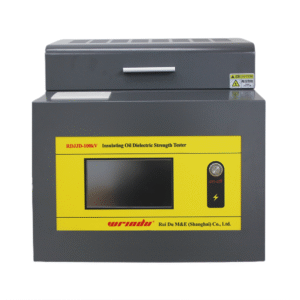
Click the image to know more about Wrindu Oil BDV Tester.
What Is the Difference Between GC-ECD and DGA Gas Chromatography?
GC-ECD is a gas chromatography system equipped with an electron capture detector. It is commonly used for PCB analysis because the detector responds strongly to many chlorine-containing compounds.
DGA gas chromatography analyzes dissolved gases extracted from transformer oil. It helps identify electrical and thermal faults inside transformers.
| Comparison | GC-ECD | Conventional DGA gas chromatography |
|---|---|---|
| Main purpose | PCB analysis | Dissolved gas analysis |
| Main target | PCB compounds | Fault gases |
| Typical detector | Electron capture detector | FID, TCD, or other configured detectors |
| Sample preparation | Extraction and cleanup | Dissolved gas extraction |
| Typical results | PCB concentration | Gas concentration |
| Common application | PCB contamination assessment | Transformer fault diagnosis |
The two systems have different analytical methods, detector configurations, and sample preparation requirements.
Which Substances Can a DGA Oil Analyzer Detect?
DGA testing measures gases dissolved in transformer insulating oil.
Common target gases include:
| Gas | Chemical formula | Monitoring purpose |
|---|---|---|
| Hydrogen | H₂ | Electrical discharge and other faults |
| Methane | CH₄ | Thermal and electrical fault assessment |
| Ethane | C₂H₆ | Thermal fault assessment |
| Ethylene | C₂H₄ | Thermal fault assessment |
| Acetylene | C₂H₂ | High-energy electrical discharge assessment |
| Carbon monoxide | CO | Paper insulation deterioration assessment |
| Carbon dioxide | CO₂ | Paper insulation condition assessment |
These gases provide information about transformer operating conditions.
They are not a substitute for PCB concentration analysis.
Why Can’t a Conventional DGA Gas Chromatograph Detect PCB?
A conventional DGA system is configured to separate and measure dissolved fault gases.
Its sample extraction process, analytical column, detector, and calibration method are designed for specific gases.
PCB compounds require a different analytical procedure. The laboratory must use suitable extraction, cleanup, chromatographic separation, and detection conditions.
A DGA analyzer equipped with FID or TCD should not be assumed to support PCB analysis.
Can a DGA Gas Chromatograph Be Converted into a PCB Analyzer?
Not simply by changing the test settings.
PCB analysis requires a compatible GC configuration, suitable detector, analytical column, sample preparation method, calibration standards, and validated analytical procedure.
An existing GC system may be technically adaptable in some cases, but this depends on the instrument configuration and method requirements. A conventional DGA oil analyzer should not be treated as a ready-to-use PCB analyzer.
What Equipment Is Required for PCB Analysis?
A typical PCB laboratory setup includes:
| Equipment | Function |
|---|---|
| GC-ECD | PCB separation and detection |
| Automatic liquid sampler | Improves sample injection consistency |
| Capillary column | Separates PCB compounds |
| Nitrogen blowdown concentrator | Concentrates prepared samples |
| SPE equipment | Supports sample cleanup |
| Analytical balance | Measures sample quantities |
| Fume hood | Supports safe sample preparation |
| PCB reference standards | Calibration and quality control |
GC-MS may also be used for additional identification or confirmation when required by the validated method.
An ECD containing a radioactive source may require specific regulatory authorization, depending on the country.
Which Equipment Should a Transformer Oil Laboratory Purchase?
A laboratory should first identify the testing services it plans to provide.
| Laboratory requirement | Recommended system |
|---|---|
| Transformer fault diagnosis | DGA gas chromatograph |
| PCB contamination analysis | Dedicated PCB analytical system |
| Routine oil insulation testing | BDV and dielectric loss testers |
| Oil moisture analysis | Karl Fischer titrator |
| Oil acidity analysis | Acid value tester |
Purchasing a DGA analyzer does not automatically provide PCB testing capability.
How Does Wrindu Support Routine Transformer Oil Testing?
Wrindu focuses on transformer oil condition testing equipment rather than dedicated PCB analytical systems.
Available product options include:
- Wrindu Oil Dielectric Strength Tester
- Wrindu Transformer Insulation Oil Acid Value Tester
- Wrindu New Insulating Oil Micro-Water Tester
- Wrindu Transformer Tan Delta Tester
These instruments measure different oil properties and do not directly measure PCB concentration.
Contact Wrindu to discuss your routine transformer oil testing requirements and laboratory equipment configuration.
