

How Do Resistors Convert Electrical Energy into Heat or Light
Learn how resistors convert electrical energy into heat and light through Joule heating. Explore resistor types, power dissipation formulas, high-voltage applications, efficiency factors, and FAQs for industrial and electrical systems.
Electrical resistors are essential components in almost every circuit. Their main job is to control current flow and safely convert electrical energy into heat. In special applications such as incandescent lamps, resistors can also produce visible light. Understanding how resistors work helps engineers improve circuit safety, energy efficiency, and equipment reliability.
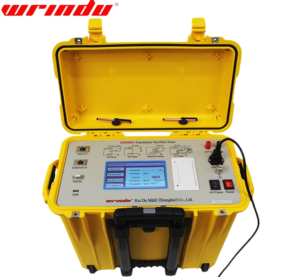
Click the iamge to know more about Transformer Tan Delta Tester.
What Is a Resistor and Why Is It Important?
A resistor is a passive electronic component designed to limit or regulate electrical current. According to Ohm’s Law, the relationship between voltage, current, and resistance determines how electricity flows through a circuit.
By resisting current flow, a resistor changes part of the electrical energy into heat. This process protects sensitive devices, stabilizes circuits, and prevents excessive current from damaging equipment.
Resistors are widely used in transformers, circuit breakers, batteries, power distribution systems, and industrial control equipment.
| Resistor Type | Common Material | Power Rating | Typical Applications |
|---|---|---|---|
| Carbon Film | Carbon | 0.25W–5W | General electronic circuits |
| Wirewound | Nichrome Wire | 5W–100W+ | High-power applications |
| Metal Film | Metal Alloy | 0.125W–3W | Precision measurement circuits |
How Does a Resistor Turn Electrical Energy into Heat?
When electric current passes through a resistor, electrons move through the resistive material and collide with atoms inside it. These collisions reduce the electrons’ energy and create atomic vibrations.
The vibration energy becomes heat, a process known as Joule Heating.
The amount of heat produced depends on the current and resistance value. The power dissipated by a resistor is calculated using:
P=I^2R
A higher current or larger resistance creates more heat.
In industrial power systems, accurately controlled resistors help simulate electrical loads and energy losses during testing procedures.
Why Do Resistors Mainly Produce Heat Instead of Other Forms of Energy?
The primary reason is that moving electrons continuously collide with atoms inside the resistor material.
Each collision transfers electrical energy into thermal energy. As a result, the resistor’s temperature rises.
This characteristic is useful because it allows excess energy to be safely dissipated instead of damaging sensitive electronic components.
In high-voltage equipment, excessive heat can also indicate faults, overloads, or insulation problems that require further investigation.
Can a Resistor Produce Light as Well as Heat?
Yes. Certain resistive devices can generate both heat and visible light.
A common example is an incandescent light bulb. When current flows through its thin tungsten filament, the filament becomes extremely hot. At high temperatures, it emits visible light while also releasing heat.
Most standard resistors only generate heat because their operating temperatures are much lower than those required to produce visible light.
What Functions Do Resistors Perform in Electrical Circuits?
Resistors serve several important purposes in modern electrical systems:
- Limiting current flow
- Protecting LEDs and electronic components
- Dividing voltage levels
- Stabilizing circuit operation
- Providing transistor biasing
- Dissipating excess electrical energy
- Supporting sensor signal processing
Without resistors, many electronic devices would be vulnerable to overcurrent conditions and voltage spikes.
What Factors Affect Energy Conversion Efficiency in Resistors?
Several factors influence how efficiently a resistor converts electrical energy into heat:
Resistance Value
Higher resistance generally increases heat generation when current remains constant.
Current Level
Current has the greatest effect because power increases with the square of current.
Material Type
Different materials have different thermal properties and temperature limits.
Ambient Temperature
A hotter environment reduces cooling efficiency and may affect resistor performance.
| Factor | Impact on Heat Generation | Benefit of Proper Selection |
|---|---|---|
| Resistance | Direct relationship | Better energy control |
| Current | Squared relationship | Accurate power dissipation |
| Material | Determines thermal capacity | Longer operating life |
| Temperature | Affects cooling | Improved reliability |
How Do You Select a Resistor for High-Voltage Applications?
Choosing the correct resistor requires evaluating several specifications.
Power Rating
The resistor should typically be rated for at least twice the expected power dissipation.
Tolerance
Lower tolerance values provide greater measurement accuracy.
Temperature Coefficient
A lower temperature coefficient helps maintain stable resistance under changing temperatures.
Voltage Rating
The resistor must safely withstand the maximum operating voltage.
Recommended Selection Process
- Calculate expected power dissipation.
- Verify voltage requirements.
- Check temperature coefficient specifications.
- Select high-quality components from certified manufacturers.
- Confirm long-term reliability for the application.
What New Technologies Are Improving Resistor Performance?
Modern resistor technology continues to evolve.
Some important developments include:
- Thin-film resistors for high precision
- Surface-mount resistors for compact designs
- Surge-resistant resistor structures
- Advanced ceramic materials
- High-stability metal oxide resistors
- Improved thermal management designs
These innovations help increase accuracy, reliability, and operational lifespan in demanding industrial environments.
Why Are Resistors Important in High-Voltage Testing Equipment?
High-voltage testing systems rely on resistors to safely absorb and dissipate energy during diagnostic procedures.
Applications include:
- Transformer testing
- Circuit breaker testing
- Battery energy storage evaluation
- Cable diagnostics
- Electrical safety inspections
Accurate resistor performance allows testing equipment to simulate real operating conditions and produce reliable measurement results.
How Does Heat Affect the Lifespan of a Resistor?
Heat is one of the main factors that determine resistor lifespan.
Repeated heating and cooling cycles can gradually degrade resistor materials, causing:
- Resistance drift
- Reduced accuracy
- Physical cracking
- Complete component failure
Selecting a resistor with adequate power capacity and proper cooling can significantly extend service life.
What Are the Future Trends in Resistor Technology?
Future resistor development is expected to focus on:
- Higher precision materials
- Lower energy losses
- Improved thermal efficiency
- Smart monitoring capabilities
- Better surge protection
- Integration with advanced power electronics
As renewable energy systems and electric vehicles continue to expand, demand for reliable high-performance resistors will keep growing.
FAQs About Resistors and Energy Conversion
Q: How does a resistor convert electricity into heat?
A resistor converts electrical energy into heat through electron collisions inside the resistive material. This process is called Joule heating.
Q: Why does a resistor get hot when current flows through it?
Current causes electrons to collide with atoms inside the resistor. These collisions release energy as heat.
Q: Can resistors convert electrical energy into light?
Yes. In incandescent lamps, the resistor-like filament becomes hot enough to emit visible light while also producing heat.
Q: What is the formula for resistor power dissipation?
The most common formula is:
P=I^2R
Another form is:
P=\frac{V^2}{R}
Q: Which resistor material is best for high-power applications?
Wirewound resistors made from nichrome or similar alloys are commonly used because they handle high temperatures and power levels effectively.
Q: How do I choose the right resistor for a high-voltage circuit?
Consider power rating, voltage rating, tolerance, temperature coefficient, and long-term reliability. A safety margin above expected operating conditions is recommended.
Q: Why do industrial testing systems use precision resistors?
Precision resistors improve measurement accuracy, energy control, and repeatability during transformer, cable, battery, and circuit breaker testing.
Q: Do resistors wear out over time?
Yes. Long-term thermal stress can gradually change resistance values and reduce performance. Proper sizing and cooling help extend lifespan.
Q: What causes resistor failure in power systems?
Common causes include overheating, excessive current, voltage surges, poor cooling, aging materials, and incorrect resistor selection.
Q: How can I improve resistor reliability in industrial equipment?
Use properly rated components, ensure adequate ventilation, avoid overload conditions, and choose high-quality resistors designed for industrial environments.
