

What Is a Termination Resistor? A Complete Guide to Applications, Installation, and Best Practices
Learn what a termination resistor is, how it works, and why it is essential for RS485, CAN Bus, Modbus, and industrial communication systems. Discover installation methods, troubleshooting tips, four-wire resistance measurement, and best practices for reliable signal transmission.
Termination resistors are essential components in modern communication and electrical systems. They help maintain signal quality in networks such as RS485, CAN Bus, industrial automation systems, and sensor communication lines. By preventing signal reflections and reducing electrical noise, termination resistors improve communication reliability and system stability.
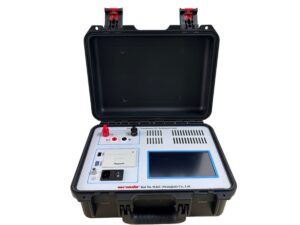
What Is a Termination Resistor?
A termination resistor is a resistor installed at the end of a transmission line. Its purpose is to match the characteristic impedance of the cable and absorb signal energy before reflections occur.
Without proper termination, signals can bounce back along the cable, causing communication errors, distorted waveforms, and unstable network performance.
The most common values include:
- 120Ω for RS485 networks
- 120Ω for CAN Bus systems
- 50Ω for many coaxial cable applications
The correct resistor value depends on cable impedance, cable length, and network design.
Why Are Termination Resistors Important?
Termination resistors improve communication quality by:
- Eliminating signal reflections
- Reducing electromagnetic interference (EMI)
- Preventing data corruption
- Improving network reliability
- Supporting long-distance communication
In industrial environments where electrical noise is common, proper termination is often critical for stable operation.
Where Are Termination Resistors Commonly Used?
Termination resistors are found in many communication and control systems.
RS485 Networks
RS485 systems typically use two 120Ω resistors installed at both ends of the bus. This arrangement supports reliable communication over distances up to 1200 meters.
CAN Bus Systems
Automotive electronics and industrial controllers use CAN Bus networks. Two 120Ω termination resistors help prevent reflections and ensure accurate data exchange between devices.
Industrial Automation
Protocols such as:
- Modbus RTU
- Profibus
- DeviceNet
often require proper termination to maintain communication stability.
Marine Networks
NMEA 2000 systems use termination resistors on the backbone cable to ensure dependable communication between navigation and monitoring equipment.
Power Testing Applications
In electrical testing, four-wire resistance measurement techniques use specialized terminal connections to achieve highly accurate low-resistance measurements in transformers, batteries, and power equipment.
How Does a Termination Resistor Work?
A termination resistor absorbs the signal energy reaching the end of a transmission line.
When the resistor value matches the cable’s characteristic impedance, the signal is fully absorbed rather than reflected back into the network.
Without proper termination, networks may experience:
- Signal ringing
- Data packet errors
- Communication failures
- Reduced transmission distance
- Unstable device operation
For differential communication systems such as CAN Bus and RS485, correct impedance matching is essential for reliable performance.
How Do You Select the Correct Termination Resistor?
Choosing the correct termination resistor depends on:
- Cable impedance
- Communication protocol
- Cable length
- Data transmission speed
- Network topology
General recommendations include:
| Network Type | Typical Value |
|---|---|
| RS485 | 120Ω |
| CAN Bus | 120Ω |
| Profibus | 150Ω |
| Coaxial Cable | 50Ω |
Always verify the cable specification before selecting the resistor value.
What Technologies Are Used in Modern Termination Resistors?
Modern termination solutions use advanced resistor technologies such as:
- Thin-film resistors
- Wire-wound resistors
- Precision metal-film resistors
- Active termination circuits
High-accuracy applications often use Kelvin four-terminal measurement methods to eliminate lead resistance errors.
Some advanced systems also use active termination circuits that automatically adjust impedance while reducing power consumption.
What Are the Benefits of Four-Wire Terminal Resistance Measurement?
Four-wire measurement, also called Kelvin measurement, provides greater accuracy when measuring very low resistance values.
Advantages include:
- Eliminates lead wire resistance errors
- Improves micro-ohm measurement accuracy
- Suitable for transformer testing
- Useful for battery testing
- Ideal for high-current applications
This method is widely used in power utilities, manufacturing plants, and electrical laboratories.
How Are Termination Resistors Installed Correctly?
Follow these best practices when installing termination resistors:
Step 1: Verify Network Length
Long communication lines usually require termination. Networks longer than 10 meters often benefit from proper termination.
Step 2: Install at Both Physical Ends
Place termination resistors only at the two ends of the main communication bus.
Step 3: Use the Correct Resistance Value
For most RS485 and CAN Bus systems, use 120Ω resistors unless the manufacturer specifies otherwise.
Step 4: Test Signal Quality
Use an oscilloscope or communication analyzer to verify clean signal edges and stable communication.
What Are the Most Common Termination Resistor Problems?
Several common issues can affect network performance.
Missing Termination
Symptoms:
- Signal reflections
- Data errors
- Unstable communication
Solution:
- Install termination resistors at both ends.
Incorrect Resistance Value
Symptoms:
- Communication failures
- Reduced signal quality
Solution:
- Match the resistor value to cable impedance.
Single-End Termination
Symptoms:
- Partial signal reflection
- Random communication errors
Solution:
- Ensure both ends of the bus are terminated.
Underrated Power Capacity
Symptoms:
- Resistor overheating
- Component failure
Solution:
- Use higher-power resistors when necessary.
What Are Current Market Trends for Termination Resistors?
The demand for termination resistor solutions continues to grow because of:
- Industrial automation expansion
- Industry 4.0 adoption
- Smart manufacturing
- Electric vehicle development
- Renewable energy projects
- Industrial IoT deployment
Modern systems increasingly require compact, high-precision, and low-power termination solutions.
The rapid growth of EVs and smart grids is creating additional demand for reliable communication networks and advanced diagnostic tools.
How Is Wrindu Supporting Electrical Testing Applications?
Wrindu (RuiDu Mechanical and Electrical Shanghai Co., Ltd.) specializes in the design and manufacture of high-voltage testing and diagnostic equipment.
Established in 2014, the company develops testing solutions for:
- Transformers
- Circuit breakers
- Surge arresters
- Batteries
- Power cables
- Relays
- Insulation systems
With ISO9001, IEC, and CE certifications, Wrindu provides reliable solutions for customers worldwide.
What Is the Future of Termination Resistor Technology?
Future developments are expected to include:
- AI-assisted network diagnostics
- Smart active termination systems
- Higher-speed communication support
- Integration with electric vehicle systems
- Advanced impedance monitoring
- Improved low-power designs
As industrial communication speeds continue to increase, termination technology will remain a critical part of reliable network design.
FAQs About Termination Resistors
Q1: Does a CAN Bus require termination resistors at both ends?
Yes. Most CAN Bus networks require a 120Ω resistor at each end of the bus to prevent signal reflections and maintain communication stability.
Q2: What is the standard termination resistor value for RS485?
The most common value is 120Ω because it matches the impedance of typical twisted-pair communication cables.
Q3: Why is four-wire resistance measurement more accurate?
It removes errors caused by test lead resistance, making it ideal for measuring very low resistance values.
Q4: Can termination resistors be switched on and off?
Yes. Some systems use switchable or automatic termination modules to simplify installation and reduce power consumption.
Q5: How can I calculate the correct termination resistor value?
The resistor value should match the characteristic impedance of the transmission cable. For most industrial communication networks, 120Ω is the standard choice.
Q6: What happens if a CAN Bus has no termination resistor?
Without termination, signal reflections can occur, leading to communication errors, unstable operation, and data loss.
Q7: How many termination resistors are required in an RS485 network?
A standard RS485 network normally requires two termination resistors, one at each physical end of the communication line.
Q8: When should four-wire terminal resistance testing be used?
Four-wire testing is recommended when measuring extremely low resistance values in transformers, busbars, batteries, switchgear, and other power equipment.
Q9: Can incorrect termination resistor values damage communication systems?
Incorrect values usually do not damage equipment, but they can significantly reduce communication reliability and signal quality.
Q10: Which industries use termination resistors most frequently?
Termination resistors are widely used in industrial automation, automotive electronics, renewable energy systems, power utilities, marine communication networks, and smart manufacturing facilities.
Conclusion
Termination resistors are simple components, but they play a critical role in maintaining signal integrity across communication networks and electrical testing systems. Whether used in RS485 networks, CAN Bus systems, industrial automation, or power equipment diagnostics, proper termination helps reduce noise, eliminate reflections, and improve overall system reliability. Selecting the correct resistor value, following installation best practices, and using accurate testing methods can significantly improve network performance and long-term operational stability.
