

How Do You Calculate Primary Injection Test Current?
Learn how to calculate primary injection test current using breaker pickup settings, CT ratios, circuit resistance, and practical calculation examples.
Primary injection test current depends on the equipment being tested and the purpose of the test. Engineers may need to verify a circuit breaker’s trip response, check a current transformer ratio, or confirm current flow through a high-current connection.
The correct value should come from the equipment specifications, protection settings, and approved test procedure. A higher current does not automatically produce a better test.
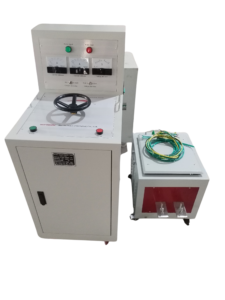
Click the image to know more about 6000A Primary Current Injection Tester.
How Do You Calculate Circuit Breaker Test Current?
For a test based on a multiple of the pickup setting, use:
Test current = Pickup current × Test multiple
For example, if a circuit breaker has a 400 A pickup setting and the procedure requires 1.5 times pickup current:
400 A × 1.5 = 600 A
This example illustrates the calculation only. The required multiple and injection duration must follow the applicable procedure and manufacturer’s requirements.
How Do You Calculate CT Secondary Current?
For a CT with a rated ratio of 800/5 A, the nominal ratio is:
800 ÷ 5 = 160
If the primary current is 400 A, the ideal secondary current is:
400 ÷ 160 = 2.5 A
Engineers can compare the measured secondary current with this reference. CT accuracy requirements and test conditions determine whether the result is acceptable.
How Do Output Current and Voltage Affect Tester Selection?
Primary injection systems generally provide high current at relatively low voltage. The voltage required depends on the total resistance and impedance of the test circuit, including cables, connections, and the equipment under test.
Ohm’s law provides a basic estimate for a resistive circuit:
V = I × R
For example, if the total resistance is 1 mΩ and the current is 1000 A, the estimated voltage drop is 1 V. Actual requirements may differ because of connection conditions and circuit characteristics.
The Wrindu RDSL-82-6000D has a rated output of 6000 A at 6 V and a rated capacity of 36 kVA. These are product ratings, not a guarantee that the tester can deliver 6000 A under every circuit condition.
How Should Engineers Consider Test Duration?
Test duration depends on the equipment, current level, and purpose of the test. Longer injection periods can increase heating in cables, contacts, and the test object.
The RDSL-82-6000D is designed for short-time operation. Its specifications state that power-on time should be less than 2.5 minutes, with a working cycle longer than 10 minutes. Follow the specified operating limits and allow the required recovery time between tests.
What Should You Check Before Applying Current?
Confirm the target current, output capability, cable ratings, connection resistance, and permitted test duration. Verify the test arrangement before energizing the equipment and record the actual current applied.
Correct calculations help engineers select an appropriate primary current injection tester and reduce the risk of invalid results or equipment overheating.
