

How Is Primary Current Injection Testing Used for Circuit Breakers?
Learn how primary current injection testing verifies circuit breaker trip response, measures trip time, identifies faults, and supports electrical commissioning.
Primary current injection testing verifies selected circuit breaker functions by passing a controlled current through the breaker’s primary current path. Engineers use the test to evaluate overcurrent trip response and confirm that the installed protection system operates under defined test conditions.
The test result depends on the injected current, the breaker’s trip settings, the test duration, and the protection mechanism being evaluated. A successful injection test does not automatically verify every mechanical, insulation, or short-circuit interruption capability of a circuit breaker.
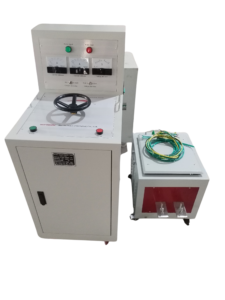
Click the image to know more about 6000A Primary Current Injection Tester.
What Is the Purpose of Primary Current Injection Testing on a Circuit Breaker?
Primary injection applies current through the primary conductors of the circuit breaker rather than injecting a simulated signal only into the trip unit. This approach can test more of the installed current path and protection arrangement.
For thermal-magnetic or electronic trip breakers, the test can help verify selected overcurrent protection functions. The measured trip response is compared with the manufacturer’s time-current characteristics and the project’s acceptance criteria.
Primary injection may also help identify problems caused by incorrect connections or current paths. However, additional tests may be necessary to evaluate contact resistance, insulation, mechanical operation, or other breaker functions.
Which Circuit Breakers Can Be Tested by Primary Current Injection?
Primary current injection can be used with many types of circuit breakers, provided the tester and test procedure are suitable for the equipment.
| Circuit breaker type | Typical test objective | Important consideration |
|---|---|---|
| Molded-case circuit breaker (MCCB) | Verify selected overcurrent trip functions | Confirm trip-unit settings and the manufacturer’s test procedure |
| Air circuit breaker (ACB) | Check long-time, short-time, or instantaneous trip functions where applicable | The required current and test duration depend on the trip settings |
| Low-voltage power circuit breaker | Evaluate the installed protection response | Follow the applicable product standard and acceptance criteria |
| Medium- or high-voltage circuit breaker | Evaluate selected primary-current-related protection functions | Confirm the breaker design, relay arrangement, and approved test procedure |
The available test current must be sufficient for the specific function being tested. A tester’s maximum output current does not guarantee that it can reach the target current through every breaker and cable arrangement.
How Do Engineers Perform a Primary Injection Test on a Circuit Breaker?
The exact procedure depends on the breaker type, trip unit, test current, and manufacturer’s instructions. A typical test process includes the following steps.
Step 1: Review the test requirements.
Identify the breaker model, rated current, trip settings, required test points, and acceptance criteria. Obtain the manufacturer’s time-current curve or the applicable commissioning procedure.
Step 2: Prepare the equipment.
Verify that the primary injection tester, test cables, connectors, and measurement instruments are suitable for the required current. Check the tester’s output rating and operating limits before connecting it.
Step 3: Isolate and secure the test area.
Apply the site’s approved isolation, work authorization, and safety procedures. High-current injection can cause heating, arcing at poor connections, and dangerous forces in inadequately secured conductors.
Step 4: Connect the test circuit.
Connect the tester to the prescribed primary current path. Ensure that the conductors and connections can carry the intended current for the required duration.
Step 5: Apply the specified current.
Increase or set the current according to the approved procedure. Record the actual injected current and the time taken for the breaker to trip, where trip-time measurement is required.
Step 6: Compare the results.
Compare the measured response with the manufacturer’s time-current characteristics and the project’s acceptance criteria. Repeat tests only as permitted by the procedure and within the equipment’s thermal limits.
Step 7: Restore the equipment.
Disconnect the test equipment under the approved procedure, restore the required settings and connections, and document any deviations before returning the breaker to service.
How Is Circuit Breaker Trip Time Evaluated During Primary Injection?
Trip time is the elapsed time between the defined start of the test current and the circuit breaker’s trip operation, measured using the specified test arrangement. The result must be assessed at the actual current applied.
For example, an instantaneous trip function may respond much faster than a long-time overload function. Therefore, a trip time cannot be judged without knowing the selected protection function, current level, trip settings, and applicable acceptance criteria.
| Test parameter | What engineers should record |
|---|---|
| Breaker identification | Model, rated current, and serial number where applicable |
| Trip-unit settings | Long-time, short-time, instantaneous, or other relevant settings |
| Injected current | Actual measured current in amperes |
| Test duration | Elapsed time for the test or trip operation |
| Trip response | Whether the expected function operated |
| Acceptance criteria | Manufacturer’s curve or approved project limits |
A single trip-time value is not sufficient to prove that every protection function operates correctly. Each required test point should be assessed separately.
Why Might a Circuit Breaker Fail a Primary Injection Test?
A breaker may fail to trip at the expected current or may trip outside the permitted time range. Possible causes include incorrect settings, a defective trip unit, an unsuitable test connection, or insufficient current delivered by the injection system.
| Observed result | Possible cause to investigate |
|---|---|
| Test current does not reach the target | Excessive circuit impedance or insufficient tester output voltage |
| Breaker does not trip | Incorrect settings, a protection fault, or an unsuitable test arrangement |
| Trip occurs earlier than expected | Incorrect settings, an unexpected trip condition, or a test setup issue |
| Trip time varies between tests | Inconsistent test conditions, connection problems, or equipment thermal effects |
| Connection becomes excessively hot | Loose connections, undersized conductors, or excessive test duration |
These observations identify possible causes, not definitive diagnoses. Engineers should confirm the cause through the manufacturer’s troubleshooting procedure and additional measurements where required.
Which Standards Apply to Circuit Breaker Primary Injection Testing?
The applicable standard depends on the circuit breaker type and the test objective.
IEC 60947-2 covers circuit breakers within its scope for low-voltage equipment. IEC 62271-100 addresses AC circuit breakers within its high-voltage switchgear scope. IEEE C37.09 provides test procedures for AC high-voltage circuit breakers covered by that standard.
These product standards do not mean that every commissioning primary injection test must follow an identical procedure. Engineers should identify the applicable standard edition, manufacturer instructions, and project acceptance requirements before testing.
How Do You Select a Primary Current Injection Tester for Circuit Breaker Testing?
Select a tester according to the highest required test current, the current-voltage characteristics of the test circuit, the required duration, and the measurement needs.
A 6000 A primary current injection tester may suit applications that require currents up to that level, but the available output current depends on the circuit impedance and the tester’s rated output characteristics.
The Wrindu RDSL-82-6000D Primary Current Injection Tester is designed for high-current testing in power plants, substations, laboratories, and electrical equipment manufacturing facilities. Confirm its output characteristics, duty cycle, connection requirements, and compatibility with the target breaker before use.
What Should Engineers Record After a Circuit Breaker Injection Test?
A test report should identify the circuit breaker, trip settings, test current, measured trip time, test arrangement, and acceptance criteria. Record any abnormal heating, unstable current, unexpected trip response, or other observed issue.
The report should distinguish measured results from conclusions. If a breaker fails a test, document the failure and the follow-up checks instead of marking the breaker as compliant based on incomplete evidence.
