

What Is the Difference Between IEEE 450 and IEEE 1188?
Learn the key differences between IEEE 450 and IEEE 1188 battery maintenance standards. Understand inspection methods, testing schedules, and maintenance requirements for flooded lead-acid and VRLA stationary battery systems.
Stationary battery systems are critical for backup power, but different battery types require different maintenance rules. IEEE 450 and IEEE 1188 are the two primary standards that guide industrial users on how to inspect, test, and maintain these systems.
The main difference comes down to the battery design: IEEE 450 governs vented (flooded) lead-acid batteries, while IEEE 1188 covers valve-regulated lead-acid (VRLA) batteries.
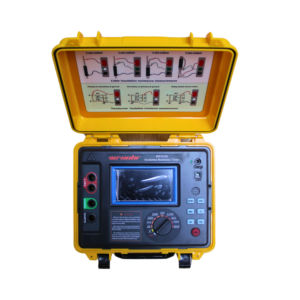
Click the image to know more about Wrindu IR Tester.
Why Do Flooded and VRLA Batteries Need Different Maintenance?
The structural design of a battery dictates how you care for it. Flooded batteries have direct electrolyte access, allowing technicians to perform physical checks like measuring specific gravity and adding water. However, this open design requires high ventilation due to gas emissions.
VRLA batteries are sealed, eliminating routine watering but preventing you from seeing inside. Because you cannot check the fluid directly, you must rely on electrical diagnostics—such as voltage, temperature, and internal resistance trends—to spot early signs of dry-out or thermal runaway.
What Are the Core Differences Between IEEE 450 and IEEE 1188?
| Feature | IEEE 450 | IEEE 1188 |
| Battery Type | Vented / Flooded lead-acid | VRLA / Sealed lead-acid |
| Electrolyte Access | Direct access available | No access (sealed) |
| Primary Focus | Physical and chemical checks | Electrical monitoring |
| Ventilation Needs | High | Moderate |
| Key Risks | Water loss, hardware corrosion | Thermal runaway, internal dry-out |
How Often Should You Inspect Stationary Batteries?
Both standards use a tiered inspection schedule to catch faults early. High-reliability environments like power substations or data centers might require even shorter intervals.
-
Monthly: Visual inspections and basic operational checks.
-
Quarterly: Detailed electrical measurements and data trend analysis.
-
Yearly: Full capacity testing and performance evaluation under load.
What Tasks Are Required During Routine Maintenance?
How do you perform monthly checks?
Monthly maintenance focuses on quick, visual signs of trouble:
-
Check room temperature and ventilation.
-
Look for dirt, corrosion, leaks, or casing deformation.
-
Confirm the charger output and check for active alarms.
-
Listen for unusual noises and check for strange odors.
How do you perform quarterly inspections?
Quarterly maintenance introduces deeper diagnostics to track battery health over time:
-
Measure individual cell and string voltage.
-
Check intercell connection tightness (torque verification).
-
Monitor temperature distribution across the battery bank.
-
For flooded batteries only, check electrolyte levels and specific gravity.
How do you conduct annual testing?
Yearly testing proves whether the battery can actually handle a power outage:
-
Run a full capacity or battery discharge test.
-
Inspect all electrical connections and insulation.
-
Review long-term data trends to identify weak cells.
-
Create documentation for compliance audits and replacement planning.
FAQs: Frequently Asked Questions about Battery Standards
Can I use the same maintenance plan for both flooded and VRLA batteries?
No. While you can use the same calendar schedule (monthly, quarterly, yearly), the actual tasks must differ because flooded batteries require manual fluid checks, whereas VRLA batteries require indirect electrical testing.
Why is documentation so critical for IEEE compliance?
Consistent data logging removes guesswork. It allows teams to track performance trends, catch failing cells before they collapse, validate warranties with manufacturers, and provide clear proof of compliance during safety audits.
Where are these standards used in the product lifecycle?
Global supply chains use these standards from start to finish: during factory quality control, during on-site commissioning, during routine field diagnostics, and as compliance proof for international exports.
