

How Do You Test a Current Transformer Using Primary Injection?
Learn how to test a current transformer using primary injection, calculate CT ratio, measure secondary current, and identify common testing limitations.
A current transformer (CT) primary injection test passes a known current through the primary conductor or winding and measures the resulting secondary current. Engineers use the readings to check the nominal current transformation ratio and investigate selected wiring or polarity issues.
The procedure depends on the CT design, nameplate ratio, secondary circuit, and required accuracy. A simple ratio check does not constitute a complete CT accuracy test.
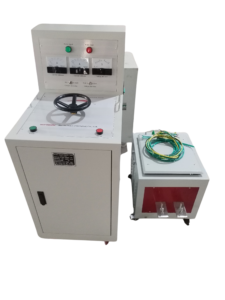
Click the image to know more about 6000A Primary Current Injection Tester.
How Do You Calculate the CT Transformation Ratio?
The nominal current ratio is calculated as:
CT ratio = Rated primary current ÷ Rated secondary current
For a CT rated 800/5 A:
800 A ÷ 5 A = 160.
The nominal transformation ratio is 160:1.
If the primary current is 400 A, an ideal CT with this ratio would produce 2.5 A on the secondary side under the assumed test conditions.
Actual readings may differ because of CT characteristics, burden, wiring, measurement uncertainty, and the test arrangement.
How Do You Connect a CT for Primary Injection Testing?
Follow the CT manufacturer’s instructions and the approved test diagram. Apply current through the designated primary path and measure secondary current with an instrument that has a suitable range and accuracy.
Verify the CT nameplate, terminal identification, and secondary circuit before testing. Never open the secondary circuit of an energized CT because a dangerous voltage can develop.
The equipment must be isolated and handled according to the applicable safety procedure before connections are changed.
Can Primary Injection Testing Verify CT Polarity?
Primary injection can help investigate polarity when the procedure includes a defined reference direction and suitable measurement equipment. The result must be interpreted according to the specified CT test method.
A ratio measurement alone cannot prove correct polarity. Engineers should document the terminal references and the method used to determine the polarity result.
Does a CT Ratio Check Verify CT Accuracy?
No. A primary injection ratio check provides evidence about the current relationship under the conditions tested, but it does not necessarily verify the CT’s complete accuracy performance.
Accuracy assessment may require defined test currents, burdens, phase-angle measurements, and other conditions specified for the CT’s accuracy class.
For protection CTs, additional testing may be necessary depending on the required performance criteria and the manufacturer’s documentation.
What Causes an Unexpected CT Secondary Current?
Possible causes include an incorrect nominal ratio, wiring errors, unsuitable measurement range, burden effects, or an invalid test connection.
Confirm the nameplate ratio and primary current measurement first. Then inspect the secondary circuit and verify the instrument configuration before repeating the test.
What Equipment Is Needed for CT Primary Injection Testing?
The setup typically includes a primary current injection tester, suitable high-current cables, and appropriate secondary-current measuring equipment. Engineers should verify the CT wiring, polarity, rated ratio, and test procedure before applying current.
For high-current applications, the Wrindu RDSL-82-6000D Primary Current Injection Tester provides up to 6000 A output current, with a rated capacity of 36 kVA. Its two ammeters support monitoring across large and small current ranges.
The split-type design is useful where engineers need to position the test unit around existing equipment or within a laboratory setup.
Conclusion
CT primary injection testing can help verify the nominal current relationship and investigate selected wiring or polarity issues. The measured result must be interpreted in the context of the CT ratio, test conditions, and measurement equipment.
A complete CT assessment may require additional tests for accuracy, burden performance, insulation, or other characteristics specified by the application.
