

What Is the Difference Between VHF and UHF
Learn the differences between VHF and UHF frequencies, radio spectrum classifications, frequency ranges, applications, and communication advantages.
Radio communication systems use different frequency ranges to transmit signals. Among the most common are VHF (Very High Frequency) and UHF (Ultra High Frequency). Although both are widely used in communication and broadcasting, they operate at different frequencies and have different characteristics.
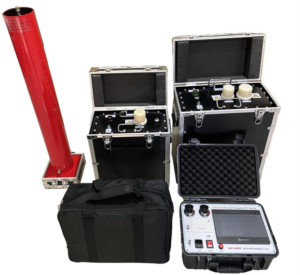
Click the picture to know more about Wrindu VLF HV Testers.
What Is VHF?
VHF stands for Very High Frequency. It covers the frequency range from 30 MHz to 300 MHz, with wavelengths between 1 meter and 10 meters.
VHF signals are commonly used for:
- FM radio broadcasting
- Television transmission
- Air traffic communication
- Marine communication
- Navigation systems
Because of its longer wavelength, VHF can travel relatively long distances and is suitable for open outdoor environments.
What Is UHF?
UHF means Ultra High Frequency. It operates between 300 MHz and 3000 MHz (3 GHz), with wavelengths ranging from 10 centimeters to 1 meter.
Typical UHF applications include:
- Mobile communications
- Wireless networks
- GPS systems
- Digital television
- Public safety radio systems
UHF signals generally provide higher data transmission capacity and work well in urban environments where signals need to penetrate buildings and obstacles.
VHF vs UHF: Key Differences
| Parameter | VHF | UHF |
|---|---|---|
| Frequency Range | 30 MHz – 300 MHz | 300 MHz – 3000 MHz |
| Wavelength | 1 m – 10 m | 0.1 m – 1 m |
| Coverage Distance | Longer | Shorter |
| Building Penetration | Moderate | Better |
| Typical Applications | Aviation, Marine, FM Radio | Cellular Networks, TV, GPS |
Radio Frequency Spectrum Classification
The electromagnetic spectrum is divided into several frequency bands:
| Band | Name | Frequency Range |
|---|---|---|
| ELF | Extremely Low Frequency | 3 Hz – 30 Hz |
| SLF | Super Low Frequency | 30 Hz – 300 Hz |
| ULF | Ultra Low Frequency | 300 Hz – 3 kHz |
| VLF | Very Low Frequency | 3 kHz – 30 kHz |
| LF | Low Frequency | 30 kHz – 300 kHz |
| MF | Medium Frequency | 300 kHz – 3 MHz |
| HF | High Frequency | 3 MHz – 30 MHz |
| VHF | Very High Frequency | 30 MHz – 300 MHz |
| UHF | Ultra High Frequency | 300 MHz – 3 GHz |
| SHF | Super High Frequency | 3 GHz – 30 GHz |
| EHF | Extremely High Frequency | 30 GHz – 300 GHz |
FAQs
Q1: What is the main difference between VHF and UHF?
A: The main difference is the operating frequency. VHF works from 30 MHz to 300 MHz, while UHF operates from 300 MHz to 3000 MHz. UHF generally supports higher data capacity and better obstacle penetration.
Q2: Which is better for long-distance communication, VHF or UHF?
A: VHF is usually better for long-distance communication in open areas because its longer wavelength can travel farther with less signal loss.
Q3: Why is UHF widely used in modern communication systems?
A: UHF offers higher bandwidth, supports more channels, and performs better in cities where buildings and other structures may block signals.
Q4: What does VLF mean in radio frequency terminology?
A: VLF stands for Very Low Frequency and covers frequencies from 3 kHz to 30 kHz. It is often used for submarine communication and specialized navigation systems.
Q5: What frequency band is commonly used for FM radio broadcasting?
A: FM radio stations typically operate in the VHF range, usually between 88 MHz and 108 MHz.
Q6: What frequency range is considered High Frequency (HF)?
A: HF covers frequencies from 3 MHz to 30 MHz and is widely used for international shortwave communication.
Q7: What are the applications of UHF radio waves?
A: UHF is commonly used in cellular networks, digital television, GPS, Wi-Fi systems, satellite communication, and public safety radio networks.
Q8: What is the difference between low-frequency and high-frequency signals?
A: Low-frequency signals generally travel farther and penetrate deeper into certain materials, while high-frequency signals can carry more information and support faster data transmission.
